If you’re looking to put your money to work in the stock market, the choice between buying individual stocks and picking low-cost, high-yield ETFs can feel pretty overwhelming. Having invested in both over the years, I’ve noticed that low-cost, high-yield ETFs offer some surprisingly practical advantages for both new and experienced investors. If you’re unsure where to start or just want a smoother investment ride, I think you’ll find these insights helpful.
Disclaimer: This article contains affiliate links. If you open an account through these links, I may earn a commission at no additional cost to you. Investing involves risk, including the possible loss of capital. eToro is not available in all countries. Eligibility depends on your region. Always consider your individual circumstances before investing.
Low-Cost High-Yield ETFs: What Makes Them Worth Considering?
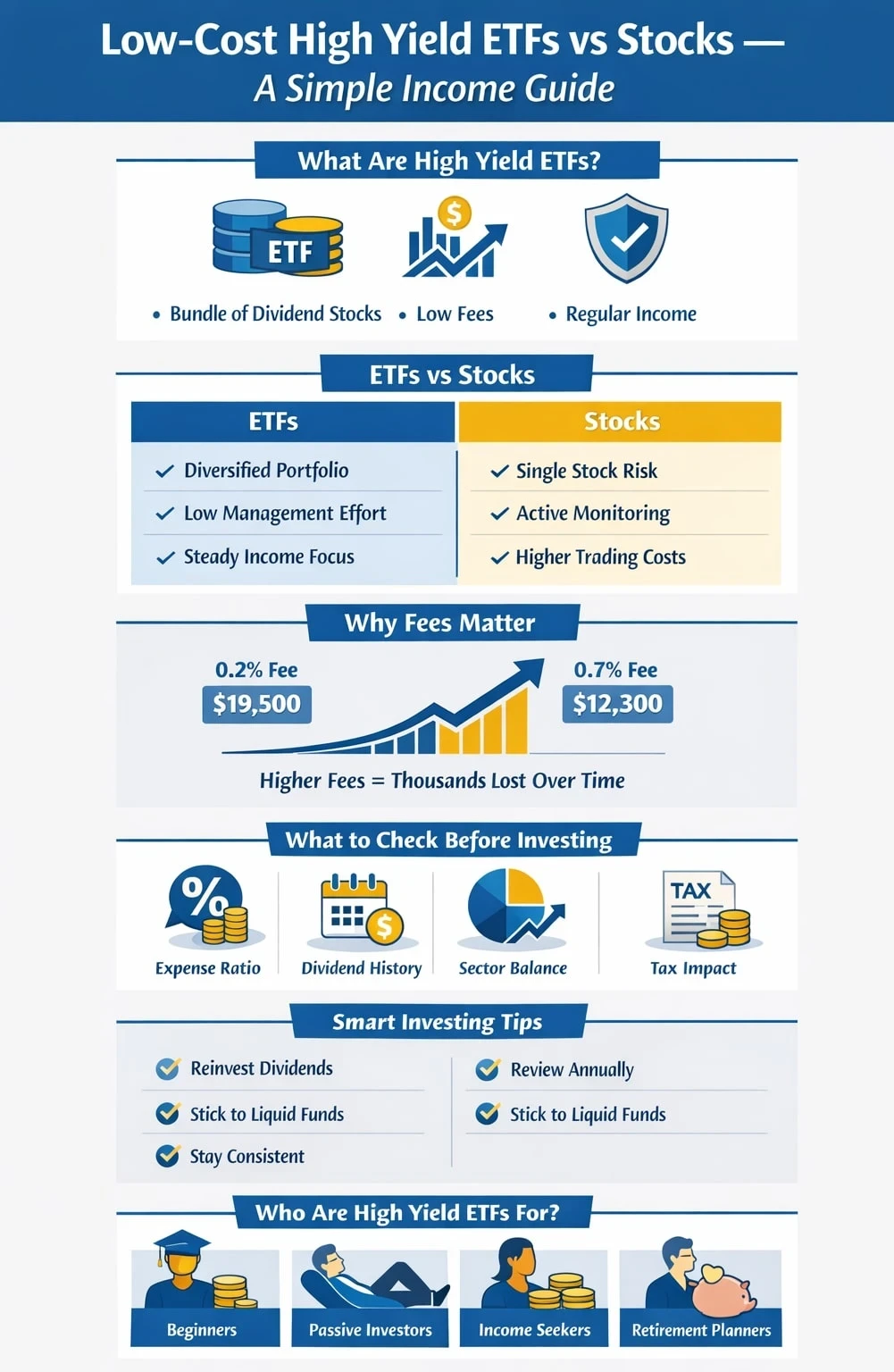
Low-cost high-yield ETFs basically bundle together a set of stocks or bonds known for paying out steady dividends. By combining these assets and keeping management fees low, they aim to give investors more bang for their buck when it comes to income. I find these funds are especially popular with folks looking for steady growth without huge costs eating into their returns.
These ETFs are usually made up of companies that are reliable dividend payers, such as utilities, big established firms, and sometimes even real estate investment trusts. With expense ratios often under 0.2%, you get a healthy yield without having to keep a close eye on every single company in your portfolio.
This approach is a pretty big deal today, especially with market volatility and unpredictable news headlines. For many, low-cost, high-yield ETFs help smooth out the ride and let money work in a less stressful way.
Plus, as dividend-focused investing has become more popular, more issuers have created specialized low-cost high-yield ETFs to give investors more choices. This expansion has allowed investors to find funds that suit their risk levels, goals, and ethical preferences without compromising on fees or income potential, making these ETFs flexible solutions for many portfolios.
Why Investors Lean Toward ETFs Instead of Just Stocks
One question I hear a lot is: why not just skip the fund, buy the best stocks individually, and pocket those dividends directly? Here’s what I’ve noticed through my own investing:
- Built-in Diversification: A typical high-yield ETF spreads your money over dozens or hundreds of companies. This helps cut down the risk that comes from betting on just a handful of stocks.
- Lower Fees: A low-cost ETF can shave off a ton of management or trading expenses over time. Fees matter more than most beginners realize and can quietly eat into returns, a detail I wish I’d paid closer attention to earlier on.
- Simplified Management: ETFs handle rebalancing and company swaps automatically. No need to spend hours tracking earnings or trying to time the market; everything runs in the background for you.
- Consistent Yields: High-yield ETFs focus on companies and sectors with a stable payout record, which is great for anyone who likes seeing regular dividend payments hit their account.
On top of these points, I’ve found that ETFs offer more transparency with their holdings, and most funds update their portfolios and strategies regularly, giving you peace of mind knowing exactly where your investments are allocated. This continuous oversight adds another layer of reassurance compared to managing everything alone.
How These ETFs Stack Up Against Stocks for Everyday Investors
Direct stock investing can be exciting, especially if you love reading up on companies or tracking earnings reports. But it’s not always a fit for everyone. If your style is more set-it-and-forget-it, ETFs have some real perks:
- Time Saver: Picking stocks and keeping tabs on them takes a lot of time. With an ETF, you pick one fund, and you’re done.
- Reduced Risk of Major Losses: Even the best stock picks can get hit by bad news or market panic. With dozens of holdings, a single company’s stumble doesn’t drag down your whole portfolio.
- Easy Access for Small Investors: Getting good diversification with individual stocks is tough unless you can invest thousands right away. With ETFs, you can start small and still get broad exposure.
If you’re unsure how to pick the best time to jump in, check my article here: When to Buy Low-Cost High-Yield ETFs for Best Results.
Additionally, by using ETFs, you gain access to foreign markets, sectors, or opportunities that might be tricky to access directly as an individual investor. Many global high-yield ETFs make it possible to diversify across borders, further spreading risk and potentially boosting overall income.
Things Worth Checking Before Putting Your Money in High-Yield ETFs
No investment comes without risk, even when convenience and stable yields are the main advantages. Before you lock in your money, here are some things I always watch out for:
- Expense Ratio: Make sure you’re picking a fund with fees as close to zero as you can get. Even small differences in fees stack up over the years.
- Dividend History: Look for ETFs with a consistent payout record rather than just chasing the highest current yield. Huge yields can sometimes mean higher risk or coming dividend cuts.
- Sector Exposure: Some funds earn high yields because they are super concentrated in one industry. Double-check you’re not tied too heavily to a single sector unless you’re OK with the risk.
- Tax Impact: Dividend income usually gets taxed, even inside ETFs. Know how this will affect your bottom line, especially if you plan to invest through a taxable account.
If you want a step-by-step guide on picking the right funds, I put together an all-in-one checklist at How to Evaluate Low-Cost High Yield ETFs Investment Options.
Expense Ratios
Expense ratios show how much of your investment goes toward fund management costs every year. A lower number means more money stays in your account. Two funds might look the same on paper, but over 10 years, a 0.5% difference in expenses can knock thousands off your return. Always check this number before hitting buy.
Remember, some ETFs may offer extremely low fees, but always look over closely if they cut corners elsewhere—like having lower liquidity, poor tracking of their benchmark, or extra trading costs. Read the fine print, and don’t be afraid to ask the fund provider for details.
Dividend History
Some ETFs pay juicy yields one year and slash payouts the next. Look at the fund’s distribution history over the last five to seven years. Consistency wins out over chasing the tallest number on the chart. When you want to get into what makes a fund reliable, check my tips here: How to Invest in Low-Cost High-Yield ETFs.
Also, consider whether the ETF focuses on companies with a proven record of growing dividends. Steady growth usually signals the companies inside are stable and capable of keeping up regular payments, even if the overall market hits a rough patch.
Sector and Asset Mix
Not all high-yield ETFs are carbon copies. Some are heavy on real estate, others on banks, and some stay very broad. I always check the breakdown, so I know what’s really inside. A concentrated fund might be riskier than it looks, especially during sector slumps.
Many ETF providers offer composition breakdowns and top holding lists on their websites. Before you invest, visit those pages to get a sense of what you’re actually buying and whether that matches your risk tolerance. This extra step helps you avoid surprises down the road.
Some Handy Tips for Getting the Most Out of High-Yield ETF Investing
Here are a few things I stick to for smoother investing:
- Stick with Broad, Liquid Funds: Funds with bigger trading volumes and assets under management are usually easier to buy and sell, and often track their indexes better.
- Reinvest Dividends Where Possible: Rolling your dividend payments back into ETFs can speed up compounding. Many brokers let you automate this.
- Review Periodically But Don’t Obsess: I check my portfolio once or twice a year, unless there’s huge market drama. Market-timing or jumping funds rarely pays off long-term.
- Use Reliable Tools: Personally, I like tracking my ETF watchlist with TradingView; it’s handy for charts and alerts to spot trends without drowning in data.
For buying and holding, I’ve had a good experience with eToro; it’s easy for beginners and offers a wide set of ETFs and educational resources.
One more tip: avoid the temptation to check and tweak your ETF portfolio too often. Investing works best when you stick with your plan and resist chasing after every new trend or news headline. Over the long haul, staying consistent almost always beats trying to outsmart the market.
Real World Examples: How High-Yield ETFs Fit Into Portfolios
I’ve seen friends and readers build monthly cash flow by adding just a few high-yield ETFs to their portfolios. Whether you’re saving for retirement, padding your emergency fund, or just want a steady income to offset your bills, these ETFs make that goal a bit more achievable. Because they’re steady and easy to automate, they’re a good fit for folks who can’t sit in front of a trading screen all day.
- Retirement Accounts: Many people use high-yield ETFs inside retirement funds (like IRAs) to build up bigger balances and get a steady payout stream later.
- Monthly Income: Reinvesting dividends, or taking them as cash, helps you create your own recurring paycheck if that’s something you need.
- Emergency Funds: For those who want to make their emergency money work a bit harder (while accepting some risk), high-yield ETFs can balance out low-interest savings and checking accounts. It’s not for everyone, but some investors find it worthwhile.
It’s also worth noting that some folks use high-yield ETFs as a core holding, then blend in growth-oriented funds or bonds for balance. This mix-and-match style allows you to fine-tune your risk and income while simplifying your investment decisions. Plus, once your core is set, adding or removing satellite funds is much less stressful than picking single stocks every time you want to adjust your allocation.
Frequently Asked Questions
Here are some things I get asked about investing in low-cost high-yield ETFs vs. picking individual stocks:
Question: Do ETFs pay dividends as reliably as stocks?
Answer: Most high-yield ETFs try to match their underlying stocks’ payout schedules. You can check each fund’s distribution policy to see when and how payments are made.
Question: What happens to my ETF if one of its stocks cuts its dividend?
Answer: One benefit of ETFs is spreading that risk. If a company drops its dividend or even disappears, the impact on the fund is much smaller than if you held that one stock directly.
Question: Can I lose money with a high-yield ETF?
Answer: Price swings and dividend changes can still impact your investment, so losses are possible. Diversification and low fees reduce the risk, but no investment is totally risk-free.
Getting Started with Low-Cost High-Yield ETFs
For anyone looking to grow wealth, add income, or just lower stress with their investments, starting with low-cost high-yield ETFs is a straightforward move. It’s a way to get broad exposure and steady income without needing to spend hours researching or managing every detail yourself.
I always say, begin with a clear goal, keep your eye on fees and consistency, and use smart tools to help you track things. A little time up front can really pay off later.
If you want to research or buy your first low-cost high-yield ETF, start with trusted platforms like eToro or use TradingView for watchlists and charting. You’ll get a smoother, less stressful investing experience than jumping into stocks solo, and your future self will thank you for setting up a strong foundation!