Hunting for low-cost, high-yield ETFs is a smart way to build passive income and keep more of your investment returns. With hundreds of funds competing for your attention, finding the right ones can get overwhelming fast. Relying on reliable research sources helps filter out the noise and reveals the best options for your needs. Here, I’ll walk through where I like to start my search, what tools actually help, and a few things to watch out for before parking your money in an ETF for income.
Disclaimer: This article contains affiliate links. If you open an account through these links, I may earn a commission at no additional cost to you. Investing involves risk, including the possible loss of capital. eToro is not available in all countries. Eligibility depends on your region. Always consider your individual circumstances before investing.
Why Research Matters When Picking Low-Cost High-Yield ETFs
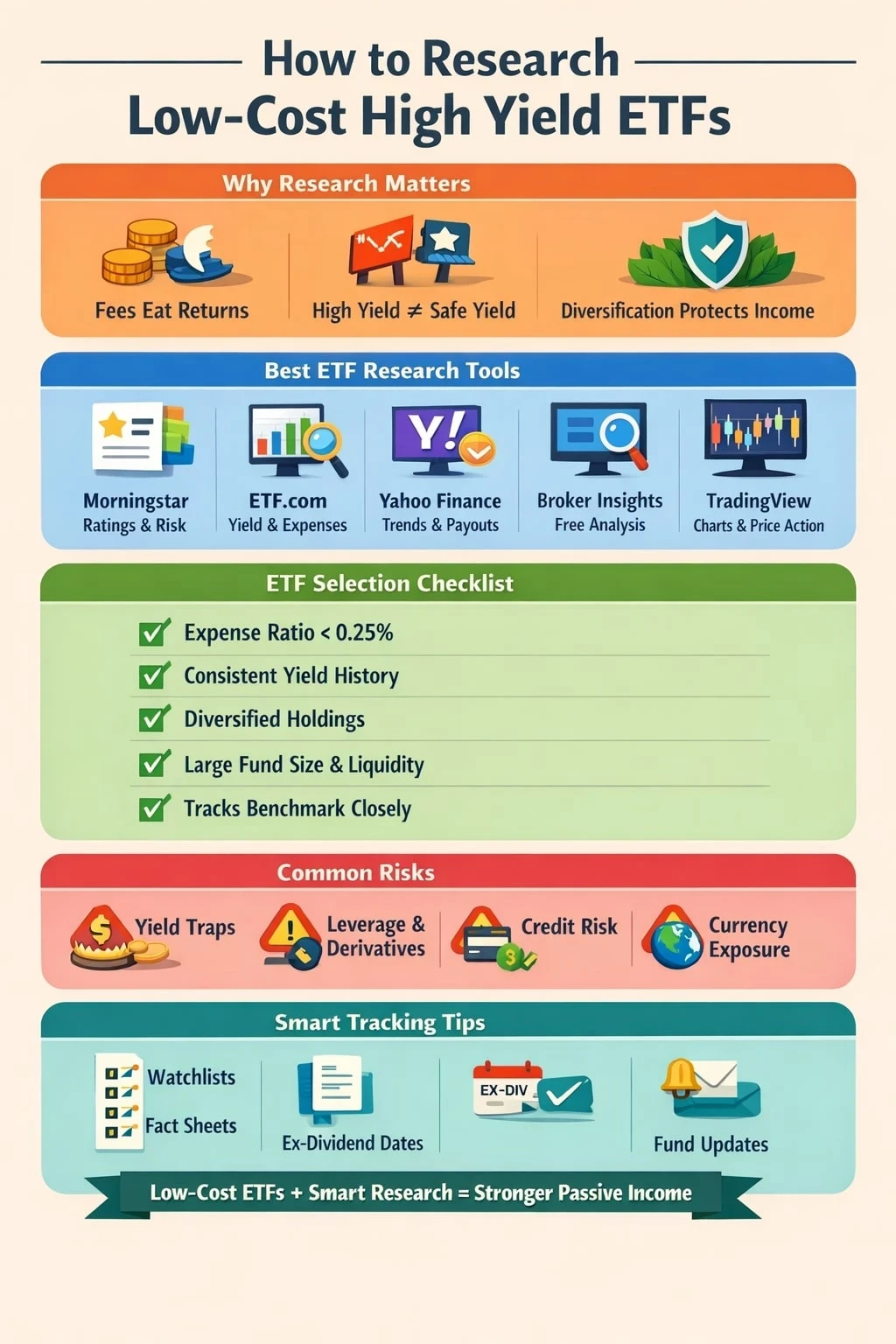
There’s more to selecting a good ETF than just jumping on the newest fund trending on finance TikTok. Low expense ratios and trustworthy yields should be your top priorities, but the small print can hide a lot. Costs add up over time; even just a 0.3% difference in fees could mean thousands lost to expenses over decades. Careful research helps you avoid funds that advertise high yields but come with sneaky risks or underwhelming past performance.
This research also tells you if a fund is really diversified, how stable the income is, and if the manager has a good track record. I find it’s usually worth the extra effort to dig beyond the surface before you buy. If you want more on what to look for in a fund, check out this guide on how to evaluate low-cost high-yield ETF investment options.
Where I Go for ETF Research: Trusted Platforms and Tools
Several online platforms do a really good job gathering up data, breaking down fees, and comparing yields. Here are a few I regularly use, with details on what makes each one pretty handy:
- Morningstar: Offers all-in-one ETF reports, easy-to-read star ratings, and clear breakdowns of risks, returns, and expenses. Some features are behind a paywall, but a free account still gives you plenty of info.
- ETF.com: Packs a ton of data about every ETF, including true expense ratios, distribution yield, index tracked, and portfolio breakdown. I like their Fund Finder for comparing multiple options quickly.
- Yahoo! Finance: While not as specialized, it’s a great place to quickly scan distribution yields, charts, and look at analyst commentary. It’s also easy to spot trends over time.
- Brokerage Research Hubs: If you already use an investment app or broker, platforms like eToro provide their own ETF screeners, ratings, dividend histories, and analyst insight for free.
- Trading Platforms for Charting and Trends: For technical analysis of ETF price action, I use TradingView. You get advanced charting, real-time data, and can track how dividend-focused funds move with the market.
Using more than one source helps confirm performance stats and exposes any differences that could affect your decision on yield or risk. This way, you won’t be thrown off by a single platform’s take. For beginners, taking time to compare several research hubs also builds your confidence as an investor.
Some platforms like Fidelity and Vanguard offer educational articles alongside their tools, digging into the strengths and risks of ETF investing. Reading through a couple of these can help you understand the basics before jumping into any specific fund’s info.
Getting Started: What to Look For in Low-Cost High-Yield ETFs
I always start by narrowing down the universe of ETFs using a few straightforward filters. Here’s my basic checklist that’s helped me avoid a lot of costly mistakes:
- Low Expense Ratio: I look for funds with total annual expenses under 0.25% if possible. They’re everywhere now and can make a huge difference over time.
- Yield Consistency: It’s tempting to chase the highest yield, but funds with erratic payouts make budgeting really tough. I prefer a steady income year to year instead of a one-hit wonder.
- Underlying Holdings: Make sure the fund isn’t just one or two stocks or bonds propping up the yield. Diversification helps protect against unexpected losses or market hiccups.
- ETF Size and Volume: Bigger, more liquid funds are usually safer and less likely to shut down since they attract more ongoing attention from investors.
- Benchmark Tracking: High yield is great, but it should still closely track its benchmark index so you’re not taking on hidden risks that might show up later.
- Distribution Schedule: Some funds pay out monthly, while others do it quarterly. Depending on whether you want a frequent income or are fine waiting, this detail can matter a lot.
For more tips on getting started, this article on how to invest in low-cost high-yield ETFs is worth checking out. If you’re new to ETF investing, consider starting with funds run by major providers like Vanguard or Schwab to minimize risk.
Comparing Popular ETF Screeners
ETF screeners let you filter funds by yield, cost, sector, size, and more. These are some of the ones I’ve found super useful for narrowing down a long list of options when you want to keep things clear:
- ETF.com Screener: Lets you search by dividend yield and expense ratio, while listing distributions, assets, and liquidity all in one place.
- Morningstar ETF Screener: Tons of filters and solid guidance on performance history, yield, fund size, ratings, and sector exposure.
- Brokers’ Screeners: Big brokers like eToro and Fidelity have robust ETF screeners, handy if you already have an account with them.
Screeners are easy to use; you just pop in your target yield or fee, and they’ll show you what matches. I always double-check fund facts against the official fact sheet or website before making any trades. Remember, the most eye-catching yields aren’t always the safest picks.
Some screeners even let you compare lineups side by side or export information to a spreadsheet. If you’re the analytical type, this can help you track small differences that might pay off long term.
Risks to Watch Out for When Chasing High Yield
Some high-yield ETFs can hide sneaky risks that aren’t obvious upfront. Here are a few things I always check for before locking in an investment:
- Yield Traps: If a yield looks way higher than average, there’s often a reason. Could be risky holdings or declining payouts; always check how the fund generates income and whether those sources seem sustainable.
- Leverage and Derivatives: Some funds use leverage to juice returns, which can also increase losses. I avoid leveraged high-yield ETFs unless I truly understand the risks and am prepared for volatility.
- Credit Risk: With bond or preferred stock ETFs, higher yields often mean more exposure to less stable companies or sectors. See if the fund’s holdings are mostly investment grade or something riskier to get a feel for the risk level.
- Currency and Global Risk: International ETFs can offer higher yields, but currency swings can affect returns. Check where the fund is getting its income and if it’s hedged or not.
A little due diligence can save a lot of heartache down the road. If you’re new to these risks or need a more super detailed breakdown, the article on the benefits of low-cost high-yield ETFs covers this topic in more depth.
Remember, no fund is risk-free. High-yielding funds may at times lower payouts or run into sector problems. Staying sharp and reading up before and after investing helps you avoid costly mistakes.
Smart Ways to Track Your ETF Research
After I shortlist a few ETF candidates, I keep tabs on them for a couple of weeks (or even months) before hitting buy. Here are some easy ways to stay organized:
- Set up a free watchlist on Yahoo! Finance or TradingView so you can monitor price, volume, and yield in real-time.
- Bookmark each fund’s official page and download the latest fact sheets for comparison so that you have easy access to the accurate data.
- Sign up for fund updates and financial news that might impact dividends or regulations connected to your funds.
- Track ex-dividend dates and payout schedules to see how often and how much funds actually pay out, helping you forecast your income more reliably.
Being organized helps you feel more confident about your choices, and it can alert you if something changes with your funds before you invest. If a fund suddenly changes its yield or shifts its holdings, you’ll catch it faster this way. Tracking gets easier over time and helps you avoid surprises.
Common Questions When Researching ETFs
How much do fees really impact my returns?
Even a difference of 0.25% in annual expense can mean thousands saved over a few decades, especially with reinvested dividends. Lower fees mean more of your money works for you instead of the fund.
Can I trust the yield numbers shown on fund pages?
Always check both trailing and SEC yields, and remember that past yields aren’t guaranteed. Some funds pay variable distributions that can drop quickly in tough markets.
Should I stick to U.S. funds or go global?
U.S. funds are simpler taxwise and often more transparent, but global funds can boost yield. It’s up to your risk tolerance and comfort level with international holdings.
What if my ETF drops in price?
Price dips happen, even in strong funds. Focus on why the price moved—sometimes it’s marketwide, sometimes it’s about the fund itself. If the fundamentals and yield are still sound, a dip can turn into a buying opportunity. Otherwise, you might want to move your money somewhere more stable.
Final Thoughts
Taking the time to research low-cost, high-yield ETFs before you invest is a smart move that can pay off for years. Using trusted data platforms, checking more than one source, and being picky about costs and yield stability really makes a difference. Keep tracking your funds and check in on them every few months. The market and yields change, and even great funds need ongoing attention. Happy hunting for those steady, wallet-friendly returns!