If you’re scanning the market for big yields with low fees, it makes sense to check out low-cost high-yield ETFs. These investment products get a lot of buzz for blending budget-friendly management costs with payouts that seem pretty attractive. The upside is tempting, but I’ve noticed a lot of folks don’t always stop to look at the potential risks that come along for the ride. I’m going to dig into what you need to know before tossing any cash into these ETFs, so you can make sure you’re not getting caught off guard.
Disclaimer: This article contains affiliate links. If you open an account through these links, I may earn a commission at no additional cost to you. Investing involves risk, including the possible loss of capital. eToro is not available in all countries. Eligibility depends on your region. Always consider your individual circumstances before investing.
What Are Low-Cost High-Yield ETFs?
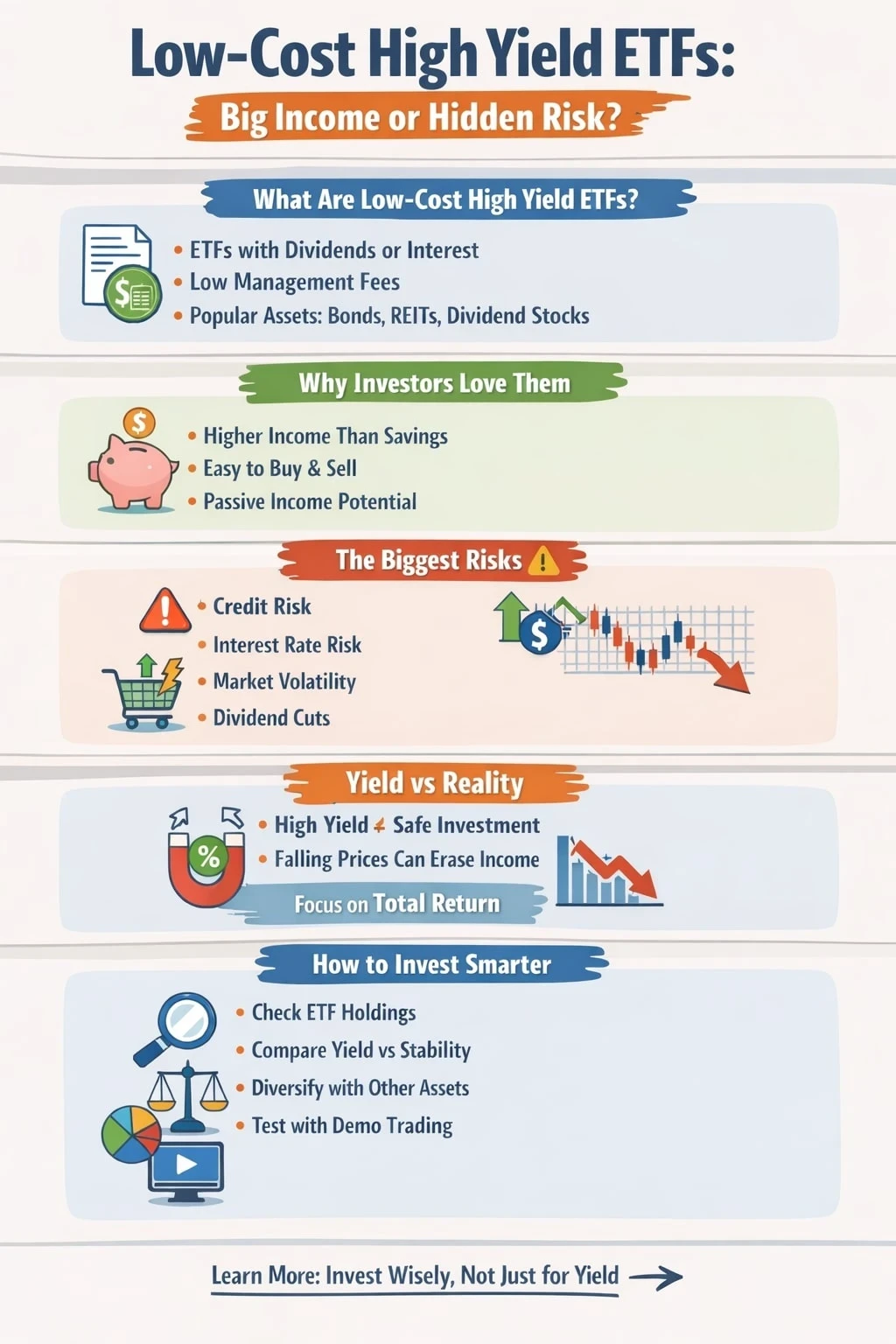
Low-cost high-yield ETFs are funds that track an index or group of investments known for paying out hefty dividends or interest, all while charging a minimal management fee. These usually focus on things like corporate bonds, real estate investment trusts (REITs), or dividend-paying stocks. Since ETFs trade on an exchange like regular stocks, it’s pretty easy to buy and sell them anytime the market’s open.
Usually, the appeal comes from two big promises: a modest fee every year, and an income stream from the fund’s holdings. For more on how these ETFs work, check out my deep dive on how low-cost high-yield ETFs work.
Main Risks of Low-Cost High-Yield ETFs
Even though these ETFs keep costs down, chasing high yield comes with a few hazards you don’t want to ignore. Based on what I’ve seen and learned, here are the main things you should keep in mind before adding these to your portfolio.
- Credit Risk: A lot of high-yield ETFs focus on assets, like junk bonds or smaller companies, that can pay above-average rates simply because they’re riskier borrowers. If companies in the fund go through tough times or even default, it chips away at your returns.
- Interest Rate Risk: When interest rates rise, bond prices often fall. High-yield ETFs with heavy bond exposure can drop in value pretty quickly if rates go up.
- Market Risk: These ETFs still move up and down with the stock or bond markets. If the market tanks, your ETF’s value will probably drop as well, no matter how high the yield might look.
- Liquidity Risk: While most ETFs trade easily, some high-yield versions hold investments that aren’t so easy to sell fast during rocky markets. This could mean bigger price swings or trouble selling at a fair value when you’re ready to cash out.
- Dividend Cuts: High payout rates aren’t guaranteed. Companies or funds can sometimes cut dividends, which directly reduces your expected income. Be prepared for those surprises.
Why Low Costs Don’t Cancel Out Risks
Management fees are just one slice of the overall picture. Sure, a lower expense ratio means you get to keep a bit more of your money over time, but none of these fees protect you from swings in price, company bankruptcies, or sudden interest rate hikes. It’s easy to fall into the trap of thinking cheap means safe, but I’ve seen plenty of times when a low-cost, high-yield ETF loses value fast after a downturn. Watching market news and being alert to portfolio shifts can help you avoid major pitfalls.
If you want to compare costs and benefits, I’ve written a full breakdown of low-cost ETFs vs traditional funds.
How Yield Chasing Can Lead to Portfolio Trouble
It’s easy to be tempted by an ETF advertising a 6%, 7%, or even 8% yield while mainstream savings accounts are much lower. But higher yields are often a tradeoff for taking bigger risks. Sometimes, the companies or bonds in these ETFs are paying more simply because there’s a higher chance things could go wrong.
A big portfolio filled mostly with high-yield funds can leave you exposed if these investments sour. I’ve come across stories from people expecting a reliable cash flow, only to watch their dividend get cut right when they needed it most. Mixing in some high-yield funds makes sense for extra income, but betting your whole retirement on them is risky. If you’re curious about blending income and stability, check my guide on using low-cost high-yield ETFs for retirement savings.
Common Types of High-Yield ETFs and Their Specific Risks
Not all high-yield ETFs are built the same. The source of yield impacts what kind of trouble you might run into. Here are a few popular types I see and what to watch out for with each:
- High-Yield Corporate Bond ETFs: These are held bonds from companies with lower credit ratings. They pay more, but are way more likely to face setbacks or even defaults if the economy slows down.
- REIT ETFs: Real estate investment trusts can pay well in strong markets but get hammered during recessions or when property values fall. Big drops in rental income or higher vacancy rates hit payouts hard.
- Dividend Stock ETFs: These focus on stocks with steady dividends, but if profits slide or the market takes a hit, dividends can drop unexpectedly. Even proven companies sometimes pause or cut their payouts.
Extra Considerations: Taxes, Turnover, and Variety
Beyond the basic risks, I always keep an eye on a few other things:
- Taxes: High-yield income often pushes out taxable distributions, even in ETFs labeled as “tax efficient.” If you’re not holding these in a tax-deferred account, your tax bill might be higher than you expect. Consulting with a tax professional can help you plan for this ahead of time.
- Fund Turnover: Some ETFs trade frequently, chasing the highest yield. High turnover can quietly raise costs and lower after-tax returns, cutting into the gains from low management fees.
- Variety: If you load up on high-yield funds, you can be less diversified than you think when most of your returns are tied to risky corners of the market. Spreading out your investments helps smooth the ride and can limit big surprises.
Quick Guide: How to Size Up Low-Cost High-Yield ETFs Safely
- Check What’s Inside the Fund: See what companies, bonds, or properties the ETF holds. If most of the assets have sketchy credit ratings or wild swings in payouts, it’s a warning flag.
- Look Beyond Just Yield: If the yield is way higher than the competition, there’s usually extra risk. Compare different funds and look for ones that find a balance between payout and stability.
- Consider Total Return: A massive yield doesn’t make up for falling share prices. Track historical total returns (price and payouts) for the true picture.
- Read the Prospectus: It may be boring, but the prospectus will tell you a lot about the fund’s game plan, risks, and what could shake up payouts.
- Start Small or Try Demo Trading: Test out an ETF with a tiny investment, or try ideas using demo platforms like eToro or TradingView before you commit larger sums.
Practical Tips: Managing the Risks
Making these ETFs part of your investment mix doesn’t have to be all or nothing. Here’s what’s worked for me and others who want income but don’t want to take on too much risk:
- Mix in other asset classes like broad index funds or cash so you’re not leaning totally on high-yield ETFs.
- Review your holdings at least a couple of times a year. Watch for big changes in yield, underlying assets, or market trends that could add unwanted risk.
- Consider using stop-loss orders or alerts on your brokerage account to help manage sudden drops.
- Stay informed on interest rate trends, inflation, and credit ratings for the companies or properties your ETFs own. Monitoring the news can help you act quickly if major changes occur.
Frequently Asked Questions
Are low-cost high-yield ETFs ever really safe?
Low fees don’t protect against economic downturns, market crashes, or dividend cuts. These ETFs can work for some investors, especially in moderation, but it’s important to know the risks and spread out your portfolio for better protection.
How are high-yield ETF dividends taxed?
Most fund payouts are taxed as regular income, not qualified dividends, especially for bond-heavy or REIT ETFs. Be prepared for potentially higher tax bills and check with a tax advisor for your individual situation.
Can I use these ETFs for regular retirement income?
Some retirees do use them for income, but you’ll want to pair them with more stable investments. Think about how long you’ll need the income, your risk comfort level, and your ability to weather swings. I get into more detail in this post: Can I Use Low-Cost High-Yield ETFs for Retirement Savings?
Final Thoughts
Low-cost high-yield ETFs can earn a spot in your portfolio, but they aren’t a free ride to stable income. Cheaper fees are great, but higher risks, like defaults, market drops, and shrinking payouts, are definitely out there. Pay attention to what’s inside the fund, look at the total return, not just the yield, and keep your whole financial plan in mind. Test your ETF investing skills on demo platforms like eToro or TradingView to build up your confidence before going big. Careful research and staying sharp make a big difference when it comes to picking the right high-yield ETF for you, so never stop learning and keep a close eye on your risks. Happy investing!