
ETFs (Exchange-Traded Funds) are one of my favorite tools for building specialized portfolios without incurring high fees or needing extensive market experience. The cool thing is, there’s a ton of niche strategies you can use with ETFs beyond the basic index tracking funds that everyone talks about. I’ve spent plenty of time checking out these specialty corners of the ETF universe, and there are some pretty handy ways investors can add diversification or target unique opportunities if you know what you’re looking for.
Disclaimer: This article contains affiliate links. If you open an account through these links, I may earn a commission at no additional cost to you. Investing involves risk, including the possible loss of capital. eToro is not available in all countries. Eligibility depends on your region. Always consider your individual circumstances before investing.
What Does “Niche” Mean in ETF Investing?
When I talk about niche ETF strategies, I mean funds that focus on very specific themes, industries, or investment factors rather than broad markets. Instead of owning the entire S&P 500 or a general international basket, you can zoom in on things like cybersecurity, clean energy, cloud computing, or even dividend growers. These funds often track custom indexes built around a single idea or market segment.
Niche ETFs are great for people who want to express a particular view, fill a gap in their overall portfolio, or just spice things up with something beyond vanilla market returns. It’s super important to understand what you’re getting, since many niche products can be more volatile or thinly traded than the popular big index funds.
Popular Niche ETF Strategies Worth Exploring
ETFs have branched out from their plain vanilla roots into some pretty creative directions. Here are a few types of niche strategies I’ve seen gain real traction and why they could be worth a look:
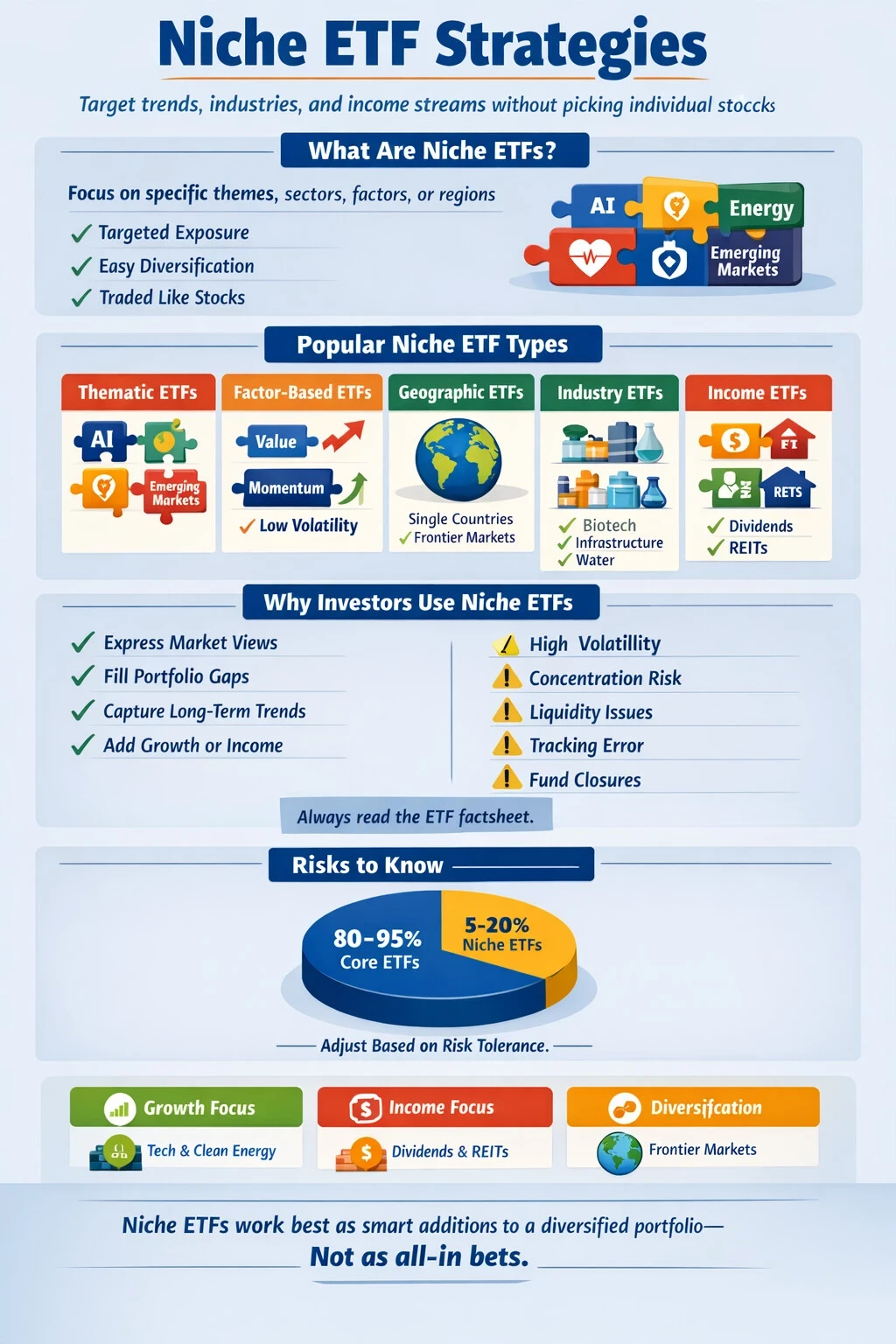
- Thematic Investing: These ETFs track trends like artificial intelligence, eSports, renewable energy, or robotics. In short, they follow money flowing into next-level cool ideas and industries that are getting lots of attention.
- Factor-Based Strategies: Rather than focusing on specific sectors, these funds look for stocks with certain “factors” like value, momentum, low volatility, or quality. It’s a simple way to bring academic investing ideas into real-world portfolios and give your investments a bit of a boost.
- Geographic Focus: Feeling adventurous? If you want exposure to frontier markets or smaller economies such as Vietnam, Poland, or countries in the Middle East, there are ETFs designed just for this purpose. These can give you access to corners of the globe that typical funds might ignore.
- Single Industry or Sub-sector ETFs: These narrow it down to things like biotech, infrastructure, water, or even rare earth metals. They’re perfect for investors who want to target just one area of the market and include something distinct in their holdings.
- Dividend & Income Niche Funds: Not just your standard high-yield fund. Some ETFs focus on companies with a steady habit of raising dividends, or those showcasing unique payout structures. Check out this article I wrote about finding low-cost, high-yield ETFs, which breaks down how to compare these specialized funds effectively.
On top of these, there are also ETFs focused on commodities like gold, lithium, or agricultural products; actively managed ETFs for those who want some stock picking alongside passive indexes; and even funds dedicated to ESG (Environmental, Social, Governance) principles if responsible investing is on your radar.
How To Start With Niche ETF Investing
If you’re new to ETFs or just haven’t stepped outside the biggest index tracking funds, going niche can seem intimidating. I’ve been there, so here’s how I started to make sense of all the options and how you can follow a simple process:
- Identify Your Theme: Think about what you want exposure to. Is it new tech, green energy, emerging market trends, or something else that matches your interests or fills a gap in your holdings?
- Screen for Funds: Use a trusted research tool. TradingView is pretty handy for comparing ETF performance. I also check data from fund issuers and reliable ETF research sites.
- Check the Index: Every niche ETF tracks some kind of index or set of rules. Read the fact sheet; it tells you what the fund actually buys and the selection process behind it. Understanding this helps you avoid surprises.
- Compare Fees: Niche ETFs sometimes come with higher expense ratios, which can eat into returns. Always compare fees against similar options. I explain this topic in more detail in this post.
- Look at Liquidity: Volume and spreads matter a lot. If an ETF is not widely traded, it may be hard to get in or out without moving the price more than you’d like. Look for funds with a solid daily trading volume for smoother investing.
Taking these steps helps you zero in on funds that suit your goals, reducing the chances of picking a product that’s expensive or hard to trade. It also puts you in the driver’s seat for customizing your portfolio.
Challenges & Risks With Niche ETFs
Specialized ETFs are definitely exciting, but there are some trade-offs to keep in mind before you add them to your portfolio:
- Concentration Risk: With their narrow focus, these ETFs often have more volatility compared to a broad market fund. A sector-only or thematic ETF will swing hard when news affects that particular segment.
- Liquidity Risk: Some funds, especially the newer or less popular ones, don’t trade much daily. The bid-ask spread can be wider, adding to your transaction costs.
- Tracking Error: Because niche indexes are created differently and funds may trade more often to stay in line with their targets, they might lag behind their stated benchmark. Sometimes, this lag is bigger than the expense ratio indicates.
- Too Niche Problems: Not every specialized ETF sticks around. If a fund doesn’t gather enough assets, it can face closure, and investors will then have to sell and reinvest elsewhere.
The key is to know what you’re buying and keep these funds as part of a more stable plan. Don’t go all in on the “trend” du jour—balance is crucial.
Another thing to consider: Niche ETFs can sometimes hold companies that aren’t pure plays in the thematic area, so double-check the holdings if you want targeted exposure.
Comparing Niche ETF Providers and Platforms
I usually shop around before settling on a platform to buy or monitor ETFs. eToro makes it easy for beginners to get started, and they frequently highlight trending funds by theme and region. TradingView is great for real-time screening and keeping tabs on technical trends—a solid option if you want to get past basic price charts.
I also suggest reading reviews or user forums before committing to a new fund or broker. This guide I made will help you with the research steps if you want more info.
Fees, user experience, and research tools can vary from one provider to the next, so don’t be shy about trying a few demo accounts before you settle on your main trading platform. The right provider can make tracking, buying, and selling niche ETFs much easier.
Practical Examples of Niche ETF Portfolios
Here’s a quick sketch of how someone might mix niche ETFs into an existing portfolio, depending on their goals:
- Growth Focused: Add a cloud computing ETF, a cybersecurity fund, and a clean energy ETF to a base of broad US or global stocks. This can add growth from fast-moving themes.
- Income Focused: Try high-yield infrastructure or REIT ETFs, plus a fund tracking dividend growers for a steady cash flow.
- Diversification Play: Bring in a frontier markets ETF or a single country fund to spread out geographic risk—perfect if your existing portfolio is heavy in developed countries.
I usually put 5% to 20% of my portfolio into these niche plays. That way, I open up some opportunity for higher rewards (and a bit more risk), while keeping the foundation of my investments stable by sticking to broad, lower-cost ETFs. You can always adjust this blend as your experience grows or your investment goals change over time.
Common Questions About Niche ETF Investing
Here’s what I get asked a lot about specialty ETFs and my take on each:
Question: Are niche ETFs riskier than regular funds?
Answer: Generally, yes. Because they focus on smaller parts of the market or newer trends, the ups and downs can be bigger than regular index funds. That’s why I stick to smaller positions to balance things out.
Question: How do I find the best niche ETF for my portfolio?
Answer: Start with trusted research platforms, read the ETF’s fact sheet, and make sure the fund has a track record and enough trading volume. Comparison tools online can save you lots of time.
Question: Can niche ETFs work with a long-term investing plan?
Answer: Absolutely, as long as you combine them with broader core funds. Niche ETFs can give your portfolio a tilt towards growth, income, or specific trends, but shouldn’t be the whole strategy.
Final Thoughts On Niche ETF Strategies
Mixing in niche ETF strategies can keep your portfolio interesting and help you catch market trends that bigger index funds might miss. Remember to do your own research, watch out for fees and liquidity, and use these funds as complements to your core investments.
If you’re curious about building a more focused ETF mix or want to scout out what’s available, tools like eToro and TradingView are both worth checking out. And for more in-depth ETF research tips, bookmark my super-detailed ETF research guide. That way, you’ll have plenty of resources to check out specialty funds and keep improving your portfolio as you learn more.