If you’ve just invested in ETFs (exchange-traded funds), you’re already making a move that keeps things simple and accessible for most investors. But once that money leaves your account, what should you focus on next? The good news: ETF investing isn’t a “set it and forget it” situation. Mapping out your next steps can help create better long-term results and give you a sense of control over your growing portfolio.
Disclaimer: This article contains affiliate links. If you open an account through these links, I may earn a commission at no additional cost to you. Investing involves risk, including the possible loss of capital. eToro is not available in all countries. Eligibility depends on your region. Always consider your individual circumstances before investing.
What to Expect After Your First ETF Purchase
You’ve picked out a few ETFs, maybe after combing through guides like this research checklist, and clicked “Buy.” This is often the easiest part, but new investors sometimes aren’t sure what actually happens next. Here’s a quick rundown of what you might notice post-purchase:
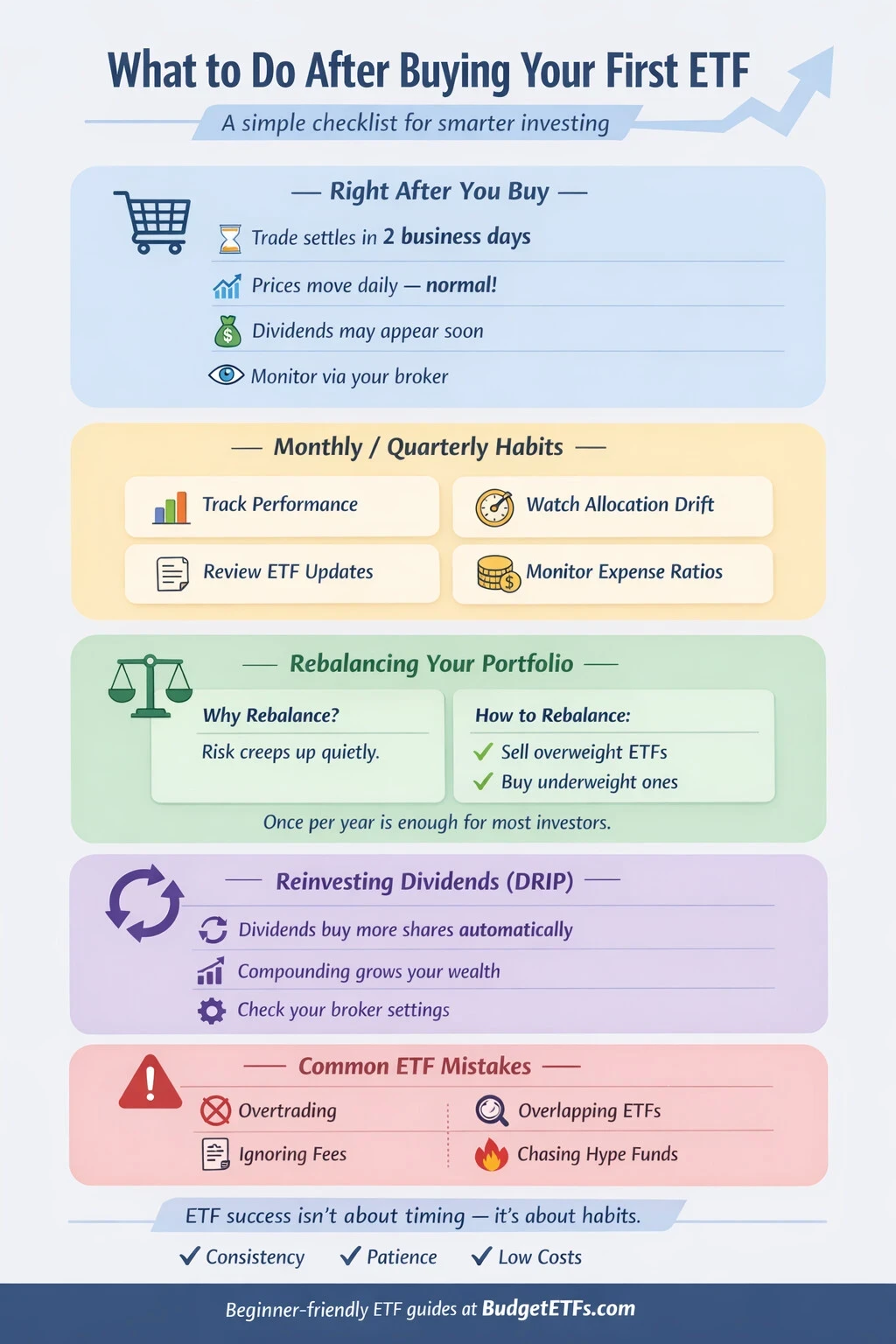
- Settlement time: For most ETFs, it takes two business days after you buy for the trade to be fully processed.
- Fluctuating prices: ETFs trade all day like stocks, so the prices will move up and down. That’s completely normal and nothing to panic about.
- Ongoing dividends: If you bought dividend ETFs, you may soon start seeing cash paid out (often every quarter or month, depending on the fund).
You can check in on your positions regularly with your broker, plus view the current value, any dividends earned, and transaction details. Some people love checking the daily changes, while others only peek once a month. Either style can work, but being aware of what’s happening, even if you’re a set it and leave it type, helps build solid investing habits. Watching your investments grow and learning how they respond to the market can also provide you with more confidence and help you adjust your strategy as needed.
Monitoring Your Portfolio: The Basics
After the big buy, keeping tabs on your ETF portfolio is pretty handy. Monitoring isn’t about micromanaging; it’s more about noticing patterns or shifts that might need your attention down the road.
- Track your performance: Use online tools from your broker, or consider platforms like TradingView for analysis and charting. It’s a nice way to keep a bird’s-eye view of your whole investing picture.
- Watch your allocation: Your original mix of ETFs (like stocks, bonds, or international funds) could drift as prices change. If your 60/40 split starts turning into 70/30 without you meaning to, it might be time to see if you want to adjust back.
- Check for changes in the funds: Most ETFs don’t change much, but sometimes a fund will tweak its holdings, bump up its fees, or switch up its strategy. Reviewing fund updates or fact sheets, usually emailed to you, helps keep you in the loop.
- Keep an eye on your costs: Even low-cost ETFs can have small expenses. Tracking the annual costs and comparing them to guides like this review of popular low-cost ETFs helps you see if you’re still on track.
This doesn’t have to be a daily task. Setting a monthly or quarterly reminder to check in is easy and can prevent any surprises from sneaking up on you. If it helps, make use of financial calendar apps or set simple reminders on your phone.
Rebalancing Strategies: Keeping Your ETF Mix in Shape
ETFs make it very easy to craft a portfolio that covers all your bases, but those allocations can get thrown off if one part of your portfolio grows faster than the others or market conditions cause some areas to lag.
- Why rebalance? Over time, your asset allocation can drift. If stocks rally while your bond ETFs lag, you might be taking more risk than you intended.
- How to rebalance: Many investors simply sell some of what is overweight and buy more of what is underweight. Some brokers even offer automatic rebalancing features for those who want to keep things on autopilot.
- How often? Some folks check in once a year, others every quarter. What’s important is just having a plan that matches your risk level and staying consistent, not chasing the latest hot trend.
Trading fees on ETF purchases have dropped a lot in recent years on many platforms, including eToro. Even so, it’s smart to double-check before you make frequent or large moves. If you find your portfolio is out of balance, a small adjustment now can help avoid larger changes later.
Reinvesting Dividends: The Power of Compounding
ETF dividends can show up in your account as cash, or, even better, you can set them to automatically buy more shares of the fund. That’s called DRIP (Dividend Reinvestment Plan), and it can help you keep growing your holdings without any extra work.
- Why it’s useful: Reinvesting keeps your money working, taking advantage of compounding over time.
- How to set it up: Most brokers let you turn dividend reinvesting on with just a few clicks in your settings. If you prefer to take your dividend cash and invest it elsewhere, you have that option too.
It’s very important to check what your broker’s default is, as not all accounts automatically reinvest dividends. Taking a few minutes to set this up can lead to significant portfolio growth as your investments compound every year.
Stay Informed: Keeping Up With ETF News and Updates
The world of ETFs is always growing, with new funds launching and older ones sometimes closing down. Staying updated can help you spot opportunities or avoid problems. Here are a few things I do to keep learning:
- Sign up for fund manager newsletters: Major ETF issuers send monthly updates about performance, index changes, and upcoming events that affect their funds.
- Check reputable news sources: Following credible finance outlets or checking recent reviews, like this one on low-cost high-yield ETFs, keeps you in the know.
- Watch for tax changes: Tax laws around investing can change from year to year. Consider a quick search at the end of each tax year, or talk to a professional if things get confusing.
Joining a community, whether that means participating in a forum, a Reddit group, or a social platform dedicated to investing, can also help you share experiences and pick up tips from others walking the same path. Compared to going it alone, you’ll get more exposure to different views, strategies, and alerts about new trends or pitfalls.
Common ETF Pitfalls and How to Avoid Them
While ETFs are often straightforward, some easy mistakes trip up new investors. These include overtrading, ignoring fees, or chasing the hottest themes without proper research. Here are a few ways I keep myself in check:
- Stick to your strategy: It’s tempting to grab trending ETFs, but sticking to your plan (unless your goals have changed) usually works better in the long run.
- Review the underlying holdings: Sometimes, different ETFs own many of the same companies, which can lead to overlap and less true diversification than you thought.
- Double-check liquidity: Most established ETFs are very liquid, but some niche funds trade less frequently, which might mean bigger price jumps.
Careful research helps buyers make informed decisions. Don’t hesitate to revisit your ETF’s info page or check in with your broker if something looks unusual or unclear. Reaching out for a second opinion is always better than flying blind.
Frequently Asked Questions
Here are some questions I get quite a lot from other new ETF investors:
Can I lose money with ETFs?
Yes, ETF values can drop if the market or a specific sector declines. Diversification helps reduce risk but doesn’t erase it. Staying diversified is important for toning down major swings in your investment’s value.
How do taxes work on ETF investments?
Dividends and capital gains from ETFs may be taxable, depending on your country’s rules. Some funds are designed to be more tax-efficient. Checking in with a tax advisor can help clarify your situation. Always read your annual statements and keep organized records.
Should I choose manual or automatic investing going forward?
If you don’t want to stress over regular ETF buying, setting up automatic investments (like monthly deposits) works well. Plenty of platforms, including eToro, offer recurring investment options that smooth the way for hands-free investing and can help you build wealth slowly and steadily.
Long-Term Habits That Keep Your ETF Investing on Track
ETF investing is best seen as a long game. Building good habits from the start can help you get the most out of your portfolio’s growth while minimizing stress. Here are a few practices I follow that make a real difference over time:
- Automate contributions: Setting up regular, small buys means you don’t have to “time the market.” Small, steady investments win out over panic buying or selling.
- Review your goals each year: Life changes, and so do financial needs. Take a yearly look at your investing plan to make sure your ETFs still fit your retirement, education, or savings needs. Adjusting your strategy to reflect big life shifts is smart.
- Use tracking tools: There are tons of free and paid apps (like TradingView) that pull together all your accounts for an easy snapshot. They make it easy to see trends and spot new opportunities.
- Don’t neglect the paperwork: Keeping your broker statements, tax documents, and any correspondence from ETF providers organized can save you big headaches down the line. Starting a simple digital folder now keeps things clear for the future.
Building a solid ETF portfolio is about small, steady steps. If you’ve just made your first purchase, tracking your progress and building good habits can lay the foundation for financial growth year after year. Remember, staying curious, asking questions, and adjusting as you go can make the ride smoother and more rewarding in the long run. Your future self will thank you for the little bit of effort you put in now to get your investments on track.