The digital economy is growing fast, and exchange-traded funds (ETFs) are right at the heart of this mix. From cloud computing and artificial intelligence to blockchain and cashless payments, the landscape is in constant motion. I pay close attention to how these changes influence investing, and ETFs are becoming a pretty handy way for regular people to get in on these digital trends. Here’s my perspective on the future of ETFs in the digital economy, plus practical takeaways for investors curious about where the market is heading.
Disclaimer: This article contains affiliate links. If you open an account through these links, I may earn a commission at no additional cost to you. Investing involves risk, including the possible loss of capital. eToro is not available in all countries. Eligibility depends on your region. Always consider your individual circumstances before investing.
The Next Stage of ETFs in a Rapidly Changing Market
ETFs have grown into one of the most flexible investment vehicles around. In their early days, ETFs simply tracked traditional indexes like the S&P 500, but now they track just about everything—from e-commerce to cybersecurity to even crypto assets. In my experience, ETFs make it easy for people to spread risk across an entire sector or theme, especially in spaces where picking individual stocks can be tough.
Tech-focused and digital economy ETFs have been growing fast. More fund managers are bringing out themed products, such as fintech, blockchain, or cloud computing ETFs. Whenever a major digital trend emerges, it doesn’t take long before an ETF shows up that tracks the companies behind it. This gives everyday investors a shot at riding the next wave without having to go all in on single stocks.
Why Digital Economy ETFs Deserve Your Attention
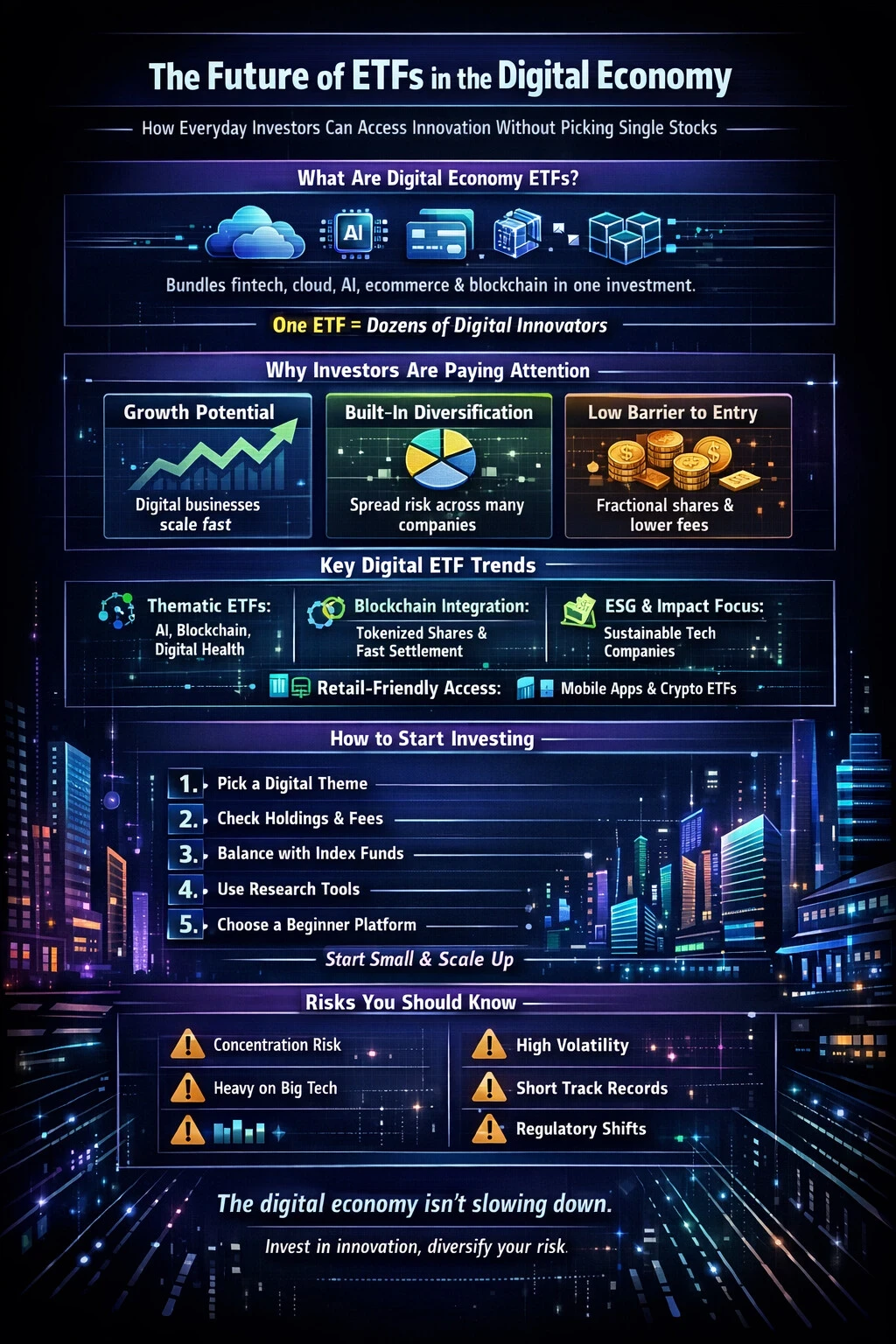
ETFs tied to the digital economy can help you quickly tap into some of the biggest trends reshaping business and consumer habits. Instead of betting everything on one company, a digital economy ETF might hold dozens or even hundreds of firms involved in e-commerce, payments, artificial intelligence, or cybersecurity.
The benefit here is variety. Instead of trying to pick the hotshot company in these fast-moving sectors, you can capture the growth of the whole space. If you want to dig into why many investors like this approach, check out why some investors prefer low-cost high-yield ETFs.
- Growth potential: Digital businesses can scale at speeds that old-school companies couldn’t, and many have revenue models made possible by the internet alone.
- Access to innovation: ETFs focused on wild new trends like AI, next-gen connectivity, or digital payments let you benefit as these areas pick up steam.
- Lower cost: A lot of these digital economy ETFs charge lower fees than traditional actively managed funds, and you can invest with just a bit of cash thanks to fractional shares on popular platforms. It’s a great way to start small.
There are even more reasons to consider digital economy ETFs. For example, they can act as a stabilizing force in a portfolio built mostly from single tech stocks, offering exposure to many companies and reducing the chances of a single bust wiping out gains.
Trends Shaping the Future of ETFs in the Digital Economy
A few big developments are making a mark on what these ETFs will look like in the years ahead. Here’s what I see shaping things:
- The Rise of Thematic ETFs: Funds centered on things like the metaverse, blockchain infrastructure, and digital health keep showing up. These ETFs are often more focused, but they let you get direct exposure to a specific trend.
- Tokenization and Blockchain Integration: Several ETF creators are trying out tokenized shares or blockchain-based record keeping to crank up transparency and efficiency.
- More ESG and Impact Flavors: Sustainability and digital transformation often go together. There are now ETFs that look for digital inclusion and greener business models when choosing companies.
- Retail Ready Features: With things like fractional trading and even crypto-backed ETFs being added to mainstream investing apps, more people can start investing with just a few bucks.
If you want a closer look at which digital economy ETFs might fit your stash, doing in-depth research is key. I often use TradingView for charting and seeing how different sectors perform. For extra tips, take a look at where to research low-cost, high-yield ETFs before investing.
Jump Start Your Investing: Basics for Digital Economy ETFs
You don’t need to be a tech whiz or super wealthy to get started with digital economy ETFs. Here are easy steps that can help beginners:
- Figure out what interests you: Whether it’s payment systems, green tech, blockchain, or cloud platforms, start by picking a field that excites you.
- Learn about the ETFs ’ makeup and fees: Check out the companies held by the ETF and keep an eye on expense ratios. Niche or trend-based ETFs can be a bit pricier sometimes.
- Think about your risk comfort: Fast-growing sectors can swing a lot. If you’re just getting going, pair a digital economy ETF with a plain vanilla index fund to keep things smoother.
- Choose a trading platform: Options like eToro make it easy for newbies to buy and sell ETFs. Most have demo accounts or helpful education sections so you can learn as you go.
I always suggest you check in on why some people choose ETFs over stocks, especially if you want broad exposure without gambling on a few names.
Things to Consider Before You Get In
No investment is without risk, and digital economy ETFs come with their own quirks. Here are the ones that I pay attention to:
- Concentration Risk: A lot of digital economy ETFs are heavy on just a couple of big tech names, so if a giant stumbles, the whole ETF might fall.
- Market Volatility: These sectors move fast—swings are common, and price shocks can happen both up and down. ETFs help spread things out, but risk still exists.
- Thematic ETF Gaps: Lots of these trend-based ETFs are new, so there’s not much performance history to rely on. It can make sizing up risk trickier.
- Regulatory Unknowns: Rules on things like digital privacy or cryptocurrency can change fast and shake up whole sectors.
Concentration Risk
I’ve seen plenty of digital economy ETFs hang a lot of weight on just a few mega tech players. If anything big happens to one of them, the ETF can swing fast. I prefer to mix in several digital economy themes, so not all my tech exposure is in the same basket.
Market Volatility
These sectors can be pretty bouncy. When big headlines hit, ETF prices tug along quickly. It’s good to figure out your own risk tolerance ahead of time so you don’t panic buy or sell.
Thematic ETF Gaps
Some trend-based ETFs don’t have a very long history, so you have to judge without a deep performance record. I limit new ETF picks to a smaller slice of my portfolio until time shows how they perform.
Regulatory Worries
New digital regulations can pop up suddenly, sometimes changing the outlook for entire groups of companies. That’s why I always pay attention to policy news on digital privacy, international data, and crypto that could change the game for these ETFs.
The good news: Most of these risks can be handled with smart strategies and keeping some extra cash for those inevitable dips and bumps along the way.
Advanced Tips for ETF Fans in the Digital Space
Once you have the basics down, there are a few ways to really give your digital ETF approach a boost:
- Rebalance regularly: Tech and digital sectors can outgrow the rest of your portfolio, so check every few months to keep your targets in line.
- Mix and match themes: Pairing cloud, cybersecurity, payments, or other digital ETFs together can broaden your exposure and cut single-theme risk.
- Mind the fees: Trendier and specialized ETFs sometimes come with higher costs. Make sure fees aren’t eating up your gains over the long haul.
- Set up news alerts: Notifications on your themes help you stay ahead if companies or sectors move abruptly.
And of course, keep doing your own research on platforms like TradingView and follow industry blogs to stay sharp on fast-changing digital trends.
Frequently Asked Questions About Digital Economy ETFs
Here are a few common questions I get from folks interested in digital ETFs:
Question: Are digital economy ETFs risky?
Answer: They can be jumpier than broad market funds, but they make it easy to invest in fast-growing trends. Keep them as part of a bigger mix for steadier performance.
Question: Can I buy these ETFs internationally?
Answer: Lots of trading platforms offer access to US and global digital economy ETFs, no matter where you live. Look at any extra fees or limitations tied to your local area before getting started.
Question: How do I research the best digital economy ETFs?
Answer: Start with free research tools or check platforms like TradingView. Read fund details, look at their investing focus and past performance, and compare how well they spread investments out across companies.
Wrapping Up: The Road Ahead for Digital Economy ETFs
As the digital economy grows, ETFs are making it simple for nearly anyone to join the adventure. These funds open doors to new and rapidly changing industries while letting investors keep their risk spread out. Options keep increasing as new technologies come in and change the way we use and invest our money.
In the end, digital economy ETFs make sense for anyone wanting to add growth and innovation themes to their portfolio. Keep your eyes open to trends, make use of research platforms, and choose a trading app that fits your style—maybe the simplicity of eToro or the charting power of TradingView. With steady research and a balanced mix, you can let the digital transformation work for you for years to come.