Exchange-traded funds (ETFs) have changed the way I invest, making it a lot easier to get a diversified portfolio with low fees. Finding the right platform for buying ETFs can help keep more money in your pocket and make growing your investments pretty straightforward.
There are more platforms than ever, but they’re not all created equal. Especially when you’re focused on minimizing costs, the differences stand out. I’ve checked out most of the popular choices and picked a handful that offer a good mix of low fees, wide ETF selection, easy-to-use features, and helpful tools for all types of investors.
Disclaimer: This article contains affiliate links. If you open an account through these links (eToro, TradingView), I may earn a commission at no additional cost to you.
Investing involves risk, including the possible loss of capital. eToro is not available in all countries. Eligibility depends on your region. Always consider your individual circumstances before investing.
1. eToro: Fractional ETF Investing & Zero Commission
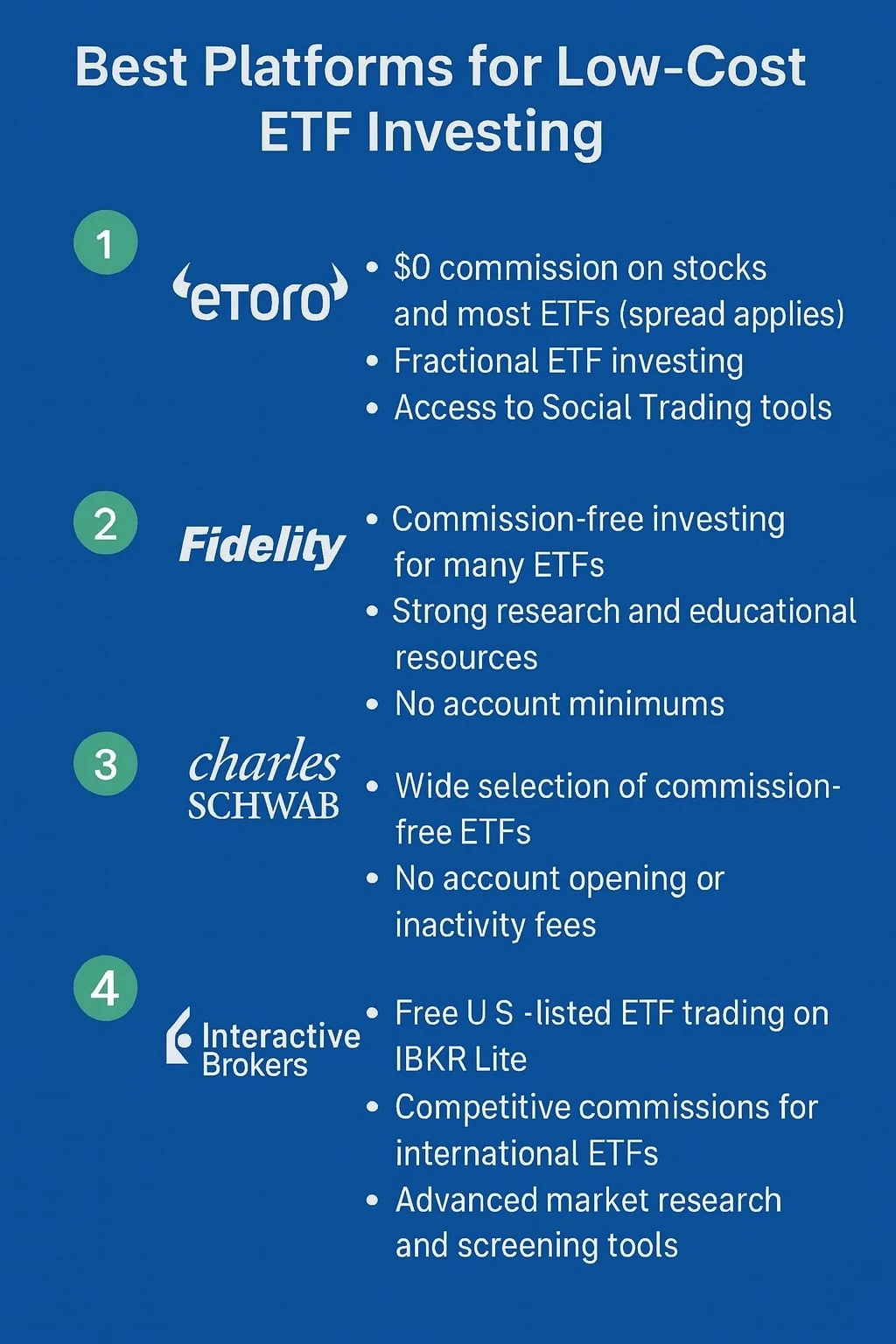
eToro is worth checking out if you want to start investing in ETFs without getting hit with a bunch of fees. The zero commission on stocks and most ETFs is what first caught my eye. You only pay a spread, which stays pretty tight compared to other platforms. The platform is user-friendly, and even if you’re just starting, you’re not going to feel lost.
If you like the idea of social investing, eToro gives you cool features like CopyTrader, where you can follow or copy the moves of experienced investors. There’s also the option for fractional ETF investing, so you don’t need a huge pile of cash to get started with pricier ETFs.
eToro Highlights for Low-Cost ETF Buyers:
- Zero commission on ETF purchases (you pay a small spread)
- Fractional shares for flexible investing
- Social investing tools for following ETF pros
- Minimum deposit is reasonable for most beginners
Just remember, eToro isn’t available in every country. Double-check your eligibility before you get too far. For my full review and signup, visit eToro’s official page.
2. Fidelity: No-Commission ETFs & Strong Support
If you want an established broker with loads of support, Fidelity stands out. They’ve got a massive selection of commission-free ETFs, and you don’t need to worry about inactivity or maintenance fees. Fidelity is known for offering a bunch of research tools and educational resources that make it easy for anyone to take up their investing game.
What I Like About Fidelity:
- Zero commission on U.S.-listed ETFs
- No account minimums for brokerage accounts
- Extensive ETF research and screeners
- Friendly support, both online and in person (where available)
Fidelity works well for both beginners and experienced investors. It doesn’t have the social aspect of eToro, but the educational content is hard to beat if you want to really understand what you’re buying.
3. Charles Schwab: Simple Low-Fee Platform
Charles Schwab has kept things simple and affordable. All U.S.-listed ETFs trade commission-free, which helps limit investment costs. The ETF filter tools make narrowing down the options pretty painless, and the platform itself is easy enough for new investors to find their way.
Charles Schwab Pros for ETF Investing:
- Extensive list of commission-free ETFs
- No account opening or inactivity fees
- Robust mobile and desktop trading apps
- Schwab’s own suite of ultralow-cost index ETFs
I’ve found Schwab good for those who want to start with low-cost index funds and possibly expand into other investments over time. There’s support if you need it, but the platform is streamlined and efficient, perfect for both beginners and seasoned investors.
4. Interactive Brokers: Ultralow ETF Commissions Globally
For investors who look outside the U.S. or want access to global ETFs, Interactive Brokers (IBKR) offers super low commissions on a huge range of ETFs. IBKR Lite gives U.S. residents free trades on U.S.-listed ETFs, and the Pro version offers some of the cheapest global ETF commissions out there, making it easy for international investing.
IBKR Features:
- Free U.S. ETF trading with IBKR Lite
- Low-cost international ETF trading
- Advanced screening and portfolio management tools
- Access to dozens of global stock markets
IBKR is a bit more technical, so it fits folks who want powerful tools and are comfortable with a more advanced interface. If you’re planning to expand into international ETFs, IBKR is worth a look. The research functions you get with this platform are top shelf, giving you a solid toolkit for building an all-in-one portfolio spread across the globe.
5. TradingView: Charting & Analysis for ETF Investors
TradingView isn’t a platform for buying ETFs directly, but I use it to explore new ETFs, check price trends, and compare funds. The tools make it simple to spot low-cost ETFs that match your investment goals, and everything updates live, so you stay up to date.
You’ll find charting features, ETF screeners, and an active community that shares insights and trade ideas. If you want to get serious about researching ETFs, TradingView is super useful for that extra edge. Sometimes, the insights from TradingView’s community help spot great ETFs that you wouldn’t stumble upon elsewhere.
How to Choose the Right Platform for Low-Cost ETFs
With so many brokers, picking the right one for low-fee ETF investing comes down to a few factors. Here’s what I keep in mind:
- Commission structure: Platforms like eToro, Schwab, and Fidelity have no commission on most U.S. ETFs, but always check international or specialty ETF fees
- ETF selection: Make sure your broker has the ETFs you want, from broad index trackers to sector-specific funds
- Account fees: Watch out for annual or inactivity fees, especially if you’re not planning to trade often
- Research & tools: Screens, charting, and education help you make smart picks, and can save you a lot in the long run
- Minimum deposit: Some platforms let you get started with just $10 to $100, which is great if you want to check out the waters before going big
Careful research helps buyers make informed decisions. I always check the fine print on fees or minimum investments, especially if I’m trying to squeeze every dollar for maximum growth. Looking out for any hidden or extra charges is always part of my investment game plan.
Tips for Keeping ETF Costs Low
- Look for low expense ratio ETFs; these sometimes cost as little as 0.03% per year
- Avoid frequent trading to minimize spread costs and bid-ask differences
- Stick with commission-free ETFs when possible, especially if you’re buying smaller amounts
It’s not just the platform fee that matters, since fund-level expenses add up. Sticking mainly to broad market or index ETFs usually keeps those long-term costs in check. Also, using a watchlist to track expense ratios and platform fees helps keep costs low.
FAQ: Low-Cost ETF Investing Platforms
- Can beginners start with low-cost ETFs? Yes, almost all the platforms mentioned above work for beginners. You can start with pretty small amounts and add as you go.
- What’s the difference between ETF commission and expense ratio? Commission is what you pay upfront to buy or sell. Expense ratio is the fund’s ongoing annual fee, taken out behind the scenes.
- Are there hidden fees to watch for? Always check for withdrawal charges, currency conversion fees, and inactivity fees. These can sneak up if you’re not paying attention.
- Should I use advanced research tools? If you want to get into ETF performance, platforms like TradingView are worth trying. Even casual investors can benefit from basic screeners and charting.
I use a combination of low-cost platforms and smart research tools to build a diversified, low-fee ETF portfolio. If you’re after simplicity, eToro and Schwab offer a friendly start. For global investing, IBKR opens up a lot more markets. Whatever you decide, choose what fits your style and check out the platform that helps you save those extra bucks with every trade. Stay dedicated to your investment plan, and over time, the savings you pile up on fees will really make a difference in your growth.