Low-cost, high-yield ETFs show up on a lot of investors’ watchlists for some pretty straightforward reasons. I’ve noticed that many people in my circles are seeking a straightforward path to passive income and long-term growth without incurring significant fees. Not everyone wants to sift through hundreds of stocks, so these ETFs are a handy shortcut for getting exposure to a steady stream of dividends and a broad spread of assets, all at a price that won’t nickel and dime you. I’ll break down why these funds are so popular, what makes them tick, and what you should keep in mind if you’re thinking about joining the club.
Disclaimer: This article contains affiliate links. If you open an account through these links, I may earn a commission at no additional cost to you. Investing involves risk, including the possible loss of capital. eToro is not available in all countries. Eligibility depends on your region. Always consider your individual circumstances before investing.
What Makes Low-Cost High-Yield ETFs Appealing?
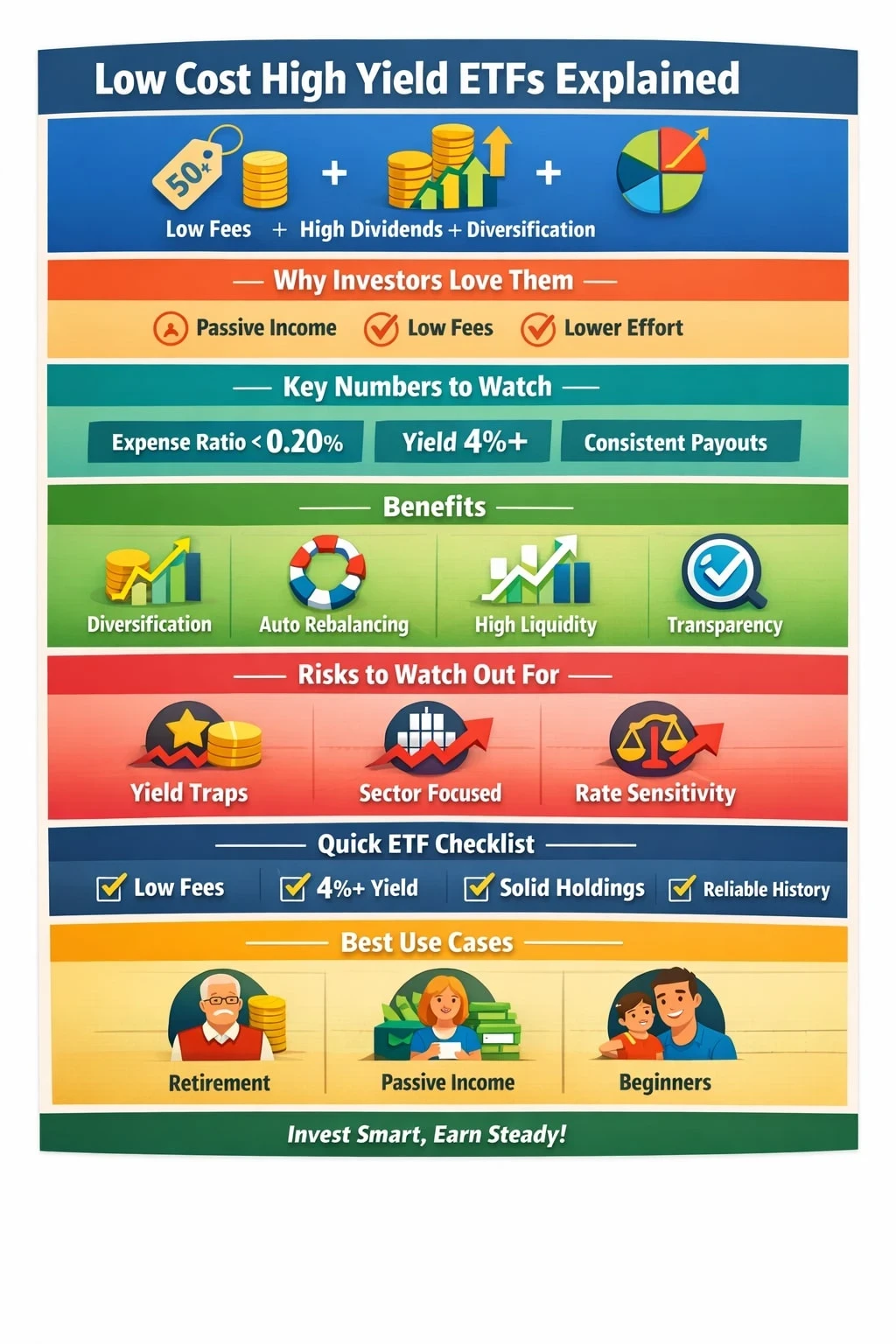
ETFs focused on low fees and high yields are designed to keep more money in your pocket. I’ve seen how even a single percent in management costs can chip away at portfolio growth over time. Low-cost options let investors keep more of their earnings, especially when compounding over years.
At the same time, high yield means those ETFs are built to pay out better than average dividends. That’s super appealing if you want a bit of extra cash flow on top of capital appreciation. For retirees or anyone working toward financial independence, these kinds of funds start to look pretty attractive.
You can find more about these ETFs’ strengths in my post: What are the Benefits of Low-Cost High-Yield ETFs?.
Rising Popularity. Why Investors Are Flocking to These Funds
A big piece of the puzzle is convenience. You don’t have to research every individual stock or bond. Instead, you buy into a basket managed by pros, usually tracking an index or a specific strategy. The low fees cut down on the drag, while regular dividends add a layer of passive income. There’s also liquidity, meaning you can buy or sell your shares whenever the market’s open, with no waiting around or hidden fees.
Some people I know use these ETFs as their core holdings, then branch out with a few stocks for extra excitement. Others rely on them entirely for hands-off investing. Either way, the combo of low expenses and steady payouts checks a lot of boxes.
Understanding the Basics. What Counts as “Low Cost” and “High Yield”?
Low cost usually means expense ratios below about 0.20%. For every $10,000 invested, that’s just $20 a year. In the ETF world, that’s a sweet spot for fee-conscious investors. High yield, on the other hand, means an annual dividend payout that’s well above the overall stock market average, sometimes 4% or more.
Plenty of ETFs advertise themselves as high yield, but the net yield after fees is what matters. Double-checking that the yield isn’t just a mirage boosted by risky assets or a short-lived market blip always helps avoid surprises.
If you want a breakdown of how these numbers shake out historically, check my guide: What is the Average Return of Low-Cost High-Yield ETFs?.
Getting Started with Low-Cost High-Yield ETFs
You don’t need to be a Wall Street pro to start with these ETFs. Most accounts at online brokers let you buy and sell shares just like individual stocks. Here are a few places to look if you’re interested in starting:
- eToro: Super simple registration and commission-free investing. Check it out here.
- TradingView: Research ETF performance, charts, and get trade ideas. Worth a look here.
Even small, regular investments add up through time. Drip feeding cash in can smooth out the ups and downs and keep your stress levels lower.
Common Features of Low-Cost High-Yield ETFs
- Broad Diversification: Most of these ETFs hold positions in dozens or even hundreds of companies from a range of industries. That lowers the risk if one or two stocks stumble.
- Automatic Rebalancing: The fund manager periodically adjusts the portfolio so it sticks to its yield or sector targets without you having to do any of the legwork.
- Transparent Holdings: You can always check what’s inside. There are no mystery assets tucked away out of sight.
- Tax Efficiency: ETFs often hand out fewer surprise tax bills at year’s end, especially if you’re in a country with friendly ETF tax treatment.
All of this together means a smoother ride for people who want to focus on long-term growth and regular income, with less day-to-day hands-on effort. Some investors even find that the transparency and built-in diversification give them more confidence to stick with their plan during market swings, since it’s easier to see exactly what they own and why.
Potential Hurdles. Things to Watch For
Low-cost, high-yield ETFs aren’t all rainbows. Watching out for a few pitfalls is smart. Some ETFs chase high yields by holding riskier companies or junk-rated bonds. When the economy hits turbulence, those assets can take a bigger hit than the market average. Chasing only the highest yield can accidentally dial up the risk in your portfolio.
Also, remember that ETFs are weighted by size or yield but might lean too much on a single sector, like real estate or energy. If that sector struggles, even a diversified fund can feel it. Reading the fine print in the ETF’s fact sheet helps avoid surprises.
- Yield Traps: Sometimes the advertised payout looks juicy, but it isn’t always sustainable. Look for stable payout histories, not just flashy numbers.
- Interest Rate Sensitivity: Some high-yield ETFs (especially bond-focused ones) can drop in value when interest rates go up.
- Dividend Cuts: If companies in the ETF’s basket reduce or pause their dividends, yield can drop quickly.
Digging into what you own and why helps keep expectations realistic. For a detailed step-by-step, take a look at How to Invest in Low-Cost High-Yield ETFs.
Quick Guide. How to Evaluate These ETFs Before Buying
- Spot the expense ratio. Under 0.20% is ideal for most people watching costs.
- Compare the yield to other, similar ETFs and broad market benchmarks.
- Check recent dividend payment history for consistency and reliability.
- Study the ETF’s top holdings and see if they line up with your risk comfort level.
- Read user reviews or look up analyst ratings to catch any red flags or praise.
Taking a little bit of time up front can make a huge difference in results down the line. The right ETF should feel like a good fit for your broader goals, not just a lottery ticket. If you start to pick up on changes in yield or expense ratios, consider looking over your portfolio and making tweaks as needed.
Tips and Tricks for Building a Portfolio with Low-Cost High-Yield ETFs
I like to mix and match a few different types of ETFs for a smoother ride. Pairing a high-yield ETF with a broader market ETF or even a bond ETF can balance things out and dial down volatility. If you rely on dividends for income, consider dividend reinvestment programs (DRIPs) so your cash keeps working for you automatically. DRIPs can make it easy to grow your investment over time by reinvesting every payout, boosting your long-term results.
Revisit your holdings every six months or so. Double-check that the expense ratios haven’t crept higher and that yield numbers still line up with your goals. If an ETF’s risk profile changes or its dividends get cut, moving your money is always an option. You’re never locked in, and sometimes spreading your bets across a few different funds makes the roller coaster a bit smoother. Think about rebalancing or adjusting your mix in response to big market moves or life changes, to keep your portfolio on track as you go.
Real World Uses. Why Some Investors Stick with These Funds
- Retirement Portfolios: Reliable income streams can offer peace of mind for retirees or folks planning for early financial independence.
- Building Passive Income: Monthly or quarterly payouts make budgeting and cash flow a lot easier for anyone looking to cover regular expenses or supplement their day job.
- Hands Off Investing: Autopilot strategies that don’t need a lot of fancy tactics or market watching.
- Starter Portfolios: Beginners who want to learn the ropes without putting all their eggs in one basket appreciate the easy access and diversification.
Every investor’s goals are different, but these use cases help explain why these ETFs aren’t going out of style anytime soon. In fact, I’ve noticed more younger investors are also turning to these funds for a base layer in their portfolios, since it means less pressure to pick the “perfect” stock every month.
Frequently Asked Questions
Are low-cost high-yield ETFs safe?
They’re often safer than picking single high-yield stocks, thanks to built-in diversification. That said, every investment carries some risk, especially if the underlying holdings are concentrated in one or two sectors or include weaker companies. Taking a closer look at the fund’s holdings helps put your mind at ease.
How often do these ETFs pay dividends?
Most high-yield ETFs pay out every quarter, but some offer monthly distributions. The payment schedule will be listed in the ETF’s documents or on your broker’s ETF info page.
Do I need a special account to invest in these ETFs?
Nope, a standard brokerage account does the trick. Accounts at modern online brokers like eToro or TradingView work well for U.S., European, and many international ETFs.
Bottom Line
Low-cost high-yield ETFs offer a solid mix of income, growth, and convenience without the high fees of old-school mutual funds. They’re a nice fit for investors seeking a streamlined and efficient way to invest, all while picking up steady dividends along the way. As always, a little due diligence goes a long way; these funds can play a big part in building wealth over time when used thoughtfully. If you’re looking for a way to start earning more passive income with less hassle, low-cost high-yield ETFs are worth checking out and might just help you reach your financial goals sooner than you’d think.