If you’re thinking about getting into investing but want something that’s simple and doesn’t take loads of effort, you’ll probably come across low-cost, high-yield ETFs. If you’re new to this, figuring out what these are can get a little confusing. I’ve been there myself, and I remember looking for investments that wouldn’t empty my wallet with fees but could still give back some decent returns. Here, I’m breaking it down so first-time investors can understand what these ETFs are, how they work, and how they might fit into your portfolio.
Disclaimer: This article contains affiliate links. If you open an account through these links, I may earn a commission at no additional cost to you. Investing involves risk, including the possible loss of capital. eToro is not available in all countries. Eligibility depends on your region. Always consider your individual circumstances before investing.
What Are Low-Cost High-Yield ETFs?
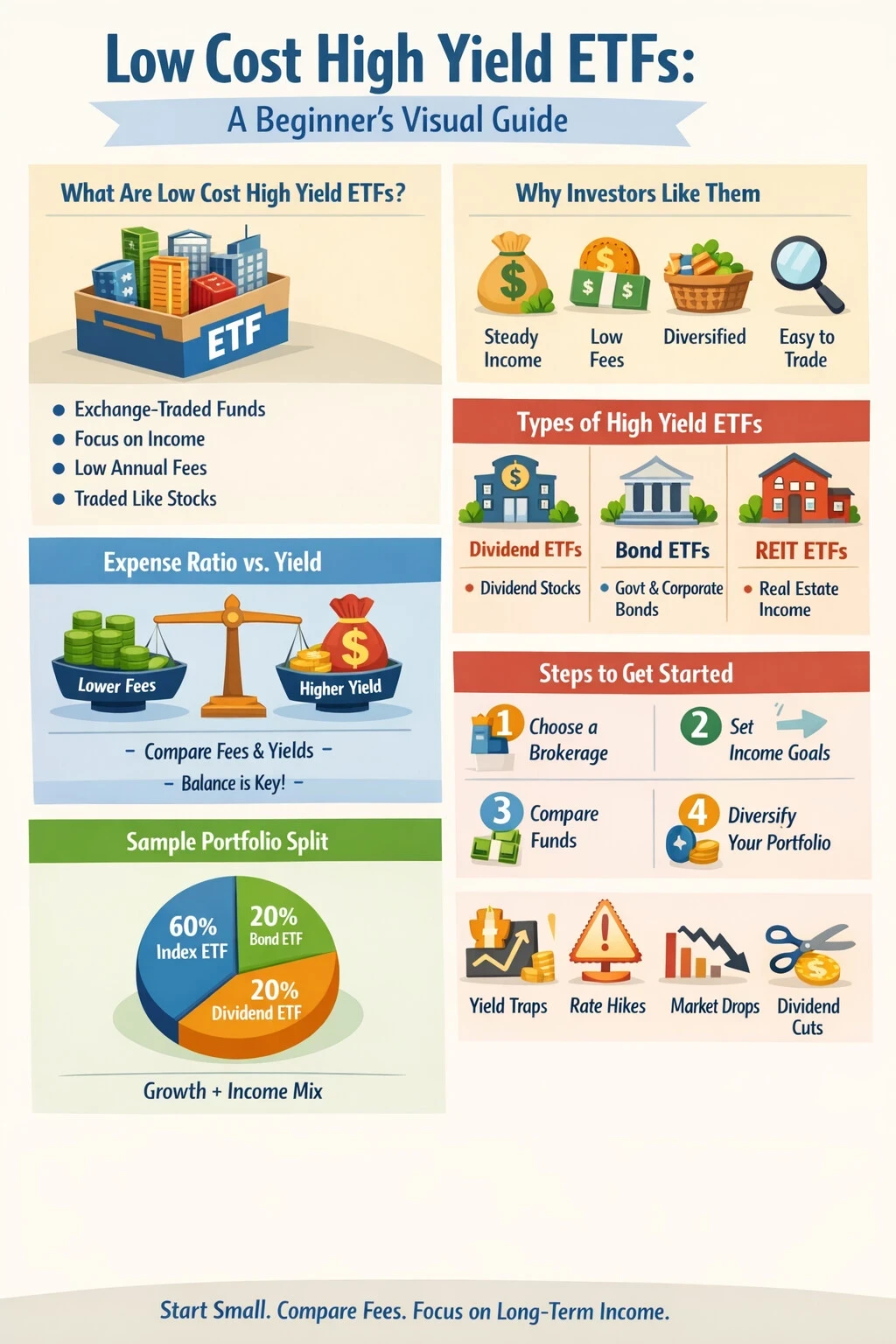
Low-cost high-yield ETFs are basically exchange-traded funds built to provide above average income (like dividends) while charging lower management fees than many other investments. They hold a basket of stocks, bonds, or other assets that pay out regular income. The “low-cost” part refers to the small annual expense ratio—the fee you pay to the fund manager for running the ETF. Compared to mutual funds or actively managed investments, ETFs usually keep those costs down, letting you hold onto more of your returns over time.
If you want to get into popular ETF options, I recommend checking out this breakdown of popular low-cost ETFs. It’s really helpful for comparing what’s out there.
Why Investors Like Low-Cost High-Yield ETFs
- Steady Income: These ETFs usually pay out higher dividends compared to standard market ETFs, which some people rely on for regular cash flow.
- Affordable Fees: Most well-known ETFs offer low expense ratios, meaning more of your money stays invested and working for you.
- Diversification: ETFs are already a collection of different assets, so you aren’t putting all your eggs in one basket.
- Easy to Trade: ETFs can be bought or sold on exchanges in real time, just like a regular stock.
- Transparency: Holdings and fees are usually very clear, helping you see where your money is going.
If you haven’t checked out a modern investment platform, sites like eToro or TradingView are handy for research and ETF trading.
Popular Types of High-Yield ETFs
Low cost high yield ETFs come in various forms depending on the assets inside them. Here are the main types I see new investors looking at:
- Dividend Stock ETFs: Hold a mix of companies with a history of paying bigger-than-average dividends.
- Bond ETFs: Focus on bonds (government, corporate, or municipal) that pay high interest rates.
- REIT ETFs: Invest in real estate investment trusts, which must pay out most of their income as dividends.
It’s worth checking out how some of these ETFs create yield. Fund strategies keep popping up and getting creative. For something a bit more detailed, have a look at my post about innovative high-yield ETF approaches.
How Do Expense Ratios Affect Your Returns?
The expense ratio is the annual percentage you pay to have your money managed in the ETF. It might seem tiny (sometimes under 0.1%), but those costs add up over time. The less you pay, the more is reinvested into the fund. For example, if you invest $10,000 in two ETFs and one charges 0.05% per year while the other charges 0.5%, after ten years, the difference shows up. It’s a small percentage that makes a big impact in the long term. Always compare fees before you hit “buy.”
How to Get Started with High-Yield ETFs
Jumping into high-yield ETFs isn’t complicated. Here’s a quick step-by-step based on what worked for me:
- Pick a Brokerage: Choose an easy-to-use platform that offers lots of ETFs. Most newbies start with the big names. Online brokers like eToro and TradingView are popular and user-friendly.
- Sort Your Priorities: Figure out what matters to you—more income, less risk, growth potential, or all three?
- Compare ETFs: Look at yield, fees, holdings, and history. Tools like TradingView make comparing side-by-side super easy.
- Diversify: Don’t put all your cash in one ETF or sector. Mix dividend, bond, and REIT ETFs if you want steady income with less risk.
- Monitor Regularly: Markets can move quickly. Check up on your funds every few months and track dividend payments or any fund changes.
It’s also helpful to read through ETF prospectuses (found on the provider’s site) to get the details on how a fund works before putting your money in. Careful research lets buyers make more informed decisions.
Risks and Things to Watch Out For
High yield doesn’t always mean safer. Here are some things first-timers should remember:
- Yield Trap: If a yield looks ridiculously high, double-check what’s up. It might mean the fund’s holdings are under a lot of stress, or prices dropped.
- Interest Rate Changes: Bond ETFs can lose value fast if rates rise sharply.
- Market Drops: All ETFs can lose money when the whole market falls, especially dividend stock or real estate ETFs.
- Dividend Cuts: There’s no guarantee that a dividend or payout will stay at the same level—companies can shrink or stop payouts.
For more advice, here’s a post about niche strategies that goes into some unusual ways of using ETFs to build yield.
Expense Ratio vs. Yield: Finding the Balance
This is where people can slip up. A super high yield looks great, but if you’re paying a bigger fee for it, your real take-home amount drops. Compare both expense ratios and current yields when picking funds to find one that fits what you want—not just the highest number you can see.
Liquidity: Why It Matters
Liquidity is how easily you can buy or sell shares without moving the price much. Bigger ETFs tend to be more liquid, so trades go through faster. That also means tighter spreads (the gap between buy and sell price), which can save you money every time you trade.
Real World Example: How High-Yield ETFs Fit in a Portfolio
Suppose you’re building a simple, balanced investment portfolio for the first time. You might have 60% in a standard index ETF, 20% in a high-yield bond ETF, and the last 20% in a dividend stock ETF. This split gives you growth potential combined with steady cash flow—without putting everything into just stocks or just bonds.
Personally, I use a combo of bond and REIT ETFs as an “anchor” for my more aggressive moves. The regular income adds a layer of safety and peace of mind in rough markets.
Frequently Asked Questions about Low-Cost High-Yield ETFs
What’s the catch with high-yield ETFs?
The main thing is balancing a desire for higher income with taking on the risk that can come with those bigger payouts. Sectors that pay more sometimes swing harder in value. Always keep an eye on what’s inside the ETF and don’t be distracted by yield alone.
How often do these ETFs pay dividends?
Most pay dividends quarterly, but some pay monthly. Check the fund’s website or TradingView for a payout schedule.
Can I lose money investing in these ETFs?
Yes. Like any investment, values can fall. Even investments labeled as “safe” can drop in a bad market or if the steady income disappears.
Are high-yield ETFs good for retirement accounts?
They can fit within IRAs or 401(k)s, but make sure to check how any payouts are taxed. Lower cost and reliable yield often make them popular picks in retirement setups.
Wrapping Up: Should You Invest in Low-Cost High-Yield ETFs?
Low-cost, high-yield ETFs can be an effective way to earn more from your investments without letting high fees eat away at returns. They’re accessible, usually cheaper than mutual funds, and can offer a steady stream of passive income. Be sure to balance risk, check both the yield and the expense ratio, and look closely at what each ETF holds.
You can start researching on platforms like eToro or TradingView. These make it simple to compare funds and monitor your portfolio. And if you’re interested in specific ETFs, check out Budget ETFs for practical reviews, or check out some unique strategies in these posts.
Starting with your first ETF might seem a bit intimidating, but investing is about learning and choosing options that feel right for you. Take your time, stay informed, and best of luck as you get started.