If you’re just getting started with investing, low-cost ETFs can make things a lot less stressful. They’re a popular choice for beginners because they’re affordable, easy to buy and sell, and offer instant diversification. These funds let you invest in a wide range of stocks or bonds without spending a fortune on fees. In this article, I’ll share what I’ve learned about low-cost ETFs, why they’re a smart pick for those new to investing, and which options are worth watching heading into 2026. Plus, I’ll fill in some important tips to make sure you have all the basics covered as you step into the investment world.
Disclaimer: This article contains affiliate links. If you open an account through these links, I may earn a commission at no additional cost to you. Investing involves risk, including the possible loss of capital. eToro is not available in all countries. Eligibility depends on your region. Always consider your individual circumstances before investing.
What Makes ETFs Awesome for Beginners?
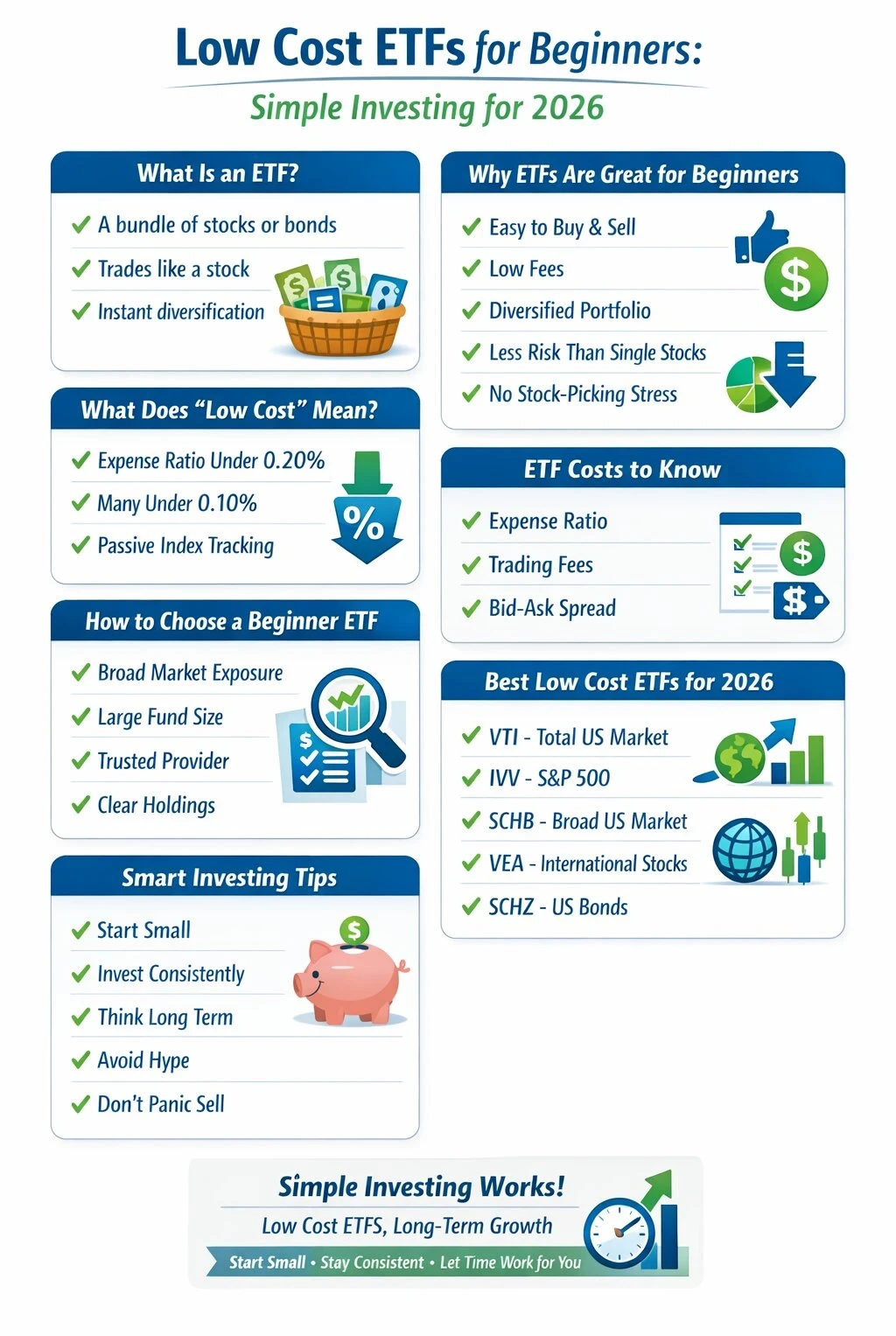
Exchange-traded funds, or ETFs, have spread like wildfire in popularity over the last decade. For anyone new to investing, they’re a pretty handy way to spread out risk and keep things simple. Each ETF bundles together a bunch of stocks, bonds, or other assets, so you don’t have to pick individual winners and losers. You get built-in diversification and can avoid a lot of the stress that comes from betting on single stocks.
ETF trading works a lot like buying and selling stocks. You can do it right from your brokerage account (I use both eToro and TradingView to keep an eye on things). The low costs are one of the biggest reasons I recommend them to beginners. While mutual funds often hit you with high annual fees, many popular ETFs have fees under 0.10%, sometimes even less.
If you’re curious about how ETFs are shaping the digital economy, I found this guide pretty interesting for anyone chasing the latest trends. It breaks down where things are headed in a way that’s easy to understand for someone just starting out.
Understanding Low Cost ETFs
Not all ETFs are created equal. Some come with higher fees or more complex strategies that aren’t well suited for new investors. Low cost ETFs are pretty much what they sound like: funds with very low expense ratios (often under 0.20%). This is important if you don’t want high fees to eat into any gains you make, especially over the long run.
Most low cost funds are “passively managed,” which means they track a popular index like the S&P 500 or the Nasdaq. This lowers management costs and tends to provide decent long term results compared to actively managed funds that often try but fail to beat the market.
Main Things to Know About ETF Expenses
- Expense Ratio: This is the annual fee (as a % of your investment) the ETF charges. Lower is always better. Look for funds charging less than 0.20% if you want to keep costs down.
- Trading Costs: Some brokers charge commissions or transaction fees when you trade ETFs, though many (like eToro and TradingView) offer commission free trades on a ton of popular ETFs.
- Spreads: The difference between the buying and selling price. Highly traded ETFs usually have tighter spreads, so you pay less each time you buy or sell.
If you want more on the basics, I put together an overview of low cost ETFs here that’s beginner friendly and breaks things down even further. Knowing what to expect is key when you’re just starting—this resource makes it all clear step by step.
Getting Started: How to Pick the Right Low Cost ETF
First timers might feel a little lost with all the ETF choices out there. I still remember staring at the list of ticker symbols and feeling like I was just guessing. The trick is to focus on a few basic things and avoid over complicating it. Here’s how I approach it:
- Decide What You Want to Invest In: Stocks, bonds, or maybe a mix of both? Beginners usually start with broadmarket ETFs that track big indexes like the S&P 500 or total market funds.
- Check the Expense Ratio: Anything under 0.10% is about as cheap as it gets.
- Look at the Fund Size and Liquidity: Bigger funds (with millions or billions invested) are usually safer bets. They’re easy to buy and sell, and tend to stick around for the long haul.
- See What’s Inside: Glance at the ETF’s top holdings so you know what you’re really buying.
- Stick With Reputable Providers: Names like Vanguard, iShares (BlackRock), Schwab, and SPDR all have solid track records and popular low fee options.
Careful research helps buyers make informed decisions. The more you know about what’s in your portfolio, the better. You can always check a provider’s fact sheets online for simple summaries of each ETF’s focus, history, and costs.
My Go To Low Cost ETFs For 2026
I keep things pretty simple, especially when recommending ETFs to anyone who’s just starting out. Here are some low fee funds that work well as your first investments:
- Vanguard Total Stock Market ETF (VTI): Tracks the whole US stock market. Its expense ratio is just 0.03% as of 2024, and you get exposure to thousands of companies in one shot.
- Schwab US Broad Market ETF (SCHB): Similar to VTI with a nearly same expense ratio, SCHB is great if you use Charles Schwab. It tracks a wide blend of large, mid, and small companies.
- iShares Core S&P 500 ETF (IVV): Focuses on the top 500 US companies, matching the S&P 500. It’s one of the largest, with razor thin fees around 0.03%.
- Vanguard FTSE Developed Markets ETF (VEA): For international exposure (Europe, Asia, etc.), VEA keeps costs low and offers easy access to developed economies outside the US.
- Schwab US Aggregate Bond ETF (SCHZ): If you want to balance risk, this ETF gives you access to the US bond market, helpful for steady growth and less volatility.
This isn’t investment advice, just what’s worked for me and plenty of other beginners. Each of these funds is available on popular trading platforms; if you’re interested in trying them out, you can check prices and buy or sell using eToro or TradingView.
Smart Moves Before You Start Investing
Jumping into investing is exciting, but there are some tips I wish I’d known earlier. If you’re starting out, keeping things simple and being patient can really pay off. Here are some things that help:
- Set Clear Goals: Figure out what you’re investing for—a house, retirement, or just growing your money a bit on the side. The timeline shapes your choices.
- Start Small: You don’t need a ton of cash to get started. Many brokerages let you invest in fractional shares, so even $25 can get your foot in the door.
- Check Account Fees: Some brokers charge monthly or inactivity fees, even if the ETF is cheap.
- Consider Dollar Cost Averaging: Instead of putting in a big lump sum, commit to a set amount each month. This smooths out market ups and downs, helping build your investment step by step.
- Ignore the Hype: There’s always a “hot trend” in investing, but the best results usually come from patience and sticking with a plan.
- Learn as You Go: Investing is one of those things where everyone is always learning. Don’t worry about being perfect from day one; just keep moving forward.
After buying your first ETF, there’s a lot to consider if you want to go further. I found this step-by-step checklist super useful when I was ready to take things up a notch.
Overcoming Common Beginner Hurdles
Everyone runs into some bumps when they start investing. Some of the challenges I dealt with, and what I’ve seen from others, include getting discouraged by short-term swings, picking too many funds at once, or not understanding fees. Here’s how I handled them:
- Short Term Drops: Even good ETFs can go down in the short run. I try not to check my balance every day, as it can tempt knee-jerk reactions.
- Over diversification: It’s tempting to buy lots of different ETFs, but too many can get confusing and sometimes overlap. A simple core of one or two broad-market funds works for most beginners.
- Fee Surprises: Always check the full list of fees linked to your brokerage and chosen ETF. Even small differences add up over the years.
- Information Overload: I stick to a few trusted websites, podcasts, and books. There’s lots of noise out there, but reliable info lets me focus on what matters.
If you do feel overwhelmed at any step, remember it’s totally normal. Take a break, ask someone you trust, or read up a bit more before making any big decisions. Slow and steady really does win in investing.
Frequently Asked Questions
Got burning questions before your first ETF purchase? Here’s what I hear the most from newcomers and my own learning curve:
Do I need a lot of money to start with low-cost ETFs?
Not at all. Some brokers have no minimums, and even $25 can start your portfolio if you use fractional shares. You can begin small and add more whenever you’re ready.
Are low-cost ETFs safer than stocks?
They’re not “safe” in the sense of being risk-free, but they spread your money out, so you’re less likely to lose everything compared to betting on a single company. That built-in diversity is a big perk for beginners.
How often should I check my ETF investments?
Checking once a month or once a quarter works for most people. Watching every day can lead to impulsive changes that may hurt your long-term gains. Setting alerts for major news or earnings reports is also an option if you want to stay somewhat in touch without going overboard.
Wrapping Up
Investing in low-cost ETFs lets beginners keep more of their returns without the stress and complexity of picking individual stocks. With simple strategies and a good handle on fees, you can build a solid foundation for your financial future. Investing doesn’t have to be intimidating—start with the basics, learn as you go, and you’ll have a plan you can stick with for years to come. If you’re thinking about getting started, look into the ETF choices above and consider doing some research on each to see which one fits your needs best. It’s never too late to jump in and start building your future, one investment at a time.