ETF investing keeps evolving, and if you’re like me, staying on top of these changes can open up some great opportunities. Exchange Traded Funds, or ETFs, have already switched up the way everyday investors access markets by offering simple, low-cost diversification. But new themes, technology, and regulations are changing things even more. Here’s a look at what’s coming up in the world of ETF investing.
Disclaimer: This article contains affiliate links. If you open an account through these links, I may earn a commission at no additional cost to you. Investing involves risk, including the possible loss of capital. eToro is not available in all countries. Eligibility depends on your region. Always consider your individual circumstances before investing.
Why ETF Trends Matter to Investors
Investing through ETFs is growing at a pretty quick pace. This growth reflects how popular these funds have become across all types of investors. Part of what’s driving this, in my experience, is the new trends shaping the ETF world. The way markets, technology, and investor priorities switch up directly affects what kinds of ETFs are developed and, ultimately, what’s available for your portfolio.
Understanding where ETFs are headed helps everyday investors make more informed choices. Whether you’re seeking stable income, exposure to new markets, or are interested in the latest tech-powered funds, knowing the trends gives you an edge.
Key Trends Shaping the Future of ETF Investments
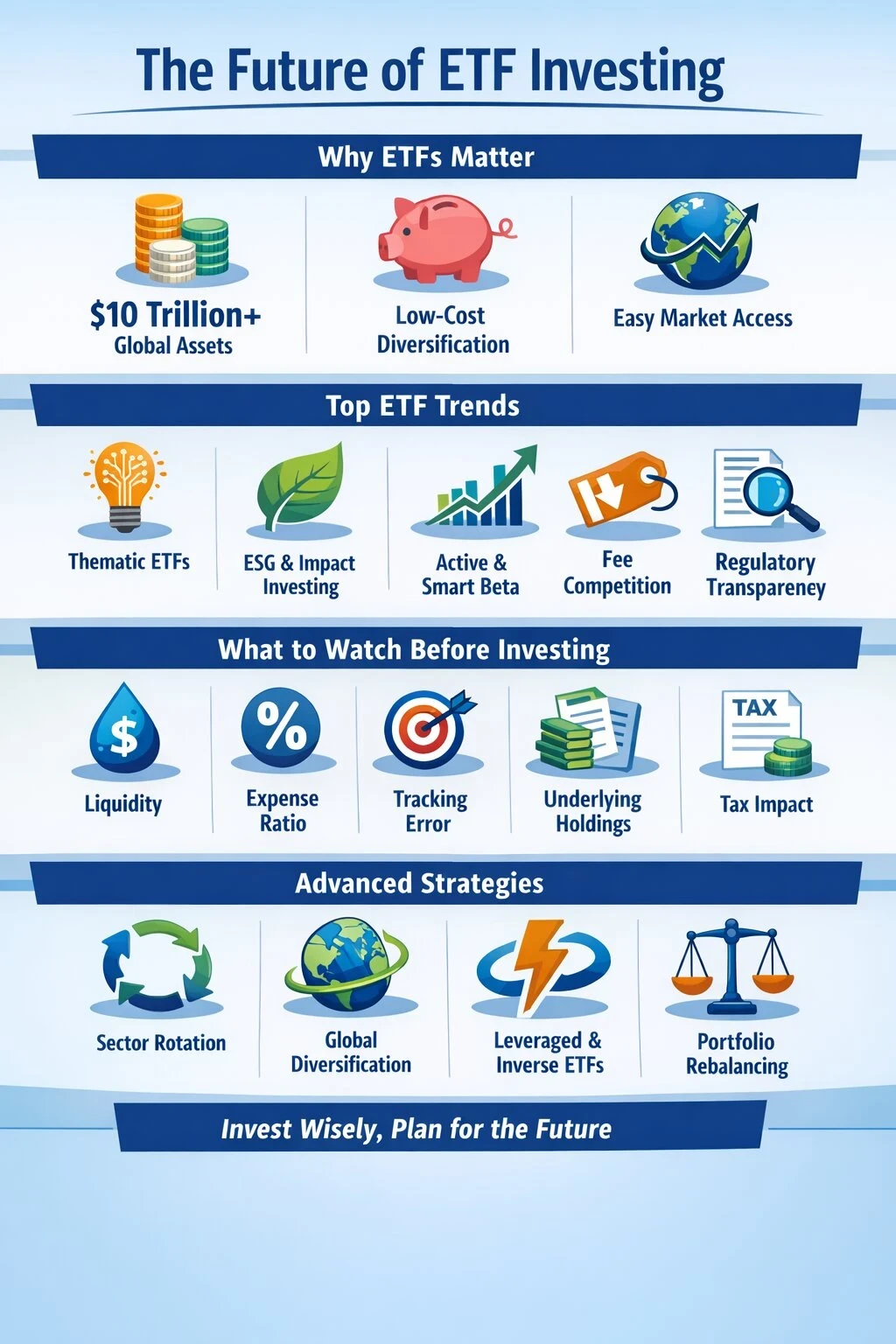
Several emerging trends are starting to shape ETF investing. Here are a few areas I’ve noticed that look really important for investors going forward:
- Thematic and Specialized ETFs: More ETFs are focusing on very specific industries, technologies, or global challenges. This ranges from funds tracking clean energy or artificial intelligence to ETFs focused on cybersecurity or demographic changes.
- Rise of ESG and Impact Investing: Environmental, Social, and Governance (ESG) factors are attracting big interest. ESG ETFs choose stocks based on values like sustainability and social responsibility. The ETF marketplace now offers funds centered on climate action, gender equality, and green bonds.
- Active ETFs and Smart Beta: Active management is popping up more, blending the lower-cost nature of ETFs with skilled managers deciding what goes in the fund. Smart beta ETFs use rules-based strategies to potentially outperform traditional index tracking funds.
- Tighter Regulations and Transparency: As ETFs become really common, governments and regulators want to make sure transparency and investor safety are top priorities. Expect to see funds get easier to analyze, compare, and understand.
- Fee Competition: ETF providers keep lowering costs to attract investors. This makes many funds really affordable for both beginners and seasoned investors. This competition almost guarantees expense ratios will keep dropping.
All these trends work together to create a much more flexible and responsive investment environment for people using ETFs. If you want more details, check out my article Low-Cost High-Yield ETFs for Sustainability Enthusiasts to track down funds with an ESG focus.
The Benefits of Thematic ETFs: Are They Worth It?
Thematic ETFs are designed to capture trends connected to technology, society, or global changes. I’ve found these funds super helpful if you want targeted exposure without picking individual stocks yourself. For example, if you want to put money into electric vehicles or cloud computing, you can grab a thematic ETF focused on those areas instead of trying to spot and buy every related stock.
Some things to keep in mind with thematic ETFs include:
- Narrow Focus: They usually cover only a specific part of the market. That means performance can be more up-and-down than that of broad-market funds.
- Quick Changes: If a trend fizzles out, a thematic ETF can lose value quickly. Doing your homework is key to smart decision-making.
- Diversification: They’re great for mixing in some variety and adding diversity to a traditional ETF portfolio, but shouldn’t be your only holdings.
I suggest beginners treat these as supplemental to their portfolio, rather than relying on them as the main holding. For more tips on adding ETFs to your plan, you might want to check out my guide on Next Steps After Investing in ETFs.
Getting Started with New Generation ETFs
If you’re getting into ETFs or want to update your approach, new generation ETFs offer some cool options:
- Pinpoint Your Priorities: Whether it’s technology, climate action, or stability, there’s probably an ETF for you these days.
- Check Fees, Liquidity, and Holdings: ETFs are generally transparent, but always look over how often they trade on exchanges, what it costs to buy or sell, and what’s actually inside the fund.
- Use Tools to Compare: Platforms like eToro or TradingView smooth the way to review available ETFs from many providers.
- Be Cautious of Hype: Not every trendy ETF stays popular or profitable. Look for steady growth and a clear investment story, not just buzzwords.
Folding ETFs aligned with your interests into your strategy is much easier with these resources. Keeping a close eye on fees and the actual assets inside will help keep your investments working for you in the long run.
Things Worth Considering Before Jumping into the Future of ETFs
Jumping into any new investment trend takes a bit of caution, even with straightforward investment vehicles like ETFs. Here are a few points I always consider:
- Liquidity: Some newer or niche ETFs may not trade that often, which can impact your ability to buy or sell at a good price.
- Underlying Holdings: Double-check what’s inside the ETF. Some wrap up international stocks, commodities, or even assets related to cryptocurrency.
- Tracking Error: Sometimes ETFs don’t perfectly mirror their target index or sector returns. Looking at past performance is helpful, but it doesn’t guarantee future results.
- Fees: While ETFs are often affordable, some specialized or active funds charge higher fees. Make sure you compare costs against more basic ETFs and ask if the premium makes sense for your plan.
- Tax Implications: Certain ETFs, especially international or leveraged ones, may behave differently at tax time. If you’re not sure, checking in with a tax professional can save trouble down the road.
There’s more guidance for picking out the right ETF if you’re a beginner in my article Low-Cost High-Yield ETFs for First-Time Investors.
Liquidity and Trading Volume
Funds with low trading activity often have wider spreads between buy and sell prices. This could eat into your returns. If you want to avoid headaches, stick with funds showing steady, high trading volume.
Active vs. Passive: Which Approach Fits the Future?
Passive ETFs have long been the go-to choice for tracking indexes, but active management is getting attention. Many investors, myself included, combine both—keeping the bulk of investments in low-cost passive ETFs, and exploring a few active funds guided by skilled managers. The right blend depends on your risk preferences and how much effort you want to put in.
Tech Advances in ETFs
Technology is making it easier than ever to invest, monitor, and analyze ETFs. Robo advisors, automated portfolio rebalancing, and AI-powered tools all give a boost to building a balanced portfolio. Platforms like TradingView are handy if you want to monitor ETFs, set up alerts, or test out new ideas before jumping in.
Advanced Insights and Strategies for ETF Investors
Once you have the basics down, there are ways to make the most of future ETF opportunities:
Try Sector Rotation: As sector trends mix it up—like strong shifts in energy, healthcare, or tech—switching ETFs over time can crank up your gains. It’s not always about buying and holding forever.
Capitalize on Global Diversification: With the growth of international ETFs, it’s easy to spread your bets across Asia, Africa, South America, and emerging economies. Expanding globally helps reduce risk where possible.
Know Leveraged and Inverse ETFs: These funds are built to turn up returns—sometimes even moving opposite to the market. But they can be risky and complicated, so study up before you even consider using them.
Rebalance Regularly: Some sectors or regions can outpace others. Rebalancing every six months or yearly helps keep your investments aligned with your goals.
All of these tactics help keep your portfolio fresh as the ETF market grows and changes.
Frequently Asked Questions
Here are a few common questions I get from people watching new ETF trends:
Question: Are ESG ETFs a good choice for all investors?
Answer: ESG ETFs are great if you want your investments to reflect certain values, but you should always look into how the fund applies those standards.
Question: How do I know if a new ETF trend is legit or just hype?
Answer: Stick to funds by reputable providers, with solid track records and healthy trading activity.
Question: What tools can I use to research ETFs?
Answer: Websites like eToro and TradingView are loaded with research, charts, and ways to compare funds. They help you dig into the details before making a move.
Final Thoughts on Finding Your Way in the ETF Landscape
Keeping track of ETF trends helps you make use of changing markets. Whether you’re getting into sustainable investing, looking for specialized funds, or just wanting to cut costs, a bit of up-front research is always time well spent. The coming decade promises even more options and flexibility for investors using ETFs, so there’s plenty to look forward to on this investing adventure.