If you’re thinking about adding low-cost high-yield ETFs to your portfolio, timing really does play a big part in your results. Knowing when to buy can make a noticeable difference, whether your goal is to boost regular income, grow wealth, or just mix in some variety with what you already have. I’ll share practical tips that can help make your ETF purchases work harder for you, without needing to keep your eyes glued to the markets every single day.
Disclaimer: This article contains affiliate links. If you open an account through these links, I may earn a commission at no additional cost to you. Investing involves risk, including the possible loss of capital. eToro is not available in all countries. Eligibility depends on your region. Always consider your individual circumstances before making an investment.
Why Timing Matters With Low-Cost High-Yield ETFs
I see a lot of excitement around high-yield ETFs, especially since they offer better dividends than the average fund, but without high management fees eating into your earnings. Still, the time when you buy these funds can influence both the kind of yield you get and the risks you’re exposed to. Timing isn’t about always chasing the lowest price or jumping in after a nerve-wracking drop. Instead, it’s about understanding how market cycles and interest rate shifts affect yields and prices.
If you’re new to how low-cost high-yield ETFs work, I’ve covered all the basics in my deep dive on how these ETFs work. Take a moment to review that guide if you’re looking for an introduction to the fundamentals and some real-world examples.
Key Times That Often Benefit Buyers
You might be wondering if there are certain moments when stepping into a high-yield ETF really pays off. Here are a few situations I look out for:
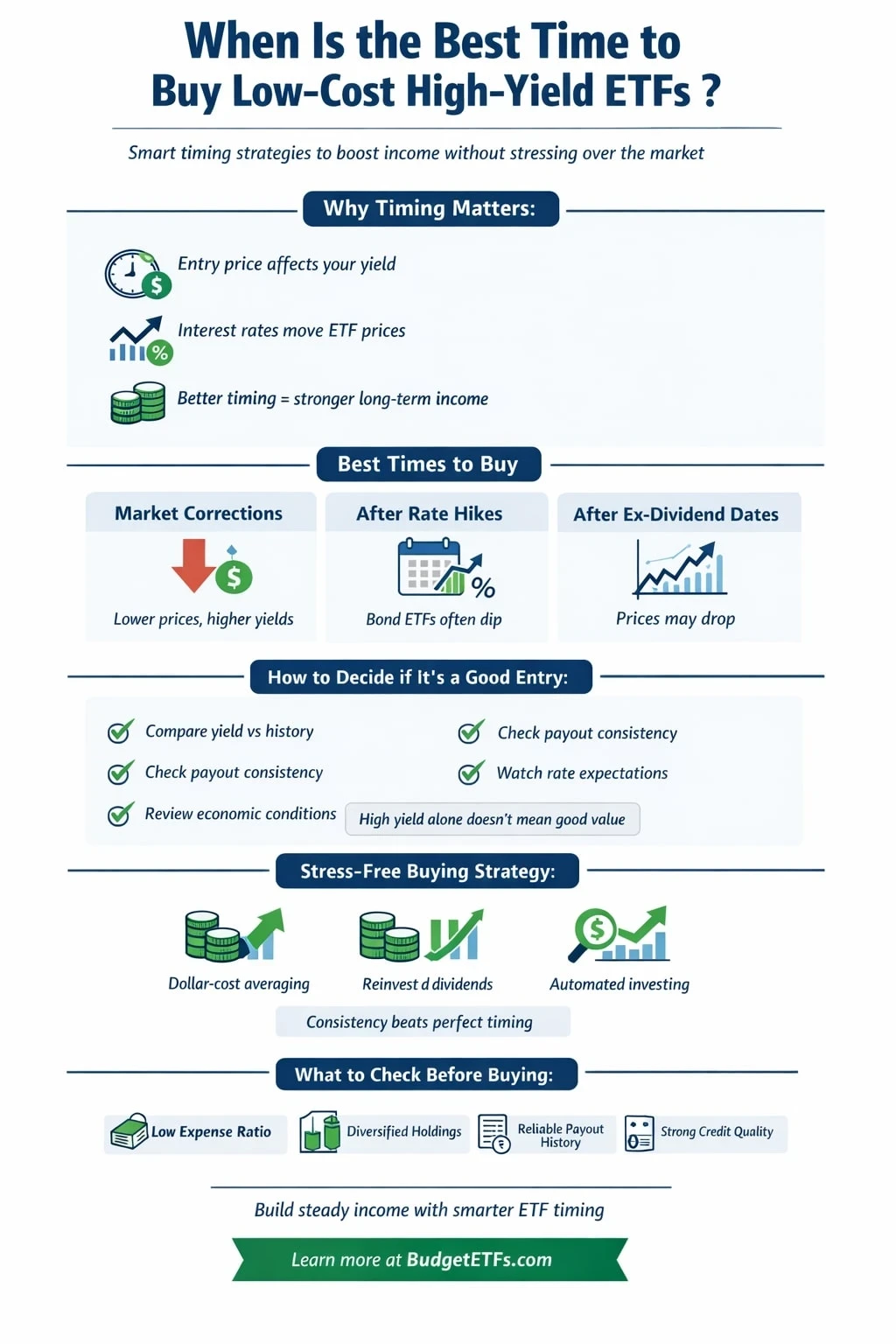
- During market corrections: When stock prices are falling as a whole, yields on these ETFs can jump, not because companies are suddenly more generous but because prices are lower and payouts stay steady. That means a better income rate for you. These moments can feel a bit shaky, but they sometimes offer the best value for long-term investors willing to weather the storm.
- After interest rate hikes: When central banks bump up rates, high-yield ETFs (especially those holding bonds or rate-sensitive assets) might dip in price short term. That’s often a good entry point if you want a higher income going forward. Keep in mind that bond-heavy funds can act differently from stock-focused ones in these scenarios.
- Near ex-dividend dates: Buying right before a fund goes ex-dividend gives you access to the next payout, but it’s not always a win if ETF prices adjust. I tend to check the underlying holdings and past price movements first. Sometimes it’s smart to wait until after the ex-dividend date if prices dip and you want to lock in a better cost basis.
The sweet spot for buying usually lines up with your own investing goals, especially if you’re adding these ETFs to a long-term retirement portfolio. Here’s more on using high-yield ETFs for retirement savings if you’d like to jump into the topic further.
How To Decide When The Time Is Right
I use a mix of research and practical rules before putting money into any new ETF. Here are a few checks that help me:
- Compare the yield to its history: If the ETF is paying a much higher yield than usual, it might be because the price has dropped. It’s worth checking if there’s a good reason or just regular market jitters. Background research can keep you from chasing yields that turn out to be unsustainable.
- Look at interest rate talk: If there’s chatter about upcoming rate hikes, some people hold off buying rate-sensitive ETFs until after the rates go up and prices settle a bit lower. But sometimes anticipation is already priced in, so it’s best to stay tuned into both actual decisions and market expectations.
- Check economic trends: When the economy looks stable or improving, high-yield assets can get more popular, which boosts their prices and sometimes shrinks yields. Conversely, big worries in the economy might create buying opportunities but also raise risk.
- Monitor payout stability: Consistent dividend payments over the years are a green flag. Sharp drops can point to trouble inside the ETF’s holdings. Reviewing payout histories and manager commentary can help you spot potential issues before they impact your wallet.
Following these steps helps me avoid falling into a yield trap, where payouts look great, but the underlying assets are shaky. More on avoiding those mistakes in my guide to using these ETFs for portfolio diversification, which is full of practical, real-world advice.
Common Hurdles And How I Work Around Them
While buying the dip can feel tempting, it’s not always the smartest move with high-yield ETFs. Sometimes prices are low because future payouts look risky, or the sectors these funds invest in are facing headwinds. If I’m worried about this, I use tools from TradingView for charting and technical insights. This is super useful for spotting bigger trends and potential red flags that aren’t obvious just from looking at basic stats.
Liquidity can be another issue, especially with smaller, less popular ETFs. Low trading volume can mean higher spreads when you buy or sell. I usually stick to funds with solid average daily volume and well-known issuers, just to keep trading costs down. This approach lets me get in and out smoothly whenever I need to adjust my holdings.
Building A Buying Plan That Works Year-Round
If you’re not excited about trying to time the market perfectly, you’re definitely not alone. I use a few steady habits to smooth out my own entry points and lower stress:
- Dollar cost averaging: Putting in smaller amounts over regular intervals helps spread out price risk. Over time, this leads to a more balanced average buy price, which feels less stressful than trying to nail the bottom. This method is especially useful if you have a busy schedule or just want to automate your wealth building.
- Reinvesting dividends: Letting payouts automatically buy more ETF shares helps harness the power of compounding, even if you’re not dumping in new cash each month. This gives a steady boost to your income stream and builds your holdings consistently over time.
- Autopilot investing platforms: I use platforms like eToro that let me schedule recurring ETF purchases. This keeps my plan steady even if I get busy or distracted by headlines, and it ensures I stick with my strategy through both market highs and lows.
You could also mark your calendar for special market events, earnings seasons, or annual portfolio reviews to give your buy plan an extra layer of discipline and structure. Adding these checkpoints helps you stay the course without overthinking each decision.
External Factors That Can Impact Buying Timing
Certain events and trends can affect the value you get from low-cost, high-yield ETFs. These include:
- Federal Reserve policy changes: Big rate changes or policy switches can send bond-heavy ETFs moving quickly, both up and down. Keeping up with Federal Reserve announcements will give you an early sense of when to consider adjusting your ETF strategy.
- Sector swings: If yields are high in real estate, energy, or bank sectors, those markets often move together based on broader economic news. Keeping an eye on headlines around these segments helps avoid surprises. Reading sector reports or news digests a few times a month can add helpful context for your buying decisions.
- Tax season: Some investors sell positions for tax reasons at certain times of the year, leading to more buying opportunities if prices dip temporarily. Being aware of these cycles lets you seize occasional bargains that pop up as the calendar turns.
It’s helpful to use economic calendars and read up on sector trends through sites like TradingView, which can give a sense for when timing is working in your favor. Even a quick weekend review once a month can keep you sharp.
Features I Lean On To Make Better Buying Decisions
There are a few ETF features I always check when deciding if now is the right moment to buy:
- Expense ratio: Lower costs are ideal because they leave more yield in your pocket over the long run. Over several years, even small differences in fees can add up to thousands of dollars.
- Diversification: Funds that spread risk over multiple sectors or asset types generally hold up better during bumps in the road. Consider whether the ETF brings something new to your portfolio instead of duplicating what you already have.
- Distribution frequency: Some funds pay monthly, which is pretty handy if you want to smooth out income throughout the year. If you count on steady payouts for living expenses, this can really make a difference for your cash flow.
- Underlying credit ratings: High average ratings on bond ETFs, for example, can mean more stable payouts. It is wise to review any recent changes in ratings or the bond mix if the ETF’s yield suddenly jumps higher than its historic average.
Don’t forget to check out online ETF screeners for side-by-side repeats of these numbers to make comparing choices simple. Platforms like Morningstar and Yahoo Finance are a great place to start your checklist.
Frequently Asked Questions
Here are a few questions I’m often asked about buying low-cost high-yield ETFs, and how I approach them in my own portfolio:
Should I wait for a big market drop before buying?
It’s tempting, but markets are hard to time. I prefer buying in chunks over time so I don’t get stuck holding out for a dip that never comes. Steady purchases mean you don’t let indecision keep you on the sidelines.
Are monthly dividend ETFs always better than quarterly ones?
Monthly payouts can be handy for predictable income, but what matters most is payout reliability and total yield, not just the payment schedule. Sometimes, quarterly funds have more stable or higher overall returns.
Do low-cost, high-yield ETFs belong in a retirement account?
Absolutely. With fees staying low and yields helping to grow your savings, they work well for long-term investors. Check out my thoughts on using them for retirement accounts here if you want to get a sense of the real-world advantages.
How do I know if an ETF’s yield is sustainable?
A little research goes a long way: I look at the fund’s payout history, sector exposure, and analyst reports for clues. Sudden yield spikes with shaky asset quality can mean trouble ahead. If anything seems off, I dig into recent news, check fund manager comments, and sometimes wait a bit to see how things shake out.
Wrapping Up
Spotting the right time to buy low-cost high-yield ETFs comes down to keeping an eye on both market trends and your own plans for the money. Using a steady investing approach and making the most of tools like TradingView or recurring investments through eToro makes it less stressful if headlines get scary or markets get rocky. Watching yield trends, expense ratios, and the fund’s payout history helps keep your income stream steady, no matter what’s happening outside. Your buy plan doesn’t have to be perfect; a thoughtful, consistent approach often outshines any attempt to outsmart the market.