Low-cost, high-yield ETFs are grabbing more attention from both beginner and seasoned investors. These funds offer a convenient way to collect regular income, keep costs down, and spread risk across a variety of stocks or bonds. I’ve found that understanding exactly why these ETFs are popular helps clear up how they might fit in almost any portfolio, even if you’re not rolling in extra cash to invest each month. Here I’ll break down the perks, what you need to watch out for, and how to make the most out of using these ETFs to give your returns a boost.
Disclaimer: This article contains affiliate links. If you open an account through these links, I may earn a commission at no additional cost to you. Investing involves risk, including the possible loss of capital. eToro is not available in all countries. Eligibility depends on your region. Always consider your individual circumstances before investing.
Intro to Low-Cost High-Yield ETFs
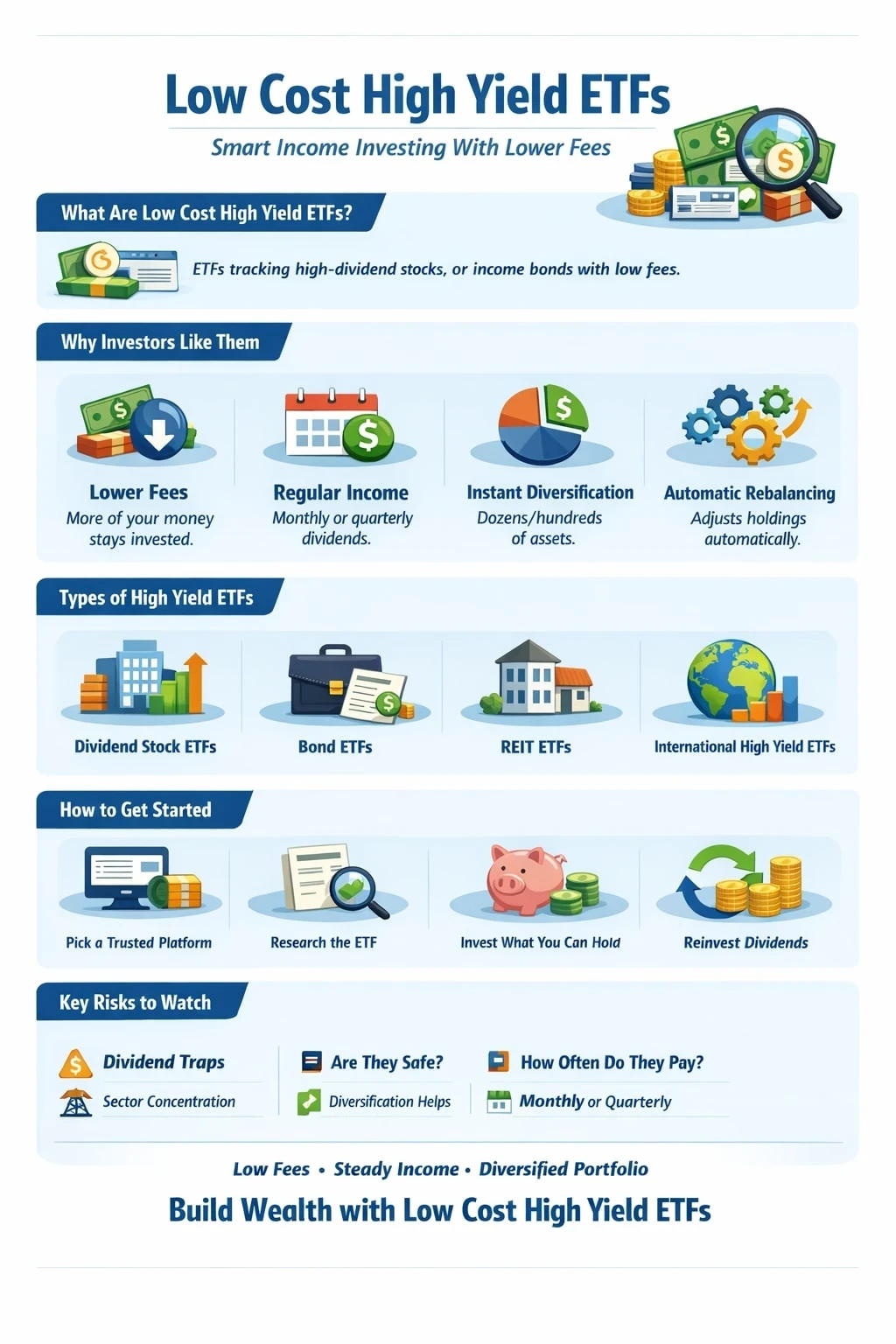
Low-cost high-yield ETFs are investment funds built to track baskets of high-dividend-paying stocks or bonds. The “low cost” part just means that the annual expenses, known as the expense ratio, are smaller compared to other funds. The “high yield” side points out that these funds focus on assets that pay above-average income, typically through dividends or interest payments. Combining the two means you’re keeping more of what you earn rather than letting fees eat away at your gains.
Why does this combo matter? Over a decade, even a small difference in fees can add up to thousands in lost returns. I always tell friends and readers that every fraction of a percent you save in costs is another bit of money working for you, not for some Wall Street manager. With interest in income-focused investing on the rise, thanks to record-low savings rates and market uncertainty, the demand for these ETFs has really taken off. For more details on selecting funds, you can check out my guide: How Do I Choose Low-Cost High-Yield ETFs for My Portfolio?.
Why Low-Cost High-Yield ETFs Are Worth Considering
There are a few core benefits that stand out to me when it comes to these funds. Here’s a closer look at the advantages:
- Lower Management Fees: The lower the expense ratio, the less you’re paying every year just to own the fund. Traditional mutual funds might charge 0.75% or more, while some popular ETFs come in at 0.08% or even lower. Over time, that adds up to some real savings.
- Consistent Income: High-yield ETFs seek out investments that offer above-average dividends or interest payments. That means you’ll often see regular payouts, either monthly or quarterly. This can be really useful if you want some reliable income for bills, retirement, or even just reinvesting to grow your portfolio quicker.
- Diversification Made Easy: Buying a single ETF can instantly spread your risk over dozens or even hundreds of companies or bonds. It’s a lot easier and usually cheaper than trying to build your own basket of high-yield stocks or bonds from scratch.
- Automatic Rebalancing: Most ETFs automatically sort their holdings to maintain their strategy. So, if markets mix things up and some holdings become less appealing, the fund swaps them out automatically. This saves time and helps reduce the risk of the portfolio drifting away from its intended strategy.
People sometimes assume you have to give up performance for lower fees, but I’ve seen plenty of low-cost high-yield ETFs that hold their own against pricier competitors. Of course, you still need to be careful about underlying risk, which I break down more in my post on What Are The Risks Of Low Cost High Yield ETFs?.
How to Get Started with Low-Cost High-Yield ETFs
Getting going doesn’t have to be complicated. Taking a few smart steps can really give a boost to your results:
- Pick a Trusted Platform: Use a brokerage with a reliable track record and low or zero trading fees. I find both eToro and TradingView to be user-friendly for beginners and great for comparing funds.
- Research Your ETFs: Always look at the fund’s expense ratio, yield, and the collection of assets it holds. Bigger, more popular ETFs tend to be more stable and easier to buy and sell quickly, too.
- Stick to Your Budget: Only invest money you’re comfortable leaving in the market for a while. These funds are great for a steady income, but prices still move up and down.
- Reinvest Dividends: Many platforms let you automatically reinvest dividends to buy more shares. This makes compounding work faster over the years.
Following these steps, I’ve managed to keep costs under control and build a more reliable income stream, even when markets get bumpy and unpredictable.
What Kinds of ETFs Should You Look For?
Not all high-yield ETFs are created the same. Some focus on U.S. dividend stocks; others stay with corporate bonds; some mix in international assets or even real estate. Here are a few categories I usually see:
- Dividend Stock ETFs: These hold a collection of companies that regularly pay solid dividends. They are popular for steady income and the chance for growth.
- Bond ETFs: Corporate bonds, municipal bonds, or a mix. Bond ETFs tend to carry less risk than stocks, but yields can change a lot depending on interest rates and the type of debt inside the fund.
- Real Estate Investment Trust (REIT) ETFs: These focus on property companies that generally pay out most of their income as dividends. Yields can be higher, but they also come with some real estate market ups and downs.
- International High Yield ETFs: If you want more geographic range, funds are holding overseas dividend stocks, though it’s smart to keep an eye on currency swings and global risks.
If you’re ever unsure, I suggest starting with broader funds and gradually adding more focused ETFs as you gain comfort and knowledge. For extra tips on timing, check out Should I Invest In Low Cost High Yield ETFs Now?.
Things You’ll Want to Consider Before Investing
Even with all the benefits, there are some key details to watch for:
- Dividend Traps: Some stocks or bonds promise high yields but end up slashing payouts if things go badly. Review the fund’s history and see if it has managed to keep steady payments over time.
- Sector Concentration: Some ETF funds lean hard into sectors like energy, utilities, or financials, which could make your returns a bit bumpier if those areas go through rough times.
- Tax Considerations: Dividends and interest from ETFs are usually taxed as income. Be sure to check how that works for your country and tax bracket. Sometimes it pays off to hold these in an IRA or another tax-friendly account.
- Yield vs. Total Return: Chasing high yields can mean missing out on longer-term growth. I try to keep a balance between steady income and capital appreciation in my own picks.
Dividend Traps
If the yield looks way too good to be true, it might be. High yields sometimes mean the companies underneath are struggling or may not be able to keep up with payouts down the line. I always dig into how the fund built its yield, so a little research can keep you from running into disappointment.
Sector Concentration
It’s common for some high-yield funds to bulk up in certain sectors. This can mean bigger swings if those industries falter. Spreading your investments by using several ETFs or funds that cut across different industries can help stabilize things a bit.
Tax Considerations
Income from ETFs can add up to your tax bill, especially if you’re in a higher bracket. Tax-friendly accounts help offset this. It’s smart to review local tax rules or talk with a tax professional, so you keep more of your income.
Common Questions About Low-Cost High-Yield ETFs
A lot of investors have questions about how these strategies work in real life and what they can expect. Here are answers to a few of the big ones:
What kind of income should I expect?
Yields can be anywhere from 2-8% yearly, depending on the fund’s focus. Bond and REIT ETFs usually pay somewhat more, but check each fund’s recent distributions to get a real sense of what to expect.
Are high-yield ETFs safe?
No investment is absolutely risk-free. High-yield ETFs come with the chance to earn more income, but also risk. Diversifying helps, and looking over a fund’s holdings gives you a better sense of possible trouble spots.
How often do these ETFs pay out?
Most high-yield ETFs pay dividends every month or quarter. You can easily schedule payouts or have them reinvested in your brokerage account.
How do I track the performance?
Platforms like TradingView help track real-time performance and compare ETFs side by side.
Bringing it All Together
Low-cost high-yield ETFs offer a straightforward way to build income, get instant diversification, and keep more of your money by keeping fees low. I rely on them a lot for creating a steady cash flow, and I think they’re well worth a look for anyone wanting a more hands-off approach to investing. If you’re ready to start, using trusted platforms like eToro or TradingView makes it much easier to research and buy these funds. Also, by staying aware of the risks and matching your ETF choices to your personal goals, you can make the most out of your investments. Happy investing!