If you’ve ever looked into investing with ETFs (Exchange Traded Funds), you might have noticed a little number listed next to each fund—the expense ratio. It’s easy to overlook, but this small percentage can quietly chip away at your returns over time. I want to share how ETF expense ratios work, why they matter for your portfolio, and what you can do to make more cost-conscious investment choices.
Disclaimer: This article contains affiliate links. If you open an account through these links, I may earn a commission at no additional cost to you. Investing involves risk, including the possible loss of capital. eToro is not available in all countries. Eligibility depends on your region. Always consider your individual circumstances before investing.
Understanding ETF Expense Ratios
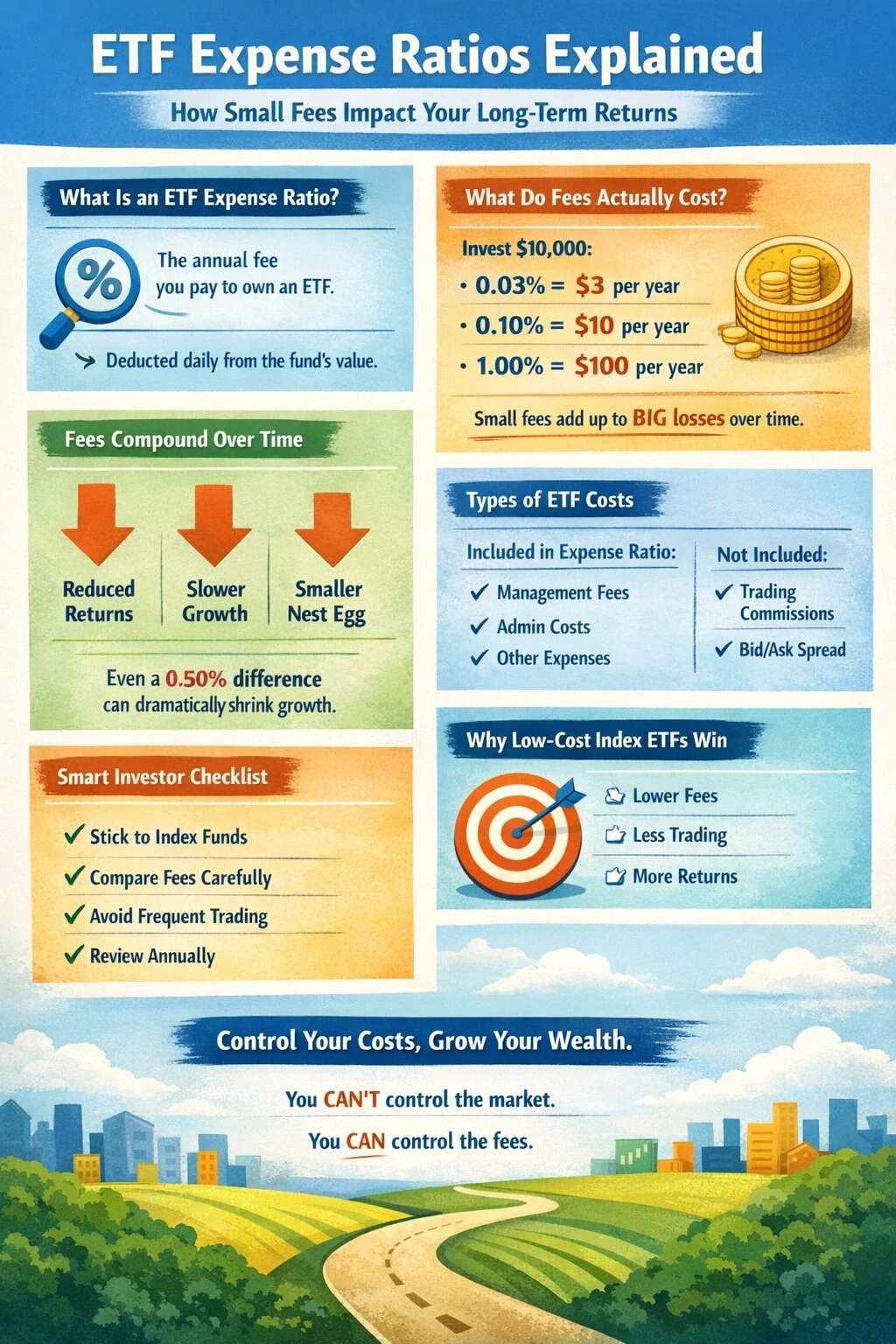
Expense ratios tell you how much you’ll pay each year to own shares of a specific ETF. These costs go toward the fund’s management, operations, and administrative fees. Usually, the expense ratio is expressed as a percentage, for example, 0.08% or 0.20%, and is automatically deducted from your returns.
These ratios can look tiny at first glance, but over time, they add up. If you put $10,000 in an ETF with an expense ratio of 0.08%, you pay just $8 a year. But a fund with a 1% expense ratio will cost you $100 a year. That difference may feel small, yet in the long run, years of higher fees can stack up and eat into your investment growth.
Expense ratios are particularly important with passive investing (tracking an index), where the goal is often to keep costs down and maximize returns. Lower expenses mean you keep more of your money working for you, which is pretty handy if you’re investing for retirement or building a long-term portfolio.
If you’re wondering how expense ratios are actually deducted, it’s worth mentioning that these fees never appear as a separate charge on your statement. Instead, they’re baked into the ETF’s net asset value on a daily basis, subtly reducing the fund’s returns over time. While it might seem invisible, this mechanic makes it even more important to be aware of the ratio when choosing among similar funds.
Why ETF Expense Ratios Matter for Investors
The cost of an ETF isn’t always front and center, but it makes a real impact on your returns, especially over years or decades. With both actively managed and passively managed ETFs, the expense ratio directly affects how much money you actually earn.
If you want to get into how ETF costs shape your returns, you can check out this detailed overview on how to maximize returns with ETFs.
Compounding Expenses Can Sneak Up On You
Small differences in expense ratios become much more meaningful as your investment grows. Over 10 or 20 years, even a modestly higher annual cost shaves off more and more of your total returns. Because ETFs usually work best for long-term goals, paying attention to these percentages early is really important.
Low-Cost Index Funds Are Popular for a Reason
More investors are choosing ETFs with super-low expenses, sometimes less than 0.05% per year. These are usually passively managed index funds, which just track the market instead of trying to beat it. If you prefer to keep things simple and cheap, low-cost passive ETFs might suit your style. Want to learn more about what to expect as ETFs evolve? Here’s a post on future trends in ETF investments.
It’s important to recognize that differences in expense ratios among similar funds can add up to thousands of dollars in lost growth over decades. Even within the same asset class, expense ratios vary, so always check them before making a final pick.
Breaking Down the Different Types of ETF Expenses
It’s not all about management fees. ETF expenses come in a few shapes and sizes, and knowing the details can help you spot hidden costs and make educated choices.
- Management Fees: These payments go to the professionals who create and adjust the ETF’s investment strategy. Actively managed ETFs usually charge more because they require more hands-on work.
- Administrative Costs: All funds need back-office support, including tasks like legal work, accounting, and reporting. These costs are bundled into the expense ratio, too.
- Other Operating Expenses: Some ETFs include additional charges, such as exchange fees or licensing costs, that contribute to the overall expense ratio.
- Trading Costs: Not included in the expense ratio, but you’ll pay your broker each time you buy or sell ETF shares unless you use a commission-free platform.
For a quick overview and comparison of different broker platforms, check out eToro or try charting and analysis on TradingView. Both are worth exploring if you’re hunting for affordable and flexible options.
Additionally, be mindful of other potential ETF costs such as tracking error (how closely the ETF follows its index) and the bid/ask spread, which can have a noticeable effect on your entry and exit prices, especially for ETFs with lower trading volumes.
How to Spot the Real Cost: Comparing Expense Ratios
When you compare ETFs, the expense ratio is usually listed near the top of the fund’s fact sheet or on broker websites. However, the cheapest ETF isn’t always the right fit for everyone. Quality, liquidity, and the underlying index can matter just as much, if not more.
Here’s a quick example: Suppose you’re deciding between two large-cap US equity ETFs, ETF A with a 0.03% ratio, and ETF B with 0.10%. If they both track the same index, ETF A will almost always be the better value. However, if ETF B tracks a broader or harder-to-access segment of the market, paying a bit more might be worth it for the added diversification.
If you want more context before picking your ETFs, here’s a post that can help: What to Know Before Investing in ETFs.
When comparing expense ratios, also consider looking at historical performance, how faithfully the ETF tracks its benchmark, and if the fund’s size and trading volume meet your comfort level. All of these factors together will give you a stronger understanding of the ETF’s total cost profile and investment appeal.
Common Questions About ETF Expenses
ETF expense ratios can be confusing when you’re just starting. Here are answers to some common questions I’m often asked:
How often do I pay an ETF expense ratio?
Expense ratios are baked into the daily share price and taken out automatically, so you won’t see a bill or direct deduction. It lowers your total return a little bit each day throughout the year.
Are there any ETFs with zero fees?
Some ETFs have launched with 0% expense ratios as an introductory offer or marketing tool. This is rare, and it’s smart to check for fine print, since sometimes these funds charge other fees elsewhere or plan to raise costs later.
Should I always choose the lowest expense ratio?
Low expenses are great, but you should also look at what you get for your money: how closely the fund tracks its index, the diversity of its holdings, and factors like bid/ask spread. Sometimes paying a little more can be worthwhile for increased reliability or a unique investment approach. Also, make sure you’re comparing funds in the same category or with similar strategies before deciding based solely on price.
Tips for Keeping ETF Costs Low
There are a few easy ways to keep expenses in check, especially if you’re building a portfolio for the first time:
- Stick with Index ETFs: These are almost always cheaper than actively managed funds.
- Look at Fund Size: Larger ETFs usually have lower costs because they spread expenses over more assets.
- Compare Similar Funds: Make sure you’re comparing apples to apples, like ETFs tracking the same benchmark.
- Don’t Forget Trading Fees: Some brokers offer zero-commission trades. Using platforms like eToro or checking out tools on TradingView can help you cut down on brokerage costs.
- Keep Turnover Low: The more often you trade, the more you’ll pay in buy/sell costs; try to hold for the long term when possible.
Another tip is to periodically review your holdings, as ETFs may lower their expense ratios over time to remain competitive, or new lower-cost alternatives may enter the market. Staying aware will help you make adjustments that can save you money.
Expense Ratios and Performance: What to Watch Out For
Sometimes, people worry that picking a fund with a low expense ratio might mean lower quality performance or weaker management. But, especially for popular indexes like the S&P 500, low-cost ETFs often perform just as well, or occasionally better, than pricier active rivals. The key is to balance costs with your goals, time horizon, and risk tolerance.
If you’re interested in broader trends, there’s a lot of chatter lately about where ETF pricing is headed and how costs may continue to drop. Keeping an eye on expense ratios is a practical way to squeeze more value from your investments, especially as the market keeps evolving.
Remember, performance after fees is what really counts, so consider the total picture. If two ETFs offer similar gross returns but one charges less, that difference goes right into your pocket year after year.
Putting It All Together: Smart ETF Choices for Every Investor
Checking the expense ratio before you buy any ETF is a super important habit that pays off for years. Picking funds because they’re cheap won’t always get you the results you need, but finding the right balance between cost, quality, and your personal financial goals sets you up for a stronger long-term outcome. I always make sure to double-check those percentages, because even small savings today mean more compounding growth later on.
If you’re just getting started, I recommend taking a little bit of extra time to shop around and compare your options. And if you want to see how to get the most out of your ETF picks, you can check out guides for maximizing ETF returns or keep up with future trends in ETFs. Investing success often comes down to controlling what you can—cost is one of the easiest things to keep an eye on while you let your investments grow.