Exchange-traded funds (ETFs) have become a favorite tool for people looking for growth, income, or just a bit more balance in their investment game. Whether you’re new to investing or have some stock market wins (and losses) under your belt, ETFs can offer some pretty handy ways to make your money work harder, without the extra hassle of picking individual stocks one by one.
There’s a lot more to getting strong returns from ETFs than just clicking “buy” and forgetting about it. The good news is, with the right approach, you can tap into the wide world of ETFs to chase higher returns, lower fees, and spread out risk in a way that fits your comfort zone.
This practical guide breaks down some steps, tips, and strategies I follow to use ETFs for maximizing returns, while keeping things as smooth and stress-free as possible.
Disclaimer: This article contains affiliate links. If you open an account through these links, I may earn a commission at no additional cost to you. Investing involves risk, including the possible loss of capital. eToro is not available in all countries. Eligibility depends on your region. Always consider your individual circumstances before investing.
The Basics: Understanding How ETFs Give a Boost to Returns
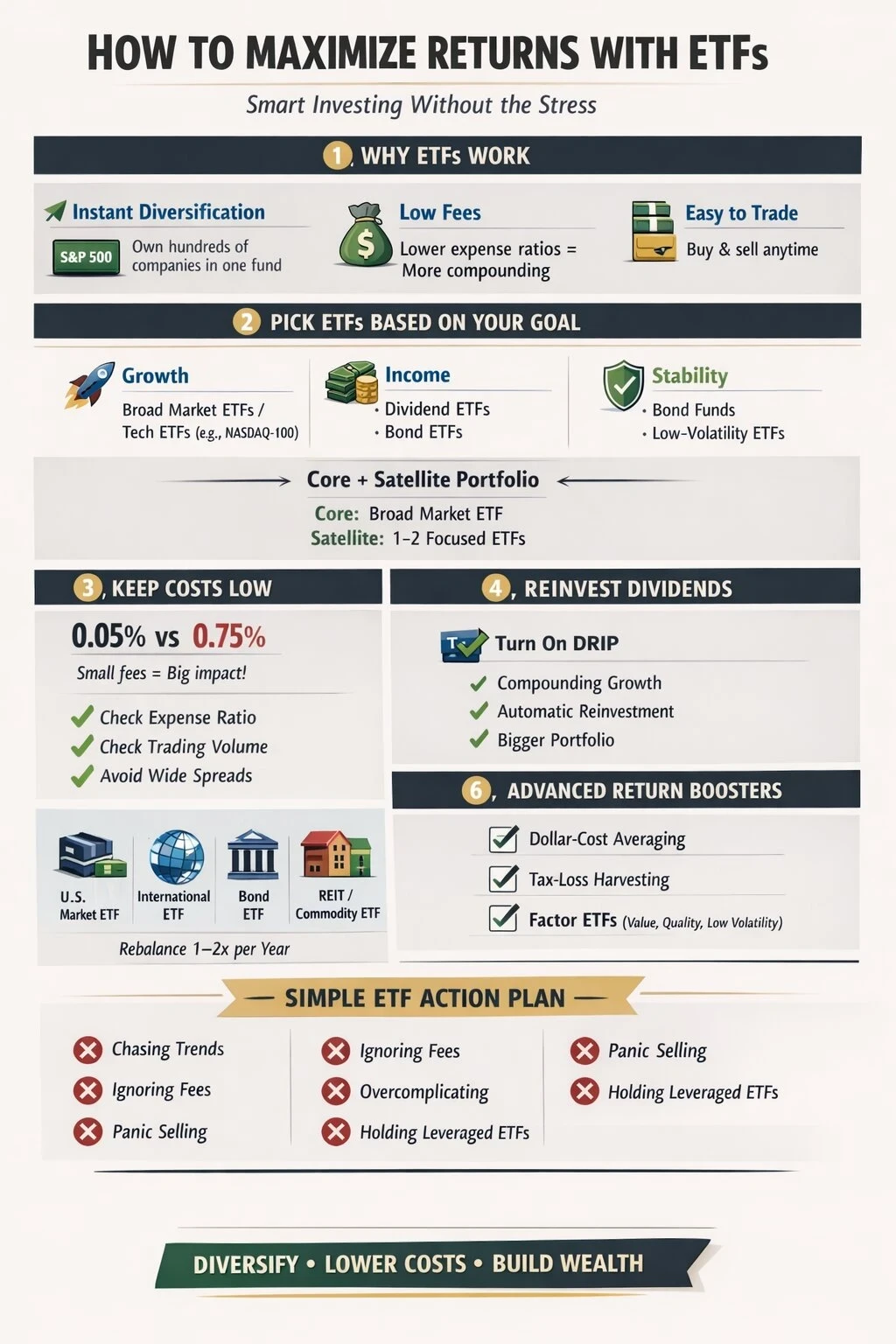
Before jumping in with both feet, it helps to get the basics down. ETFs are baskets of assets like stocks, bonds, or commodities that trade on exchanges just like regular stocks. You’re not betting on just one company; you’re buying a slice of a whole group.
- Diversification: You get exposure to dozens or even hundreds of names, which can cushion you from the ups and downs of any single stock or sector.
- Low Costs: Many ETFs have much lower fees than mutual funds. Over time, spending less on fees can bump up your returns.
- Liquidity: Because ETFs trade all day on exchanges, you can jump in or out pretty quickly if you need cash or want to rebalance.
To learn more about what makes certain ETFs attractive, check out this helpful rundown on low cost, high yield ETFs.
Choose the Right ETFs for Your Goals
All ETFs aren’t created the same. Some track broad markets like the S&P 500, while others chase after gold, bonds, energy stocks, or companies paying fat dividends. Picking the right ones depends on what you want out of your portfolio, and your comfort level with different types of assets.
What Are You Looking For?
- Growth: Focus on equity ETFs that track major stock indexes or specific sectors like technology.
- Income: Dividend ETFs and bond ETFs might be worth a look if you want regular payouts.
- Stability: Look for ETFs that include lots of high quality bonds or defensive stocks to help smooth out the bumps.
I find it’s usually best to start with a “core” ETF, like one tracking the entire U.S. market, and then add more focused ETFs to fit your style or goals. Plus, if you’re not sure where to start, using a tool like TradingView makes it simple to screen for ETF performance, fees, and holdings.
Don’t forget to explore sector-based ETFs, international offerings, or even thematic funds if you want to play trends like clean energy, tech innovation, or healthcare advances. Remember, the mix of ETFs you pick can help you match your risk tolerance and potential for greater returns over time.
Keep Costs Low: Fees Add Up Over Time
Even though ETFs are known for being low fee, not all are. A tiny difference, like 0.05% vs. 0.75% in expenses, can sneak up and shave thousands off your future returns, especially if you plan to invest for the long haul.
- Always check the “expense ratio” before buying. Lower is usually better unless the fund offers something unique that you need for your portfolio.
- Watch for hidden costs like bid ask spreads, especially in niche or smaller, low volume ETFs.
For a quick refresher on what makes a low cost ETF, get into this overview.
Reinvest Dividends to Turbocharge Growth
Many ETFs pay out cash from dividends or interest. If you’re able to, set those payouts to automatically buy more shares instead of landing in your cash balance. This helps you ride the compounding wave and build your stake over time, even if the process feels slow.
- Most brokers, including the major free trading apps, offer a free dividend reinvestment (DRIP) option.
- This is especially helpful with high yield ETFs, which tend to dish out steady income and let you snowball gains over years of patient investing.
Curious about dividend ETF basics? Here’s a simple explanation that covers what you need to know.
Build a Diverse ETF Portfolio
It’s easy to get carried away with one hot ETF, but putting all your eggs in one basket can backfire if that corner of the market takes a hit. Mixing things up with a range of ETFs, such as stocks, bonds, international, and sector funds, spreads out risk and gives you a smoother adventure.
Practical Ideas for Building a Mix
- Combine a broad market ETF (like a total stock market fund) with a bond ETF for balance—you can tweak the split based on your age and risk appetite.
- Add exposure to international markets, which helps you avoid being too tied to one country or economic cycle.
- A sprinkle of real assets (like commodity or REIT ETFs) can buffer your portfolio against inflation and market swings, providing another way to balance things out.
I aim to rebalance my ETF lineup once or twice a year, just to make sure things haven’t drifted too far from my comfort zone. Rebalancing isn’t about timing the market, it’s about making sure your investments keep matching your goals and comfort with risk.
Be Patient and Stick With the Plan
Chasing trends or jumping in and out whenever the news gets loud is tempting. But in my experience, holding your investments through thick and thin usually brings a better outcome than trying to outsmart the market or time your buys and sells.
- Weekly or daily market moves can make even the best ETF bounce around, but that doesn’t mean you need to react every time. Let the process work for you.
- I like to set a schedule for checking and adjusting my portfolio, instead of tuning in to the noise every day. Sometimes, less is more when it comes to trading activity.
Advanced Tips for Squeezing Out More Returns
Tactical Moves Without Losing Your Mind
- Tax Loss Harvesting: If you hold ETFs in a taxable account, selling losers to offset winners can help keep more money in your pocket. This can also be a smart way to fast track gains or reduce your yearly tax bill.
- Consider Factor and Smart Beta ETFs: ETFs targeting things like value or low volatility might give a boost to returns or help smooth out the ride, especially when markets get rocky.
- Automate Your Investing: Setting up automatic monthly investments (also called “dollar cost averaging”) means you buy more when prices are low and less when they’re high, which helps manage risk and takes emotion out of the process.
If you’re interested in trying some more hands on strategies, platforms like eToro make it easy to experiment with ETF heavy portfolios and copy popular traders.
Common ETF Questions & Challenges
What’s a good way to keep up with ETF news?
I keep an eye on sites like ETF.com and use screeners from TradingView to spot new funds, news, and popular trends.
How many ETFs is too many?
I aim to keep my portfolio simple—usually five or fewer ETFs. More than that can make it tough to manage without really adding much real diversification.
What about ETF risks?
Even though mixing things up helps, ETFs still carry market risk. Some are also extra risky because they use leverage or follow obscure sectors. I read the fund’s documents carefully before buying anything new. If it sounds confusing or too good to be true, I skip it.
Can you lose money with ETFs?
Yes, it’s possible to lose money with ETFs. They may drop in value with the whole market or if a specific sector falls. However, by sticking with good diversification and not chasing wild trends, you can reduce risks over the long haul.
Your Next Moves
Getting the most out of ETFs is all about matching them to your unique needs, keeping an eye on fees, spreading your bets, and letting time do its thing. With a little discipline and smart strategy, you can give yourself a better shot at reaching your investment goals in the years ahead.
Quick ETF Action Steps:
- Pick one or two ETFs that fit your plans and comfort level.
- Double check expense ratios and fund holdings with tools like TradingView.
- Set up dividend reinvestment and automate your purchases if you can—this helps your portfolio grow on autopilot.
- Review your ETFs yearly, rebalancing if needed, to make sure your mix still lines up with your goals.
Over time, you’ll likely see that smart, simple ETF moves can be a handy way to chase returns without turning investing into a full time job. Got an ETF you’re curious about? Drop it in the comments—I love checking out new funds and hearing about different portfolio approaches.