Investing in low-cost, high-yield ETFs is a pretty smart move if you’re looking to grow your money without paying lots of fees or taking on a ton of risk. I like these ETFs because they strike a balance between good income potential and low expenses, making them accessible to both beginners and longtime investors. Over the past several years, I’ve used them to add steady, passive income to my portfolio, and the results have been solid.
It doesn’t take a finance degree to get started with these funds, but knowing the key steps will save you a lot of stress (and dollars) down the road. I’ll walk you through what to look for, how to pick funds that actually suit your style, and a few useful strategies to help you get the most out of your investment.
If you’re still exploring how these ETFs can fit into your broader plan, you might want to browse my earlier breakdowns, like Should I invest in low-cost high yield ETFs now? or my deep post on mixing up a portfolio with low-cost high yield ETFs.
Disclaimer: This article contains affiliate links. If you open an account through these links, I may earn a commission at no additional cost to you. Investing involves risk, including the possible loss of capital. eToro is not available in all countries. Eligibility depends on your region. Always consider your individual circumstances before investing.
1. Understanding Low-Cost High-Yield ETFs
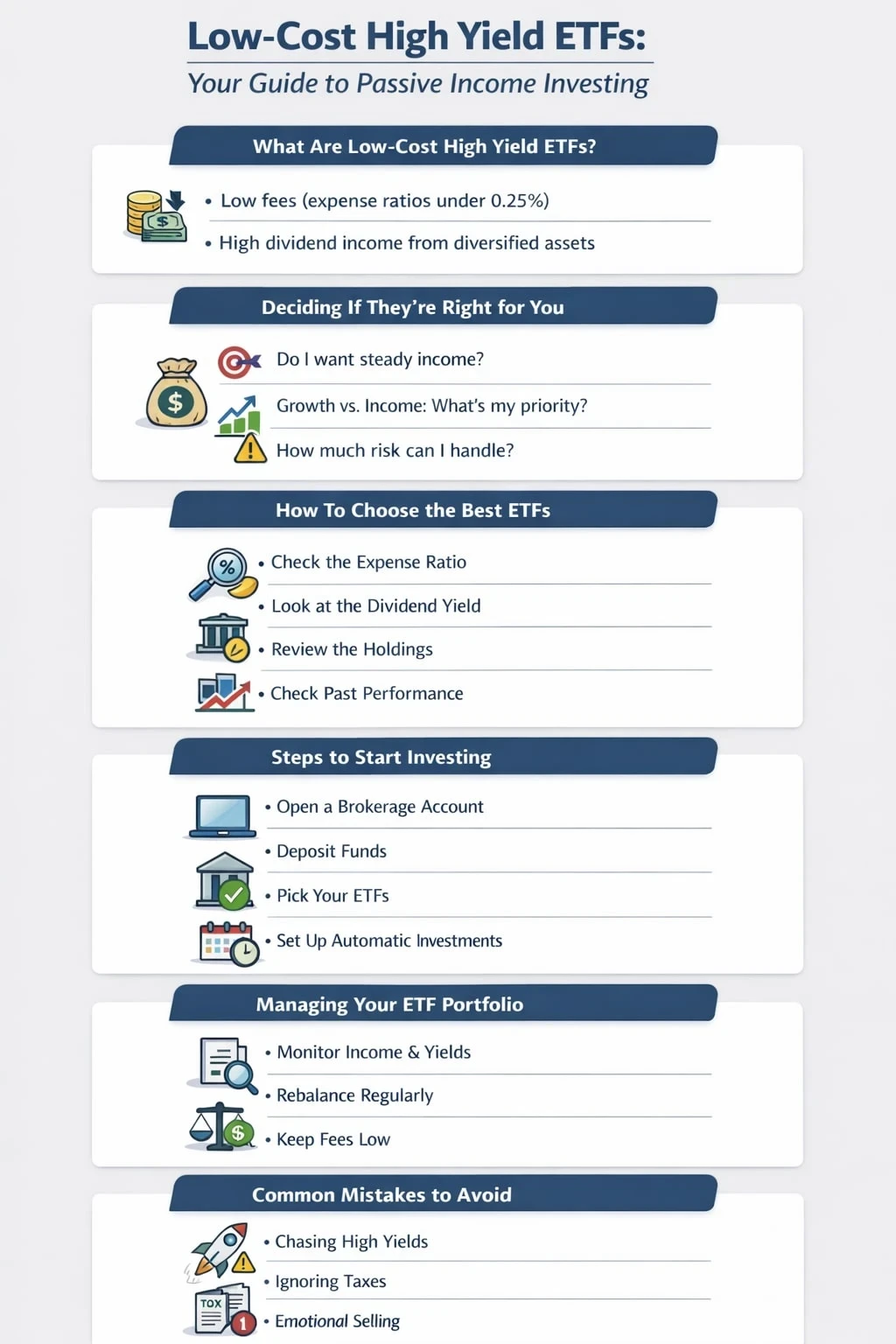
Low-cost high-yield ETFs are basically baskets of dividend-paying stocks, REITs, or fixed income assets that keep fees to a minimum. Their main goals? Pay you a regular income and not charge you much in management costs (aka expense ratios). I like that these funds make diversification super easy without needing to individually research dozens of separate stocks or bonds.
- Low cost: Expense ratios are usually under 0.25%, which means more of your money stays invested and working for you.
- High yield: Generally, you’ll find these ETFs focus on sectors that offer bigger dividend yields, like utilities, telecoms, or corporate bonds.
- Trades on exchanges: So you can buy and sell them just like any stock through your broker or investing app.
Want a full brush-up on what counts as low-cost and high yield? I wrote a detailed post on choosing low-cost high-yield ETFs for a portfolio that covers definitions and examples in depth. If this topic is brand new to you, you’ll find clear, practical info there to get you started.
One thing I always point out is that low-cost, high-yield ETFs aren’t just for retired investors looking for passive income. Younger investors can benefit too, since these funds help balance a portfolio between steady payouts and growth potential. If you’re starting to build a diversified investment plan, these ETFs are a helpful foundation. They cut out a ton of the research needed for stocks and bonds, since you’re automatically spreading risk across a range of assets. Plus, the fees are way lower than most mutual funds, which is money you keep in your account instead of paying to managers.
2. Deciding If These ETFs Are Right For You
I always start by figuring out what I’m aiming for: monthly income, long-term growth, or maybe a mix. If you need to cover some living costs or just want more cash flow from your investments, these ETFs are a good fit. Here are a few quick questions I use for self-assessment:
- Do I want some of my returns to come from regular dividends?
- Am I okay with modest growth in exchange for more income?
- How much risk can I deal with (since high yield sometimes means more volatility)?
- Is keeping my investing costs down important to me?
Most regular investors (including me) can benefit from having at least a small slice of these funds, especially if you prefer not to spend hours researching individual stocks or bonds. These ETFs let you step into investing even if you’re not sure where to start. If you’re cautious and want stability without missing out on income potential, they’re a balanced way to grow your investments without all the guesswork.
3. How To Find The Best Low-Cost High-Yield ETFs
Finding solid ETFs takes a little time, but I’ve got a checklist I always follow to make things easier:
- Start with the expense ratio. I try not to pay more than 0.25% unless there’s a really compelling reason.
- Check the dividend yield. Look for funds that pay above-average yields, but be careful of those with numbers that seem way out of line, since they can be riskier or could cut dividends soon.
- Look at the holdings. Some funds focus on stocks, some on bonds, and others on real estate, so pick what you feel most comfortable with.
- See the track record. I always prefer ETFs that have been around for at least a few years, so I can see how they perform in different market conditions.
Platforms like TradingView are super useful for comparing ETFs side by side. If you want to actually buy, eToro makes setting up an account and investing in ETFs pretty straightforward.
In my experience, reading the fund’s prospectus—even just a quick skim—can help you spot whether it’s sticking to its goals. Some ETFs may call themselves “high yield” but actually have pretty average or even lower-than-expected payouts once you factor in market changes or recent dividend cuts. Reviewing distributions from the past year can give you a sense of expected income going forward. And don’t forget to check how diversified the ETF really is. Funds with hundreds of holdings tend to be steadier than narrowly-focused or very small funds.
4. Steps To Start Investing
Practical Steps To Begin:
- Open a brokerage account. You can use online brokers like eToro, which let you start with low minimums and offer easy ETF access.
- Deposit funds. Most platforms have a simple bank transfer system and let you start with small amounts.
- Find your chosen ETFs. Search them up by ticker and use research tools for price and yield info.
- Decide how much to invest. I always stick to an amount I’m comfortable holding for at least a few years.
- Place your order. You can generally buy whole shares or sometimes even fractions.
I find it super useful to set up a recurring purchase, like a monthly buy of your ETF of choice, so you can benefit from dollar-cost averaging. That means you’re buying at different market prices over time, which helps smooth out the ups and downs and can lead to better long-term results. Setting an automatic schedule also removes the stress of trying to time the market, which is something even pros struggle with.
5. Managing Your ETF Investments Over Time
Investing isn’t really a “set and forget” deal. Checking in from time to time helps keep your approach fresh and your holdings balanced. Here’s what I focus on:
- Check your yield and income. As payouts change, decide if the fund still suits your plan.
- Rebalance every few months or after a big market shift. Adjust your holdings if one ETF or sector grows much faster than others.
- Review expenses yearly. Sometimes, funds raise their fees, so it’s worth making sure your picks are still low-cost.
If you want more ideas on keeping your investments balanced, feel free to check out my piece on mixing it up with these ETFs. Staying on top of your portfolio, even for just a few minutes every couple of months, can make sure your investments keep matching your goals.
Another tip is to use a spreadsheet or an online portfolio tracking tool. Jotting down your ETF tickers, date of purchase, amount invested, and dividend payments helps you see progress over time. Plus, you’ll quickly spot if your portfolio’s yield or performance starts to slip, so you can decide if you need to rethink your approach or switch funds.
6. Common Pitfalls And How I Avoid Them
- Chasing the highest yields. Some sky-high numbers mean extra risk. I prefer ETFs with yields a bit above the market average, not several times higher.
- Ignoring tax impacts. U.S.-listed ETFs often pay dividends that are taxed as ordinary income. I use IRAs or other tax-friendly accounts to keep my tax bill lower.
- Not checking for liquidity. I stick with ETFs that trade decent volumes every day, so they’re easy to buy and sell without a hassle.
- Overlooking changes in underlying holdings. Sometimes an ETF changes its holdings or focus, which can switch up the risk or return profile. It’s smart to read fund updates or annual reports when they land in your inbox.
It’s also easy to let emotions drive decisions when prices drop. I’ve learned to stick with my plan and avoid panic selling during downturns, since income-producing ETFs usually recover with time. Remember, it’s the steady, long-haul approach that pays off the most with these types of funds.
7. Frequently Asked Questions
Are high-yield ETFs safe?
No investment is totally safe, but picking funds with lower costs and a diversified group of holdings generally makes them less risky than buying individual high-yield stocks. If you stick to reputable issuers and avoid chasing extreme yields, you can lower your risk significantly.
How often do these ETFs pay dividends?
Most pay quarterly or monthly, depending on the assets inside the fund. If regular income is important, you can filter your search for monthly payers. Always check the fund’s distribution schedule before investing to avoid surprises.
Can I automate my investments?
Yes, most brokers have a repeat investment feature, so you can build your position over time without much effort. This makes it easy to grow your portfolio steadily without having to remember to invest each month.
Wrap Up: Your Steps To Get Started
Low-cost, high-yield ETFs make income investing way less stressful, especially for folks who don’t want to research tons of individual stocks. Here’s a quick action plan I use with friends just starting:
- Figure out why you want these ETFs—monthly cash, long-term growth, or stability.
- Pick funds with low expense ratios and check that the dividend yield makes sense based on your needs.
- Open an account on a broker like eToro and make your first buy.
- Check your investments every few months and rebalance as needed.
If you have more questions, check out my guide on choosing the right low-cost high-yield ETF for you. Building the right ETF mix is about steady steps; don’t get caught up chasing quick wins and enjoy the benefits of consistent, low-cost investing.