Low-cost, high-yield ETFs are getting a lot of attention these days. For folks aiming to grow their money while keeping costs down, these funds can be pretty appealing. But with so many options out there, deciding where to put your hard-earned cash isn’t always straightforward. Choosing the right ETFs is about more than just chasing the highest yield; it’s about understanding the risks, fees, and long-term reliability of your investment.
Disclaimer: This article contains affiliate links. If you open an account through these links, I may earn a commission at no additional cost to you. Investing involves risk, including the possible loss of capital. eToro is not available in all countries. Eligibility depends on your region. Always consider your individual circumstances before investing.
You’ll find answers here to help you sort through the choices and spot which low-cost, high-yield ETFs might fit your investing style. I’ll walk through the steps I use to check out and compare these ETFs, covering things like expense ratios, yield quality, portfolio mix, and more. Whether you’re new to ETFs or looking for ways to sharpen your analysis, these tips can help you avoid common pitfalls and build a smarter portfolio. If you want a deeper look at how these funds work, check out my article: How Do Low-Cost High-Yield ETFs Work?.
Step 1: Understand What “Low-Cost High Yield” Actually Means
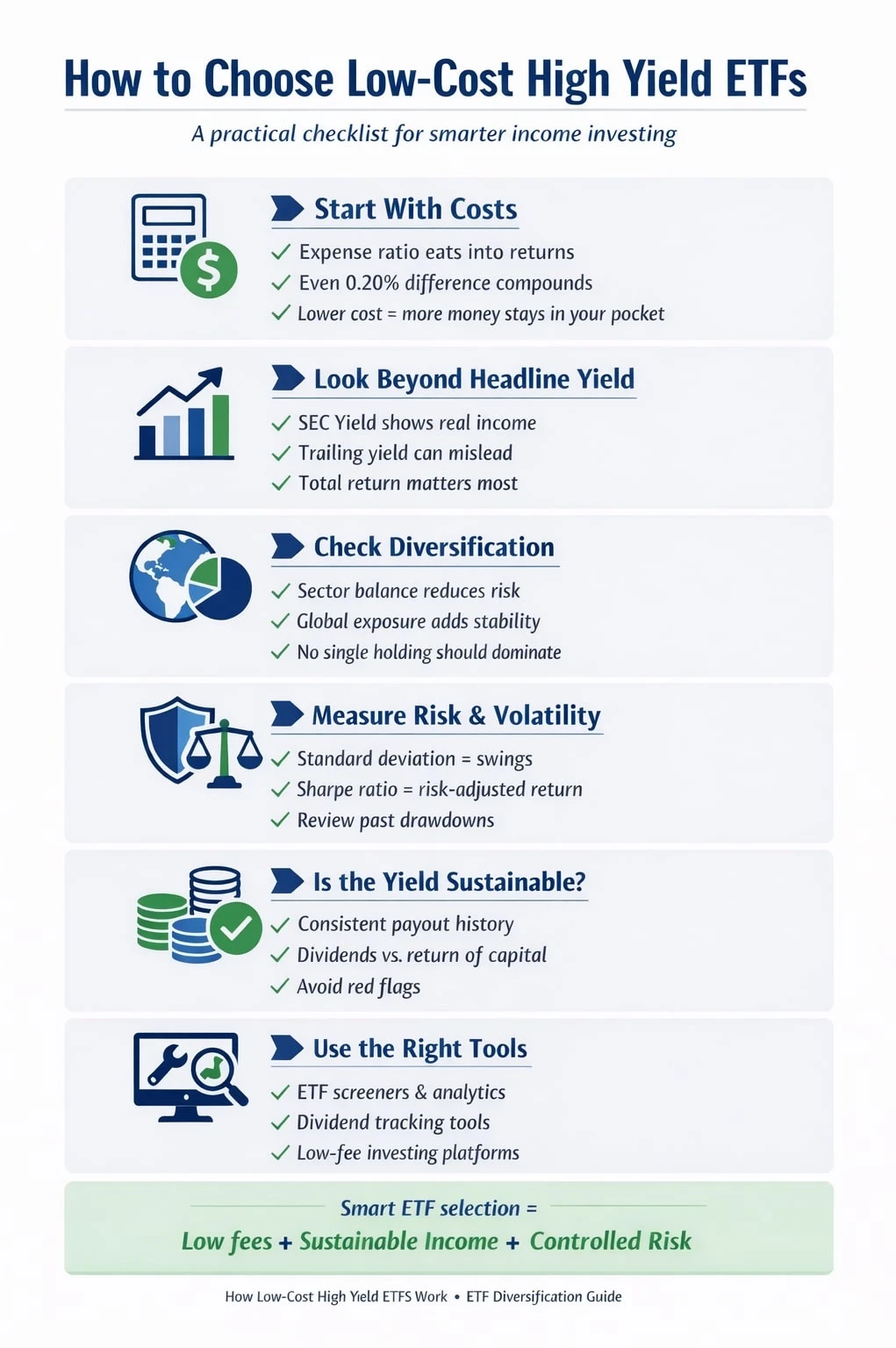
When an ETF is called “low-cost,” it usually has a low expense ratio, the annual fee charged by the fund to manage your investment. “High yield” means it aims to pay out bigger dividends or interest, often as regular income. Not every high-yield ETF truly delivers steady returns without risks. It pays to look under the hood and see what you’re really getting.
Basics Worth Checking:
- Expense Ratio: The lower, the better. Even small differences in fees add up over time.
- Yield Type: Is it mostly from dividends, bond interest, or something else?
- Distribution Frequency: How often does the fund pay (monthly, quarterly, etc.)?
If you want to get into more detail, I’ve covered ETF selection further here: How Do I Choose Low-Cost High Yield ETFs For My Portfolio?.
Step 2: Break Down Key Metrics, Beyond Just Yield
It’s easy to get drawn in by high-yield numbers, but it helps to look at the bigger picture. Here are a few metrics I pay special attention to when comparing ETFs, so I don’t get hit with surprises later.
What I Look For:
- SEC Yield: This standardized number shows yield based on the last 30 days of income, minus fund expenses. It’s a more honest measure than just “trailing 12-month yield,” which can be skewed by one-time payouts.
- Expense Ratio: Again, even a difference of 0.2% can eat into returns over the years.
- Total Return: This includes both income and price appreciation, which matters if you want long-term growth as well as regular payouts.
- Fund Size and Liquidity: Bigger, more liquid funds are easier to enter and exit, and tracking errors are usually smaller.
I often use TradingView to review ETF charts and overlays for these kinds of metrics in real time. Pretty handy when you’re comparing a handful of funds side by side. For new investors, practicing this with a virtual portfolio can help you build know-how before investing real money. Taking time to check these numbers up front saves headaches down the road.
Step 3: Check Underlying Assets and Diversification
The holdings inside an ETF really shape its risk and performance. Some high-yield ETFs pack in risky or volatile companies to boost payouts, while others balance things out more.
Things to Notice:
- Sectors: Is the ETF heavy in just one area (like real estate or energy) or does it spread holdings across different sectors?
- Geography: Does it focus just on the US, or is there international exposure?
- Top Holdings: Are a few stocks dominating, or is it spread evenly?
Diversification lowers the chance that one bad sector or company drags down your whole investment. If you’re curious about how ETFs fit in a diversified portfolio, you’ll find more details in this post: Can I Diversify My Portfolio with Low-Cost High Yield ETFs?. Notably, global diversification can add a layer of protection against regional downturns, and sector diversity can cushion against a slump in one industry.
Step 4: Assess Risk Factors and Volatility
Chasing yield without looking at risk is a common misstep. High yields sometimes come with bigger risks, such as junk bonds, overleveraged companies, or unstable sectors. Checking volatility helps you spot if an ETF’s price tends to swing wildly or stay steady.
Risk Checks I Always Do:
- Standard Deviation: Indicates how much returns go up and down. Low standard deviation suggests a smoother ride.
- Sharpe Ratio: Shows if the ETF is delivering enough return for the risk taken. Higher is usually better.
- Drawdowns and Recovery: How has the fund performed during market downturns? Did it bounce back well?
It’s smart to check these numbers across a few funds before picking one that fits your comfort level. Don’t be afraid to ask fund providers for detailed risk breakdowns or check third-party research sites for unbiased performance metrics. Remember, the allure of high yield should never blind you to the potential downsides if the risk profile doesn’t fit your goals.
Step 5: Review Yield Sustainability and Payout History
A high yield today doesn’t mean it’ll last. Some ETFs juice their yield by dipping into capital, which can eat away at the fund’s value. I always check how payouts have held up over the last several years, as history can clue you into future reliability.
Payout Items To Verify:
- Payout Consistency: Stick with funds that have a steady or growing payout track record.
- Distribution Sources: Make sure income comes mainly from earned interest or dividends, not the fund simply returning capital to investors.
- Coverage Ratio: Some investment websites show how easily earnings cover distributions. Higher is usually safer.
Digging into payout consistency protects you from relying on a yield that could disappear. Reviewing a fund’s annual reports or a sponsor’s payout graphs can help you spot red flags before committing your money.
Step 6: Compare Trading Platforms and Tools
Different investment platforms make it easier or harder (and more or less expensive) to buy and hold ETFs. I use eToro for a lot of my ETF investing; their platform is easy to use, even for beginners, and has great features for tracking dividends and comparing funds. I also keep an eye on TradingView for watchlists and alerts.
Features Worth Having:
- Low or zero trading fees (this helps for regular purchases)
- Easy to read performance analytics and yield reports
- Fractional share buying if you want to get started small
- Strong security and responsive customer service
Choosing a platform with the right features levels the playing field and helps you stay on top of your investments as markets change. Explore several options and see which layout and tools work best for you, especially if your investments will grow over time.
Answers To Common ETF Evaluating Questions
Are high yields too good to be true?
Sometimes, yes. If the yield appears significantly higher than that of similar funds, there may be additional risk lurking beneath the surface. Trust steady long-term performance over promises. Consider the underlying holdings and risk factors, not just the headline yields.
Is it okay to hold just one or two ETFs?
It’s usually better to spread money across a few funds, even within the high-yield category. This helps you avoid putting all your eggs in one basket if one area takes a big hit. Diversification among types and strategies can make a portfolio more resilient.
How often should I review my ETF choices?
I check my main holdings every few months. Changes in interest rates or market conditions can impact yield and risk. A quarterly review keeps things on track and ensures you make adjustments as needed. If a fund changes its approach or fees, it’s wise to respond quickly.
Next Steps For Picking Low-Cost High-Yield ETFs
Building an ETF portfolio is about stacking up reliable income while dodging common traps. Here’s my action plan for anyone ready to get started:
- Pick three to five low-cost high-yield ETFs that fit your risk level and goals. Use free research tools from eToro and TradingView.
- Compare expense ratios, yields, sector breakdowns, and payout histories side by side. Paying attention to these details will help you make smarter choices and prevent surprises later.
- Test how the funds performed during past downturns; look for stability and recovery, not just flashy gains. Resilience is key for long-term investors.
- Keep fees and taxes in mind; lower costs help pump up long-term growth, so don’t ignore this part.
- Once you buy, monitor payout consistency and rebalance if one ETF drifts too far from your plan. Staying on top of things keeps your investments working for you.
Ready to start sizing up ETFs you’re interested in? I’m happy to answer questions in the comments or help you compare your picks. If you want to learn more, check out these guides: