When you’re considering investing in ETFs, it’s super important to dig into the fees. ETF expenses can sneak up and chip away at your returns, so understanding these costs can really help you keep more of your profits in the long run.
Some folks just grab the lowest cost ETF they can find, but there’s a little more to ETF expenses than just going by the expense ratio. I’m going to walk you through how I look at ETF fees, what each kind actually means for your wallet, and where to watch out for sneaky costs that other investors sometimes miss.
Whether you’re building a long-term portfolio or just testing the ETF waters, knowing how to analyze expenses could save you some cash. I’ll keep things straightforward—no jargon, no guesswork.
Disclaimer: This article contains affiliate links. If you open an account through these links, I may earn a commission at no additional cost to you. Investing involves risk, including the possible loss of capital. eToro is not available in all countries. Eligibility depends on your region. Always consider your individual circumstances before investing.
Get to Know the Main Types of ETF Expenses
Before I start comparing specific ETFs, I like to know what kinds of expenses I’m dealing with. ETFs don’t all charge fees the same way, and some costs are more obvious than others.
Here Are the Main ETF Expenses You’ll See:
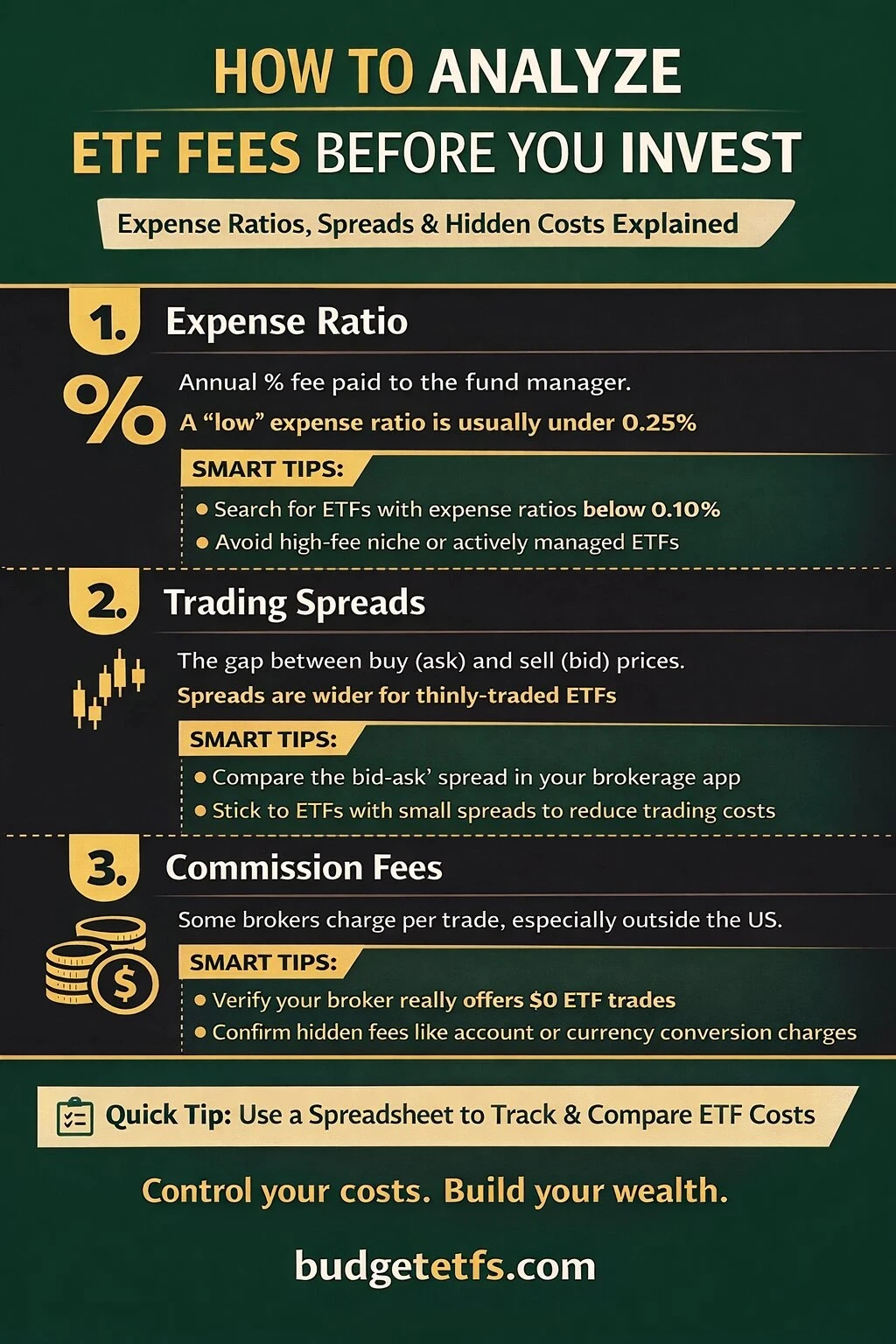
- Expense Ratio – This is the percentage cut the fund manager takes each year for running the ETF. It’s shown as a percentage (like 0.15%), and most people pay attention to these costs first.
- Trading Spreads – This is the small gap between buy and sell prices. When you buy, you pay the “ask,” and when you sell, you get the “bid.” That difference, the spread, is a hidden cost of doing business, especially for less-traded ETFs.
- Commission Fees – Some brokers still charge fees per trade. Many low-cost brokers (like eToro and TradingView) offer free trades, but it’s still worth checking before you make a move.
- Other Fees – Sometimes you’ll run into special charges, like redemption fees or creation fees (more common with unusual ETFs). These add up if you trade a lot or buy niche funds.
The expense ratio is what gets the most attention, and for good reason; it’s taken out in tiny bits every day. Over time, a higher expense ratio quietly eats up your returns. But trading spreads and commissions add up too, especially if you’re buying and selling often.
For a full overview on choosing low-cost ETFs, you might want to check out this guide for beginners.
How the Expense Ratio Impacts Your Returns
The expense ratio tells you what percentage of your investment the fund charges each year. Even something that looks tiny, like 0.20%, makes a big difference over time, especially if you’re holding the ETF for years or decades.
What’s Actually Included in the Expense Ratio?
- Management fees (paying the team that runs the fund)
- Administrative costs (paperwork, accounting, legal stuff)
- Marketing fees (sometimes called 12b1 fees)
The one thing not included is brokerage commissions, so those need to be factored in separately.
A Quick Example: Why This Matters
If you invested $10,000 in an ETF with a 0.10% expense ratio, you’d pay $10 per year in fees. At 0.60%, it’s $60 each year. That money comes straight out of your returns. So over ten years, the difference really adds up. Higher-yield ETFs might look attractive, but if the costs are too high, it eats into your actual profits.
Look for Low Expense Ratios
In my experience, broad market index ETFs (like SP500 trackers) nearly always have the lowest fees—often under 0.10%. Niche or actively managed funds usually charge more.
If you’re curious about how yield and fees work together, here’s an easy breakdown in high yield ETF basics.
Understanding Trading Spreads and Real World Costs
Even if you don’t see the trading spread as a “fee” in your account, it still takes a slice from each trade. On big ETFs with lots of volume, the spread is tiny, sometimes a penny or less. But for smaller, less-traded ETFs, spreads can be two or three times higher than the expense ratio.
How to Check the Spread
- Look up the ETF’s quote and compare the “bid” and “ask.”
- ETFs that trade with high volume usually have narrower spreads.
- If the spread is more than a few cents, think twice before trading often.
Trading tools like TradingView will show real-time spreads so you can quickly see where it stands.
Spread Costs Compound Over Time
If you are a frequent trader or rebalance your portfolio monthly, paying even a few extra cents per trade can add up in the long run. For example, if you execute 10 trades per month on ETFs with a $0.04 spread compared to a $0.01 spread, you could end up paying over $36 extra per year, which cuts into your earnings.
Liquidity Matters
Bigger, more popular ETFs tend to have better liquidity. This means tighter spreads and more efficient trading. If you spot an ETF with a wide spread, ask yourself if the fund is too niche or thinly traded. Sometimes, it’s worth sticking to the mainstream funds unless you have a strong reason to go off the beaten path.
Commission Fees: Know What You’re Really Paying
Most big US brokers now have $0 commissions on ETFs, so for many people, these costs are less of an issue. But international investors, small accounts, or specialty brokers might still have transaction fees—sometimes $5 to $10 per trade.
Why Commissions Still Matter
- If you’re dollar cost averaging (buying monthly), every extra commission chips away at returns.
- If you rebalance your ETF holdings a few times each year, those costs add up quickly.
- Zero commission brokers are great, but check for account maintenance or inactivity fees.
I always double-check my broker’s fee schedule before making smaller trades.
Also, some brokers advertise zero commissions but charge wider spreads or have hidden account fees, so always check the fine print and compare options. If you use a broker outside the US, it’s especially important to look up these policies.
Other Hidden or Overlooked ETF Costs
Beyond the big three—expense ratios, spreads, and commissions—there can be other expenses floating around. Some you’ll see in niche ETFs, leveraged or inverse funds, or international ETFs. Here’s what to look for:
Other ETF Costs That Can Sneak Up
- Tax Impacts – Some ETFs distribute capital gains or dividends that bump up your taxes. Not really a “fee,” but it still affects your actual returns.
- Redemption/Creation Fees – If you trade directly with the ETF provider (usually only big institutions), you might see these fees. Every day, investors usually avoid them.
- Currency Conversion Fees – If you’re buying international ETFs in another currency, your broker might tack on a small conversion charge.
Every fund’s prospectus and website lists these costs, even if they’re hidden in the fine print, so it’s worth a quick check if you’re shopping outside the usual SP500 or bond ETFs.
There are rare situations where ETFs hold underlying assets that have their own operating costs or licensing fees, which can make expense ratios higher for certain specialized funds. Always take the time to skim a fund’s annual report or summary to catch these less obvious expenses.
Comparing ETF Expenses Side by Side
Whenever I’m torn between two similar ETFs, I do a quick head-to-head comparison of their expenses. I look at:
- Expense ratio
- Trading volume (to check spread)
- My broker’s commission policy on ETFs
- Special fund features that might add costs (like active management)
For beginners, I usually suggest focusing first on the expense ratio (lowest is usually best), then checking if there’s enough trading volume to keep spreads tight. If there are extra costs (like international fees), I factor those in, too.
There’s a handy guide to low-cost ETF choices for beginners here if you’re not sure where to start.
Comparing a few ETFs over a cup of coffee and jotting down all key expenses can make a huge difference. Create a spreadsheet or a written cheat sheet, and update it every time you look to add a new position in your portfolio. Sometimes, the difference of two-tenths of a percent over many years can lead to thousands of dollars more in your pocket.
Frequently Asked ETF Expense Questions
Does a lower expense ratio always mean a better ETF?
A low expense ratio is always a plus, but sometimes a slightly higher fee comes with extra benefits, like a unique investment strategy or better tax efficiency. Always check what you’re actually getting for your money.
Should I ever pay a high expense fee?
I’m usually picky about paying more than 0.25% for passive funds. For actively managed or niche strategy ETFs, there’s sometimes a reason for higher fees, but you’ll want to be sure the extra cost lines up with your investment goals.
Where can I check expense ratios and fees?
You’ll find expenses listed on your broker’s ETF page, on the fund provider’s website, or in the fund prospectus. Tools like TradingView make it pretty easy, too.
How do taxes affect my ETF returns?
Your local tax rules matter. Some ETFs are more tax-efficient than others, and dividend distributions or frequent trading can trigger larger annual tax bills. Track down resources that explain ETF tax treatment in your country before making big investments.
Final Thoughts and Action Steps
Keeping ETF expenses low is one of the smartest moves for any investor. By paying attention to expense ratios, checking trading spreads, and being smart about commissions, you can set yourself up for better long-term results. I keep all these details on a cheat sheet whenever I’m picking a new ETF.
Here’s what you should do next:
- List the ETFs you’re considering and look up their expense ratios, spreads, and any extra fees.
- Factor in how often you plan to buy or sell; trading costs matter more if you’re active.
- Stick with the lowest cost ETFs that fit your strategy, and double-check with your broker on any commissions or special charges.
If you want to see how low-cost, high-yield ETFs stack up, here’s a resource worth checking out: Low Cost High Yield ETFs.