High-yield Exchange Traded Funds (ETFs) keep showing up on income-focused investors’ watch lists, and for good reason. These funds focus on assets that pay out solid dividends or interest, making them convenient picks for growing income streams without the hassle of building a custom portfolio from scratch.
If earning an income is at the top of your priorities or you’re just looking to balance your growth portfolio, high-yield ETFs can fit the bill. But with dozens of options out there, many with complex strategies or different risk profiles, having a clear understanding of what makes them tick is really important.
This guide covers what to know about ETFs in 2025, how to spot quality funds, and a look at some that are drawing attention among investors aiming for higher payouts this year. I’ll also walk you through practical benefits, current risks, and tips for building these income funds into your own plan. Plus, you’ll get some extra pointers on researching and adjusting your ETF approach for whatever the year might bring.
1. What Are High-Yield ETFs, Exactly?
High-yield ETFs are funds that track baskets of income-focused assets; think dividend-paying stocks, corporate bonds, preferred securities, or even global real estate. What links them together is a strategy aimed at producing higher income compared to the typical mix of stocks or bonds.
Some high-yield ETFs lean into bonds with lower credit ratings (aka, high-yield bonds or “junk bonds”), while others look for stocks with above-average dividend yields. Some even mix up income sources, holding everything from REITs to international bonds, for a broader payout profile.
How Income Works in an ETF
- Dividends: Stock-based high-yield ETFs collect dividends from the companies they own and pass them on to shareholders, usually quarterly or monthly.
- Interest payments: Bond-heavy ETFs pay out interest earned from the bond holdings, often on a monthly schedule.
Unlike regular stocks, high-yield ETFs spread the risk by holding dozens (or sometimes hundreds) of assets, all managed by professionals who rebalance and screen for the intended payout.
It’s this built-in diversification—plus professional oversight—that usually appeals to folks who want income but might not have time to monitor a long list of individual investments. With so much choice, it’s easier than ever to pick a fund matching your risk comfort and preferred payout schedule.
2. Popular Categories of High-Yield ETFs in 2025
The high-yield ETF universe is wider than it used to be. Here’s a quick look at the types worth checking out this year:
- High-Yield Corporate Bond ETFs: These hold bonds from companies with below investment-grade credit ratings, which typically pay higher interest in exchange for higher risk.
- Dividend Equity ETFs: Focusing on stocks that pay out big dividends. They can be spread across sectors or target specific regions for global income.
- Preferred Stock ETFs: These invest in preferred shares, blending features of both bonds and stocks to generate steady income, usually with less volatility than traditional stocks.
- Multi-Asset High-Yield ETFs: For those who want diversified income, these funds blend bonds, dividend stocks, REITs, and even international exposure.
Knowing which category aligns with your goals, like how much risk you’re cool with or if you prefer monthly over quarterly payouts, really helps when narrowing down the list. The best fund for you depends on your comfort with risk and how you want to receive your income streams.
3. Key Benefits of High-Yield ETFs
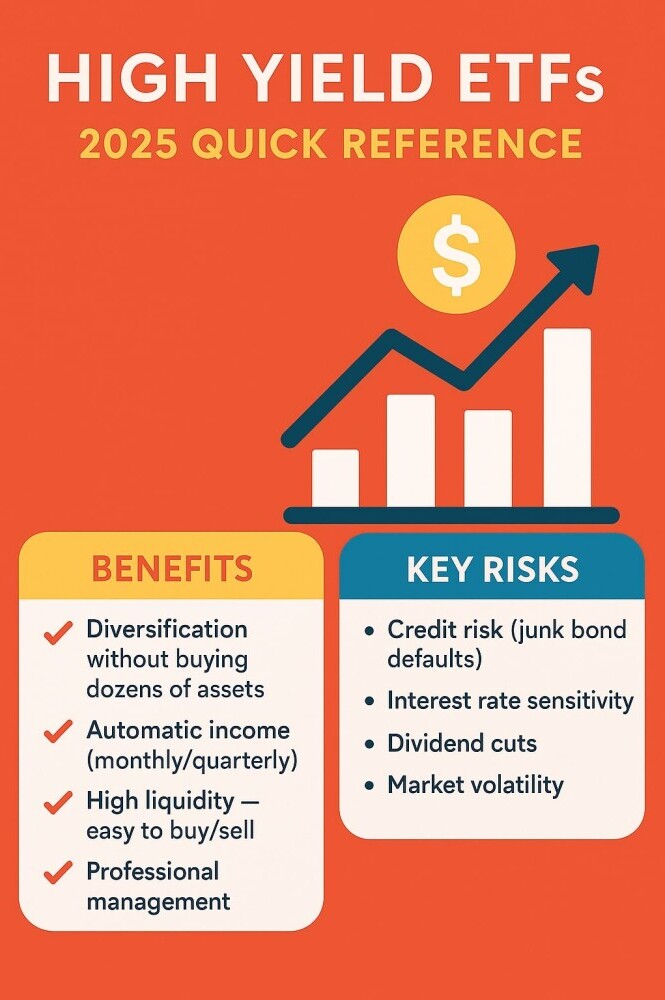
I’ve found a few big reasons investors keep circling back to high-yield ETFs, especially with interest rates shifting in 2025. Here’s a deeper look at the perks of adding them to your portfolio:
Convenient Diversification
Instead of researching and buying 40 different dividend stocks or a mix of junk bonds, one ETF gives you instant access to a full basket, managed by experts. It’s an easy way to spread out risk and save time.
Automatic Income
Payouts get rolled straight to your brokerage; no need to track company dividend dates or do the paperwork for bond interest. Some high-yield ETFs even distribute monthly, which is pretty handy for regular budgeting.
Liquidity
Since ETFs trade on the stock exchange, they’re simple to buy and sell whenever the market is open. You’re not locked in like with a CD or an annuity.
Professional Management
A team keeps an eye on your holdings, rebalancing assets as the market changes. You gain access to their expertise and market research without having to pay high advisory fees or spend hundreds of hours on analysis.
4. Risks to Watch For With High-Yield ETFs
High yield is tempting, but it’s not free money. There are a few risks I always keep an eye on, especially for 2025:
- Credit Risk: Many high-yield funds hold “junk” bonds, which are more likely to default than government or high-grade corporate bonds. Income can be higher, but if a downturn hits and defaults spike, the value of your investment can fall.
- Interest Rate Sensitivity: When rates rise, bond prices often drop. If you own a lot of bond-focused high-yield ETFs, this can mean a drop in your ETF’s price, even as you’re collecting more income.
- Dividend Cuts: Stock-based ETFs can see their payouts drop if the companies they hold lower or cut dividends, which is common during recessions or sector-wide setbacks.
- Market Volatility: These ETFs can lose value quickly in rocky markets. High-yield equities and lower-rated bonds add extra risk compared to regular S&P 500 or Treasury funds. It’s smart to balance them with more stable options to avoid wild swings in your portfolio’s value.
Balancing high-yield ETFs with other safer, growth-focused investments can help keep your overall risk in check. Regular reviews and adjusting your mix if you spot major risk changes is part of maintaining a healthy income portfolio.
5. Spotting Top High-Yield ETFs in 2025
I look for a few main things when checking out high-yield ETFs worth adding to my watch list:
- Expense Ratio: Fees eat into returns. Anything under 0.6% is fairly reasonable, but watch for hidden trading costs too. A lower expense ratio is a big plus if you’re aiming for long-term returns.
- Track Record and Liquidity: Older funds with plenty of assets and daily trading volume are generally easier to buy and sell, plus you can see how they’ve weathered tough markets.
- Current Yield: Compare the payout to other funds, but don’t just chase the highest number. Review the fund’s history over time to see if it’s steady or all over the map.
- Holdings Quality: Dig into what’s inside. Are the bonds mostly lower-tier, or does the manager balance with some higher-rated debt? Are the stocks global or U.S.-focused? The makeup tells you a lot about risk and potential resilience.
- Distribution Schedule: If you want monthly payouts (super useful if you budget monthly), check that before you buy, since some funds pay quarterly or even semiannually.
Checking up on these aspects before you invest saves you from surprises down the line and makes sure your ETF choices keep working as intended in your portfolio.
6. Noteworthy High-Yield ETFs This Year
I can’t offer personalized advice, but here are a few high-yield ETFs getting solid attention in 2025. You’ll want to research further or talk with a financial pro to figure out which fits your needs.
- iShares iBoxx $ High Yield Corporate Bond ETF (HYG): One of the biggest bond-based options for high yield, focusing on liquid U.S. corporate bonds with higher risk, higher yield profiles.
- Vanguard High Dividend Yield ETF (VYM): A top fund made up of large-cap U.S. companies with reliable dividend payouts.
- SPDR Portfolio S&P 500 High Dividend ETF (SPYD): Offers a low-cost way to access big envelope S&P dividend players, rebalanced semiannually.
- Global X SuperDividend ETF (SDIV): Goes international, holding 100 of the highest-yielding dividend stocks globally. Risk is higher, but so is the diversification.
- Invesco Preferred ETF (PGX): If you want something different from traditional bonds or stocks, preferred stock funds like this one deliver steady income with some unique risk-return characteristics.
Morningstar ETF Screener is a great tool for comparing yields, expenses, and strategies. I recommend pulling up their fund snapshots as part of your research before making final picks.
7. Tips for Building a High-Yield ETF Strategy
- Don’t Overload on Risk: Aim for a mix of different asset types (not just the highest payers) to avoid getting caught by defaults or surprise dividend cuts.
- Keep an Eye on Fees: High-yield ETFs sometimes charge more due to active management. Make sure higher fees are justified by higher long-term payouts or better risk management.
- Reinvest or Spend? Decide whether you want to reinvest income to snowball returns, or cash out the monthly/quarterly payouts for living expenses. Both approaches work; it just depends on your goals and stage of life.
- Review Regularly: Fund makeup can change each year with rebalancing, so check in every few months, especially after market swings or interest rate moves. Staying sharp helps you spot potential shifts early and make smart allocation tweaks.
- Set Clear Income Goals: Know how much income you want from your investments and monitor if your ETF payouts are meeting that target. Adjust your holdings if your needs or the yield environment switch up.
Wrapping Up
High-yield ETFs offer a flexible, efficient path for earning regular income without the stress of choosing individual bonds or chasing after dividend stocks. Still, higher yield nearly always goes hand in hand with higher risk, so balancing your ETF picks with your overall goals and comfort level is really important. Taking the time to compare funds, read up on recent performance, and understand what’s inside each ETF helps you build a strategy that works for you in 2025 and beyond.
I always recommend starting with a few funds you’re confident in, tracking your results, and adjusting as needed. If you’re brand new, reading super detailed breakdowns on sites like Investopedia can give you a solid foundation. Happy investing!