ETF fees can catch new investors off guard if you’re not paying attention. These fees can look pretty small at first glance, but they can add up over time and cut into your returns. Knowing how ETF fee structures work helps you keep more of your investment gains in your pocket. Here’s what you need to know, the main types of fees to expect, and tips for spotting hidden costs before you buy in.
Disclaimer: This article contains affiliate links. If you open an account through these links, I may earn a commission at no additional cost to you. Investing involves risk, including the possible loss of capital. eToro is not available in all countries. Eligibility depends on your region. Always consider your individual circumstances before investing.
Why ETF Fees Matter to Investors
ETF fee structure might sound like background noise, but it’s really important for anyone looking to build wealth over time. Even a small difference in annual fees can have a big impact when your investment compounds for years or decades. The lower your fees, the more you keep from your investment growth.
The ETF world is known for its lower fees compared to traditional mutual funds, but not all ETFs are as “cheap” as they first appear. Some funds pack in extra costs or trading expenses that aren’t immediately obvious. Learning how to spot these fees and compare them between funds can level up your investing game.
If you want to focus on low-fee options right from the beginning, check out this resource on low-cost ETFs for beginners. It’s packed with examples and tips tailored for newer investors who want to keep costs as low as possible.
Breaking Down the Main ETF Fees and Expenses
Each ETF has a few core expenses built into the price. Here’s what you’ll see most often:
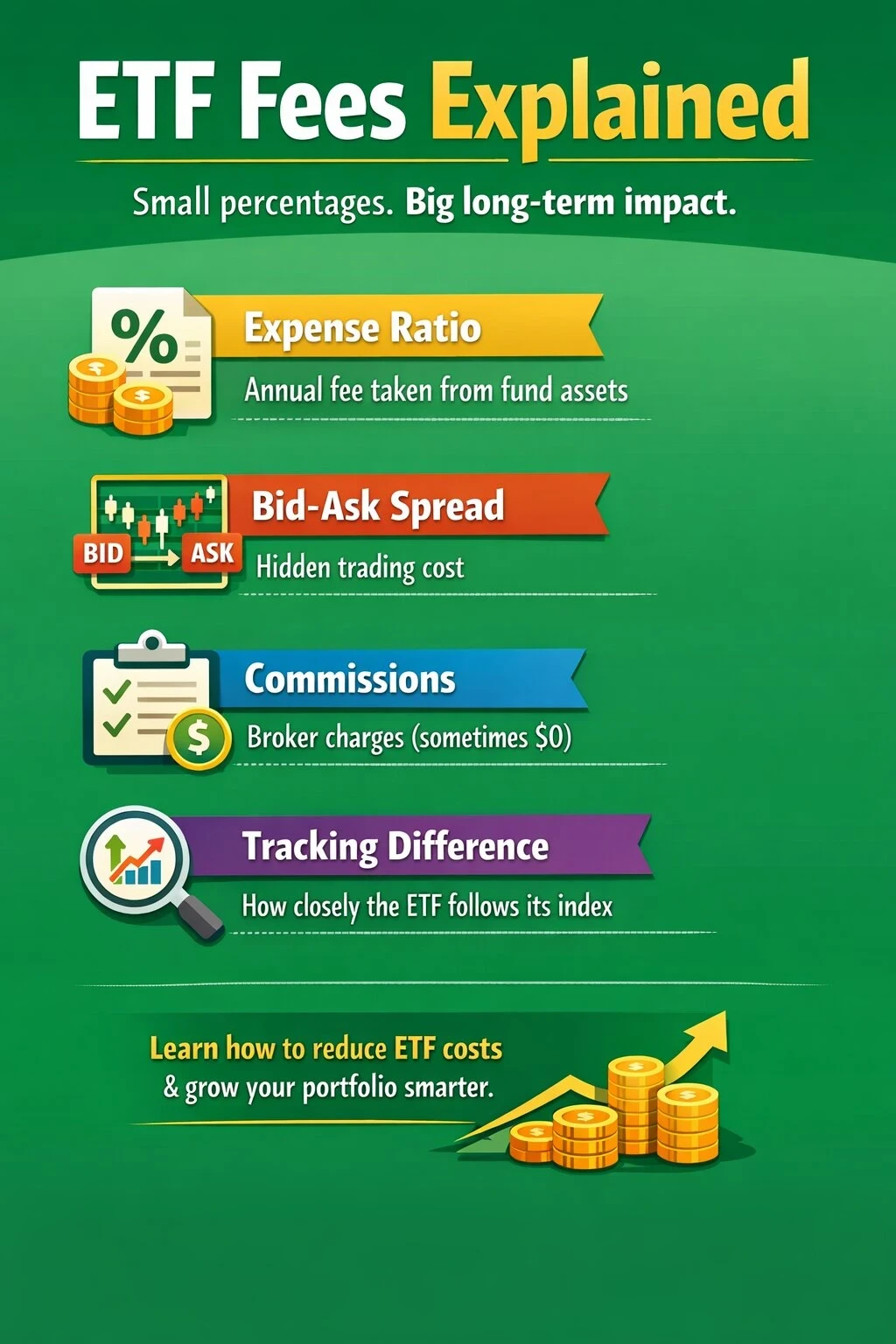
- Expense Ratio: This is the main annual fee you’ll pay for holding an ETF, shown as a percentage. It covers management costs, marketing, and basic admin. If you see an expense ratio of 0.20%, it means you’ll pay $2 per year for every $1,000 invested.
- Commission Fees: Some brokers charge you to buy or sell ETFs. These are becoming less common, but they still pop up, especially outside the US. Make sure you check your broker’s policy before you start trading.
- Bid Ask Spread: This is a hidden cost that happens every time you trade. It’s the tiny gap between what buyers will pay and what sellers want. The more popular the ETF, the smaller this will be. Thinly traded ETFs sometimes have a wider gap, which can sneak a few bucks off your total when you buy or sell.
- Other Fund Fees: Certain ETFs have unique fees, like creation/redemption fees for big institutional trades or securities lending revenue shared with the fund operator. These don’t hit most regular investors directly, but they matter for large accounts.
Platforms like eToro or TradingView can show you these numbers up front before you commit, so it’s definitely handy to look them up if you want to compare costs in real time.
How Expense Ratios Work in Practice
The expense ratio is the headline fee you’ll see for every ETF. It looks tiny, often under 0.20% for big index funds. But large equity ETFs and bond ETFs sometimes charge closer to 0.50% or more, depending on the sector or strategy.
Say you invest $10,000 in an ETF and the expense ratio is 0.20%. You’re paying $20 per year to own that fund, whether your investment goes up or down. It comes straight from the fund’s assets, not as a separate bill, so you might not notice it, but it quietly trims your returns. Over a decade, a higher expense ratio can noticeably shrink your gains compared to a lower fee fund.
Some specialty ETFs (like those tracking niche sectors or using leverage or hedging) might charge over 1% yearly. These fees can eat away at your performance pretty quickly, especially if your investments don’t outperform the market by a wider margin.
Wondering how these fees compare and what to look out for? Here’s a resource that breaks down what to know before investing in ETFs. This guide is a great tool for sidestepping extra charges and avoiding common mistakes.
Trading Costs: Commissions, Spreads, and More
Beyond the expense ratio, every time you trade ETFs, there are a few more fees to think about:
- Commissions: Some brokers charge a flat fee per trade. Others don’t, especially with the new zero commission trend—great for small investors.
- Bid Ask Spread: Super active ETFs or funds with high volume usually keep this cost very low. Narrow spreads are great for frequent traders. Niche or low liquidity ETFs can have spreads of a few cents or more, so waiting for lower volume times could cost you a bit extra when buying or selling.
For the best deal on trading, check platform costs and do your trades when liquidity is highest. It’s worth looking at interactive charts on TradingView to see when ETF volume is highest—this is typically when spreads are tightest, and you’ll save money on execution.
Hidden or Indirect ETF Costs
Some ETF costs fly under the radar for most investors. Two big ones you’ll want to know about:
- Tracking Difference: This is the gap between the ETF’s actual performance and the index or benchmark it’s supposed to follow. A high tracking difference often means the fund has extra internal costs or struggles to keep up with its target market.
- Securities Lending: ETFs sometimes make extra money by lending out securities to other traders. Funds might share the revenue, but sometimes managers keep it, which can offset or add to your net costs depending on the fund.
Always check the ETF’s total return history versus its published benchmark to spot these gaps. If the tracking difference stays close to the expense ratio (or even beats it with lending revenue), that’s usually a positive sign.
Tips for Reducing ETF Fees
If you want to keep more of your hard-earned returns, there are some simple tricks you can start using right away:
- Stick with Low Expense Ratio Funds: Index-based ETFs from big providers tend to be much cheaper than niche or actively managed funds.
- Mind Your Trading: Minimize unnecessary buying and selling to dodge both commissions and bid-ask spread costs.
- Watch for Hidden Fees: Dig into the fund prospectus before buying anything new. The “fee table” section shows all recurring and unusual charges.
- Use Zero Commission Brokers: Platforms like eToro or popular modern brokers are making commission-free trading the norm.
- Check Tracking Difference: Make sure your fund matches its benchmark pretty closely. If not, you’re paying for something you’re not actually getting.
If you’re just starting, a focus on low-cost index ETFs can be really powerful for compounding, especially over the long haul. There’s a helpful guide on future trends in ETF investments that looks at what’s next in the ETF world, including even cheaper options that could pop up soon.
ETF Fee Myths and Common Misunderstandings
- Myth: “Lower Fee Always Means Better Performance”. Lower costs help, but fund strategy, liquidity, and tracking quality matter too. Sometimes, a slightly higher fee is worth it if it comes with better access to an asset class or stronger performance after fees.
- Myth: “No Commission Means Free Investing”. Even when you pay zero to trade, the expense ratio, spreads, and internal fund costs still impact your returns.
- Myth: “ETFs Never Have Hidden Fees”. Some unique ETFs do add extra costs beyond the headline expense ratio, including swap fees, currency hedging costs, or performance fees for complicated products.
Frequently Asked Questions
Q: How do I find an ETF’s fees before I invest?
Every ETF publishes its expense ratio, usually in the “Key Facts” section on the fund or broker’s webpage. You can also look up the prospectus for all the details. Many brokers, like eToro, will show you fee comparisons for multiple ETFs at once.
Q: Are commission-free brokers always cheaper?
Most of the time, yes—especially if you’re trading in small amounts. Still, bid ask spreads and fund level fees remain, so check those before letting your guard down.
Q: What happens if I ignore ETF fees?
High fees are like a slow leak in your investing bucket. Over time, even a fraction of a percent in extra costs can mean thousands lost to fees when you could have kept more growth in your account. Paying attention upfront protects your profits in the long run.
Putting the Pieces Together
ETF fee structure isn’t rocket science if you know what to look for. Focus on lower expense ratios, use commission-free brokers, and pick ETFs with high trading volume to set yourself up for better returns over time. Careful research helps buyers make informed decisions so investments can grow faster. Understanding where your money goes is key—when you’re sharp about ETF fees up front, your investments can really go to work for you.