If you’ve ever wondered why people keep talking about ETF expense ratios, there’s a good reason. Costs really matter when it comes to ETF investing, and changes in those costs can shape what’s best for your portfolio, even in small ways that add up over the years. I’ve been following the latest trends, and 2026 is shaping up to be an interesting year for expense ratios across the ETF market. There are some big changes brewing in both how fees are set and what investors get for the money spent.
Disclaimer: This article contains affiliate links. If you open an account through these links, I may earn a commission at no additional cost to you. Investing involves risk, including the possible loss of capital. eToro is not available in all countries. Eligibility depends on your region. Always consider your individual circumstances before investing.
Understanding ETF Expense Ratios in 2026
The expense ratio tells you how much you’ll pay each year to own an ETF, calculated as a percentage of your invested assets. It covers management, administration, marketing, and other operating costs. These fees quietly chip away at your returns, so even small differences really matter, especially over the long haul.
Expense ratios aren’t always simple for new investors to spot; they simply take a bite out of your earnings in the background. The smaller the expense ratio, the more of your money keeps working for you. That’s why many people watch these figures closely, especially anyone sticking with a buy and hold strategy.
By 2026, there’s more transparency than ever regarding ETF fees. With growing competition between ETF providers and new regulations in place, issuer websites and investing platforms now put these costs front and center. If you’re still getting used to the terms, expense ratio and management fee can seem interchangeable, but expense ratio is what shows on most ETF fact sheets and screeners.
What’s Driving ETF Expense Ratios Lower in 2026?
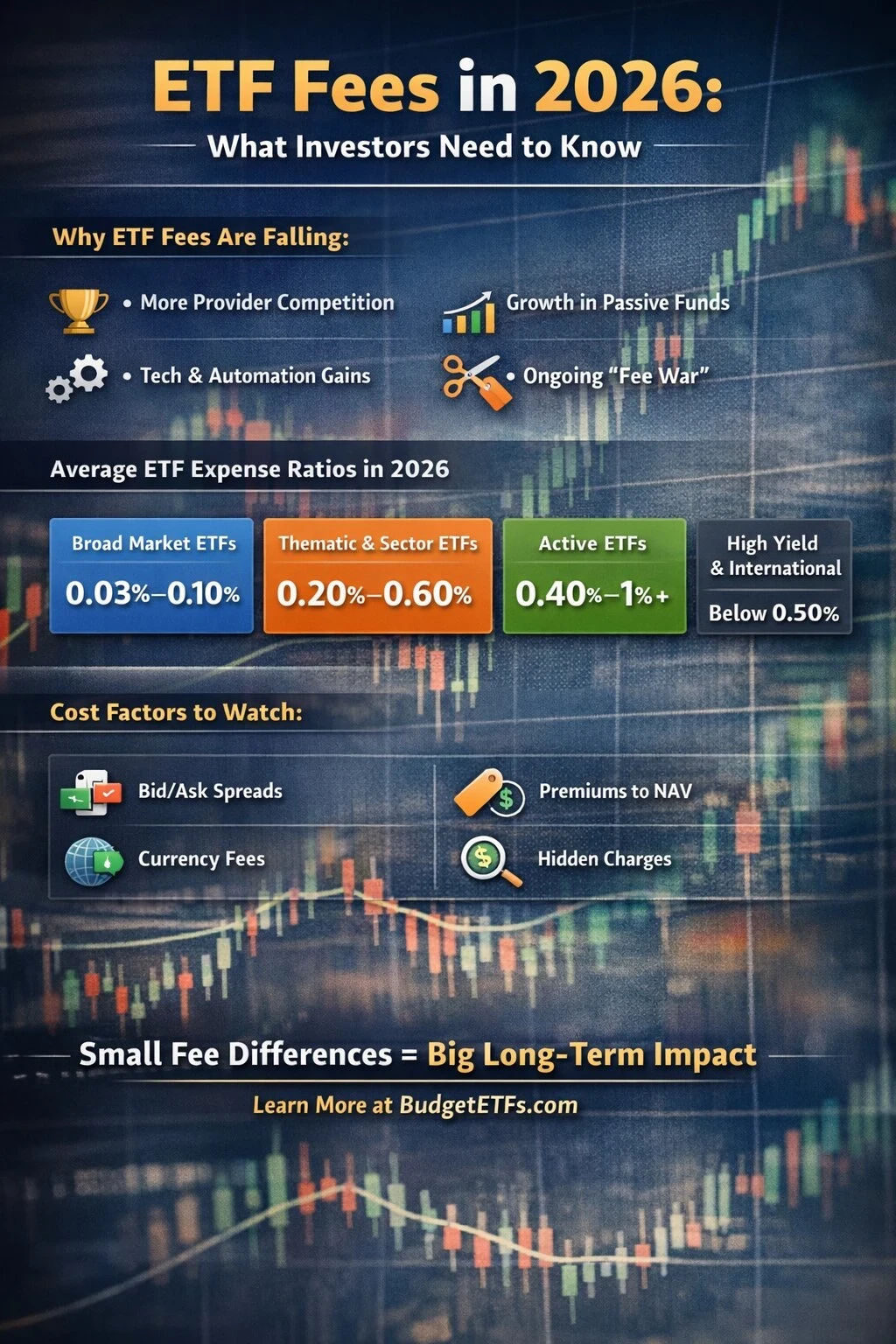
The landscape for ETF fees has switched up a lot in the past five years. Increased competition, better tech, and more investor demand all push costs down. Here’s a look at the main drivers in 2026:
- Provider Competition: As new companies join the ETF market, established names are forced to bring their fees down to keep up.
- Bigger Fund Sizes: With more cash pouring into ETFs, fund providers can spread out costs among a larger group of investors, making the fee percentage smaller for everyone.
- Tech and Efficiency: Modern trading platforms and improved back-office technology let companies cut administrative costs, sending more savings on to you.
- Switches Toward Passive Investing: Passive ETFs, those that track big indexes, keep getting cheaper while still offering plenty of diversification.
Platforms like eToro and TradingView make it simple to compare expense ratios. If you want to track down ETFs with the lowest costs, this guide on low-cost ETFs for beginners (2026) can help you get started.
Major ETF Fee Categories in 2026
Not all ETFs charge the same fees. A few trends stand out depending on fund type and strategy:
- Broad Market Index ETFs: These funds often carry expense ratios under 0.10%, sometimes dipping to 0.03%. Issuers keep trying to outdo each other with ultra-low fees on popular index offerings.
- Thematic and Sector ETFs: Expense ratios for these remain higher, generally landing between 0.20% and 0.60%. More specific strategies, such as green energy or tech-focused funds, need extra management or licensing costs.
- Active ETFs: Costs here can still hit up to 1%, since portfolio managers take a bigger cut for their research and trading decisions.
- High-Yield and International ETFs: Most of these funds stay below 0.50%. They sometimes require more day-to-day management to chase yield or handle overseas risks. If you want a primer, the basics of high-yield ETFs are explained here.
The Fee War: Race to the Bottom
One of the biggest themes in ETFs for 2026 is still what people call the “fee war.” Asset managers keep slashing fees to stand out. A few firms now offer “zero expense ratio” ETFs, although they sometimes make up for it in other ways (like securities lending or other subtle costs). Even if you see an ETF offered as “no fee,” it’s important to take a closer look for indirect costs that might not be obvious up front.
For most investors, ultra-low index ETFs do the job: you get market-matching results while paying next to nothing. Saving just 0.10% each year compounds to a much bigger end balance over decades. If you’re curious about this, try out a fee calculator at your brokerage or through sites like TradingView to see long-term effects.
Other Fees You Might Run Into With ETFs
While the expense ratio grabs most of the spotlight, a few more costs can crop up when you buy or sell ETFs:
- Trading Fees: A handful of brokers still charge commissions on trades, while most have gone commission-free. Always check your platform’s specific policy.
- Bid Ask Spread: This is the gap between what buyers want to pay and what sellers hope for. On lower-volume ETFs, these spreads can quietly eat into returns.
- Premiums/Discounts to NAV: Sometimes ETFs trade above or below the value of their holdings. It’s smart to see if your fund routinely trades away from NAV.
- Other Operational Costs: Watch for fees like redemption expenses, wire charges, or currency conversion, especially with international ETFs.
Comparing the total cost, with all these little extras in mind, makes it easier to get a real feel for what you’re paying. If you’re hoping to avoid extra fees, sticking with big, liquid ETFs often helps avoid nasty surprises.
How Expense Ratios Can Shape Long-Term Returns
When you pay more for fund management, you lose out on the compounding power of those extra dollars. Think about it like running with a heavy backpack; going lighter is almost always more effective. Picking low-cost ETFs gives your investments the best chance for your money to keep building on itself.
If you want to keep up with what’s coming next, future ETF investment trends are worth a look, since they’re often about driving down costs and making sure investors get a bigger share of the gains.
What Should You Look for When Choosing Low-Cost ETFs?
It’s smart to favor funds with super low expense ratios, but there’s more to it than just the price tag. Here’s what I always consider before buying in:
- Fund Liquidity: Bigger, established ETFs have tighter spreads and stick closer to their benchmarks, which reduces hidden costs for buyers.
- Tracking Error: Take a look at how well the ETF follows its chosen index after costs and slippage—sometimes the “cheapest” fund doesn’t return the best results.
- Size and Longevity: Funds with lots of assets and a long record tend to weather through rough market patches better and are less likely to close down unexpectedly.
- Underlying Index: Double-check that you actually want to own what’s inside the fund—the lowest cost option may not be right if it’s too narrowly focused for your needs.
Smart research lets you make sense of your options. To get a full rundown of different affordable ETFs, the detailed look at low-cost ETFs for beginners 2026 lists good choices and what features to keep in mind.
Frequently Asked Questions About ETF Expense Ratios (2026 Edition)
Questions about fees come up a lot—here are a few I hear most and what experience has taught me:
Question: Do lower expense ratios always mean a better ETF?
Answer: Lower costs put more money in your pocket in the long run. But you should check out other details like tracking error, the size of the fund, and the index it follows before committing. More than just the listed expense ratio matters.
Question: Why do some specialty or active ETFs have higher expense ratios?
Answer: These funds often need more ongoing research, actively managed trading, or unique licenses, so their costs and fees naturally run higher.
Question: Is it possible to invest in ETFs without stressing about commission fees?
Answer: Many online platforms let you put money into ETFs commission-free. eToro offers a variety of commission-free ETFs, while TradingView helps you screen and chart before buying.
Wrapping Up on ETF Expense Ratio Trends for 2026
Expense ratios have kept coming down, especially for big, broad market funds. Specialty funds still carry higher fees, but these are trending downward too, pushed by new technology and steeper competition. Keeping an eye on fees—while also checking things like fund size, liquidity, and strategy—can help your investments really add up. ETF investing in 2026 focuses on finding the right balance between low costs and quality exposure. As the ETF world keeps changing, staying informed about expense ratio trends helps you make sharper moves with your portfolio year after year.